My bucket list for Kuwait includes a few museums and historic sites. It’s not a terribly long list – tourist attractions aren’t abundant here and those that do exist vary greatly in quality and or accessibility. Case in point – a few months ago we attempted to go to the sleek and modern Sheikh Abdullah Al Salem Cultural Centre, a complex of five museums downtown, only to be turned away at the entrance because they wouldn’t accept cash for admission nor any credit cards issued by non-Gulf banks. (I’ve since heard they’ve changed the policy so we will try again.)
This weekend, we successfully visited, with another family, both the Kuwait National Museum and the Maritime Museum. Well, sort of. The Google map directions took us to a sign with the National Museum’s name, pointing into a large, pot-holed dusty parking lot. We could see the museum, and its empty paved lot, but on the other side of a row of low concrete barriers. Wil drove back out onto the road, we circled the block, noting that the real parking lot was blocked by barriers, and circled back to the original lot. One of our friends hopped out and slipped through a break in the barrier and walked the length of a football field to the entrance – it was open!
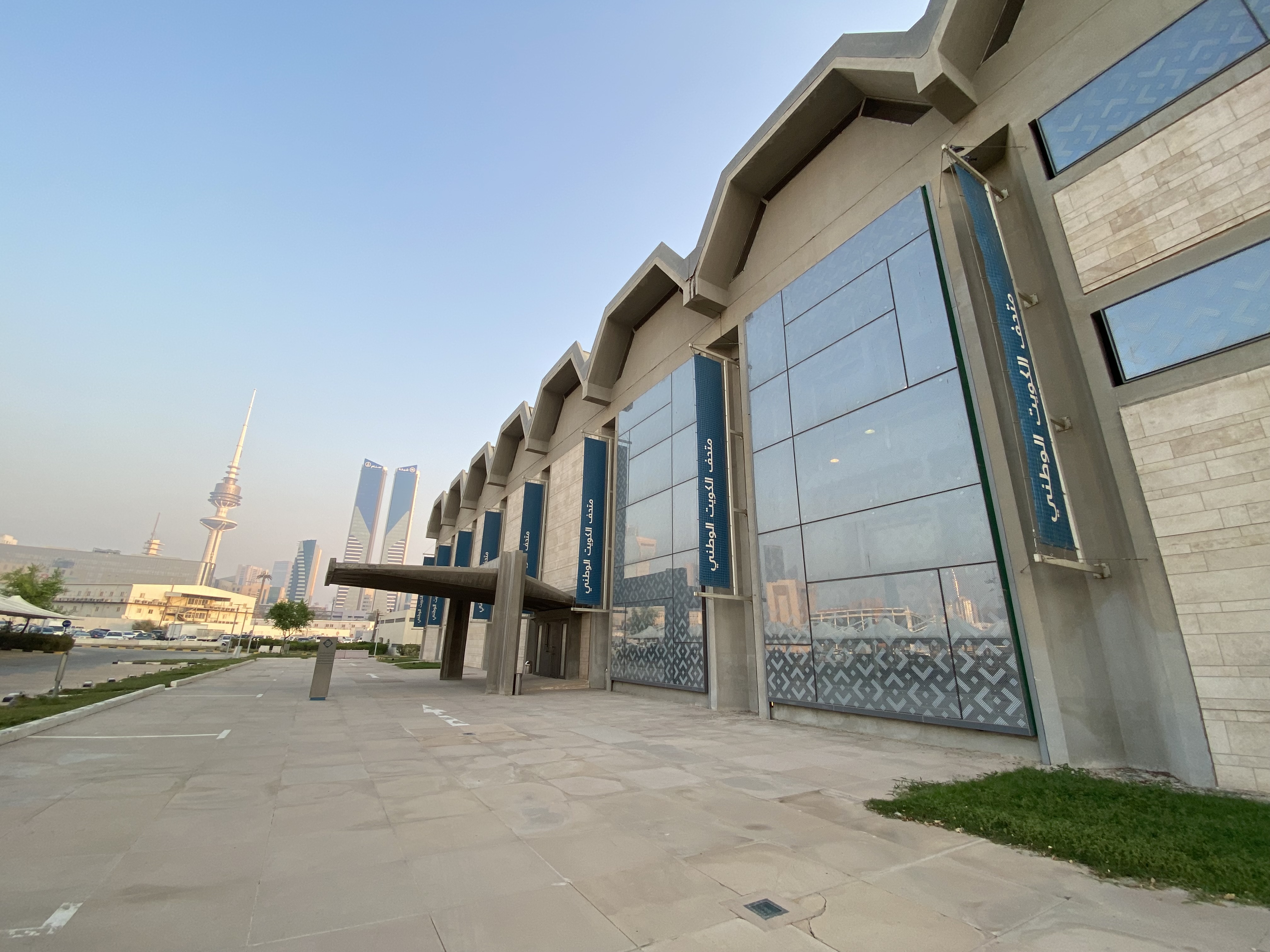
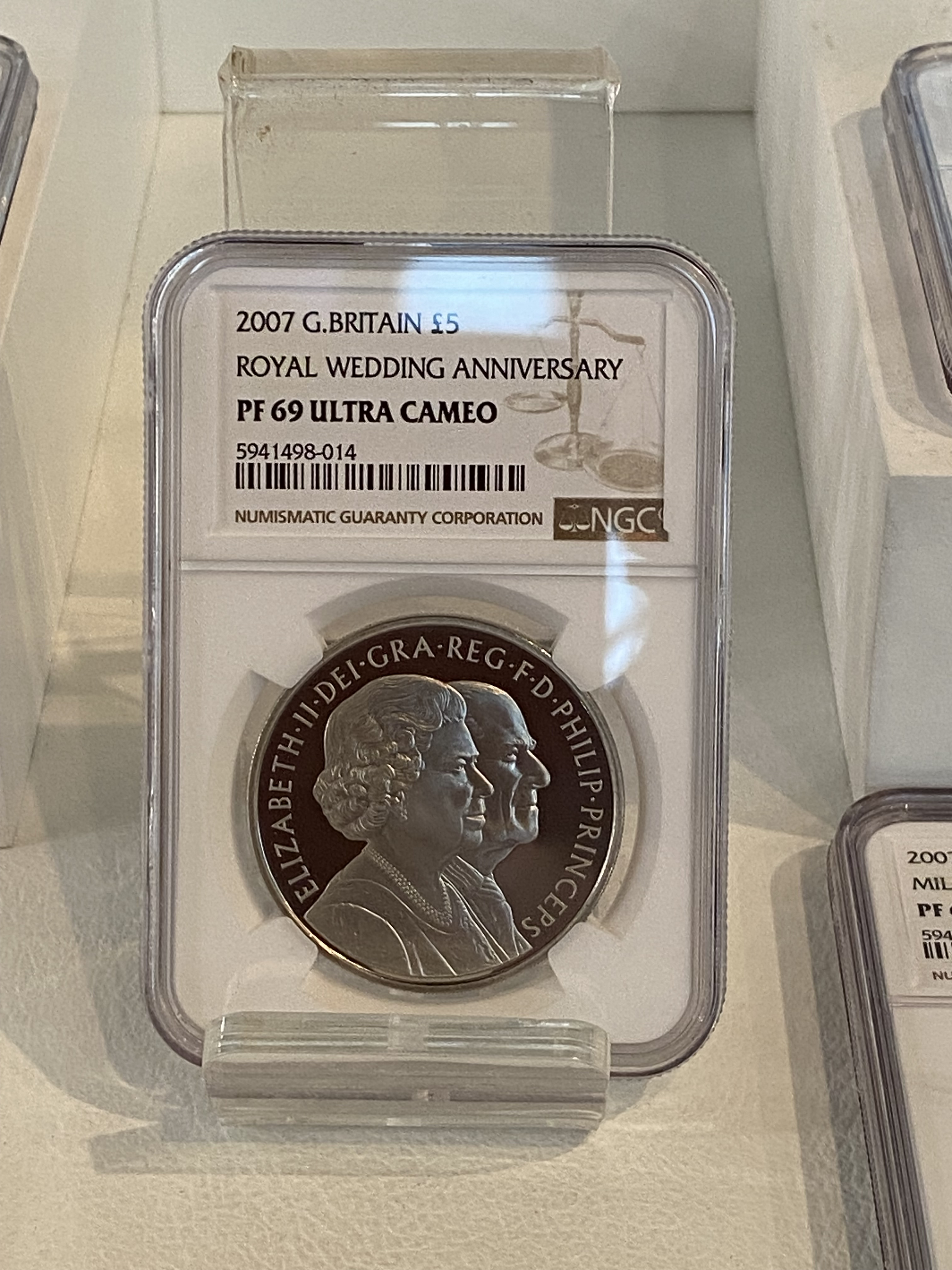
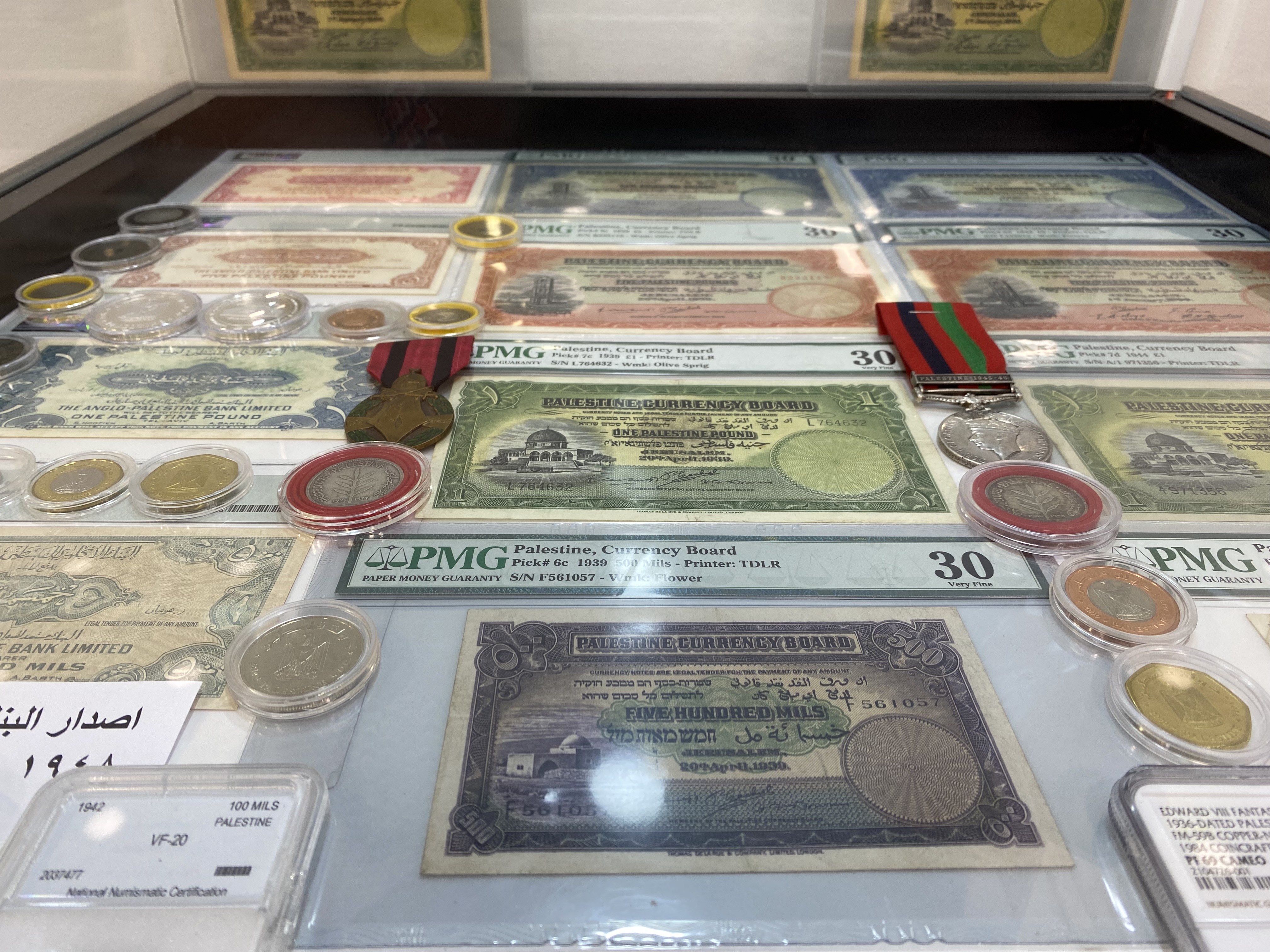
So we all shimmied between the barriers and walked to the museum. I say ‘sort of’ open because parts of the museum were closed, including a portion I had been eager to see, depicting life in Kuwait prior to the discovery of oil in 1938. Inside, we were the only visitors, although there were at least four guards on duty. There is no admission charge. In the largest gallery, we perused an exhibit on money. Display cases featured not only Kuwaiti coins and bills since the country became independent in 1961, but also displays of money from elsewhere in the region – Syria, Iran, Iraq, Jordan, Palestine – as well as a large collection of commemorative coins from Great Britain, Ferrari and Disney.
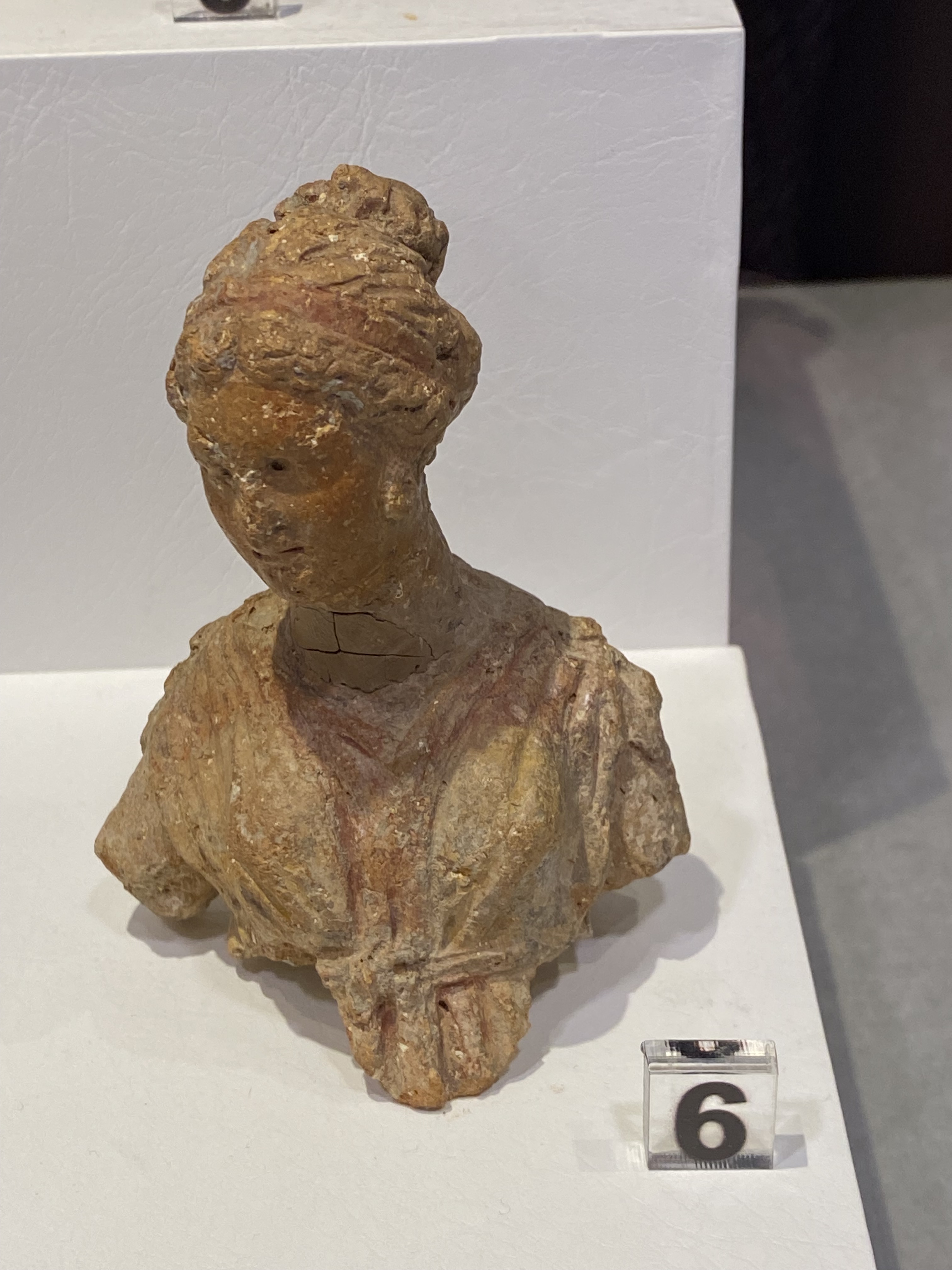
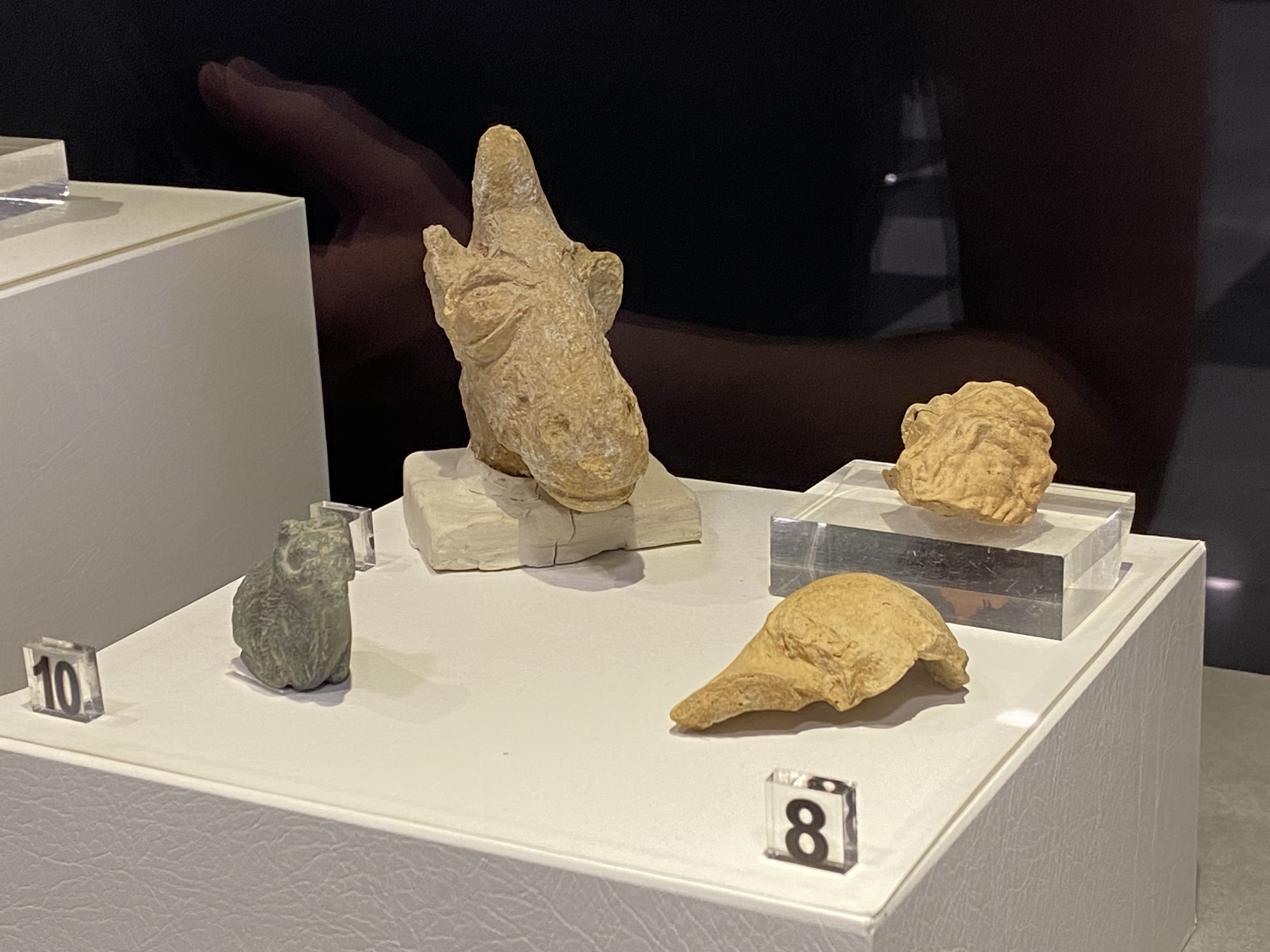
A second gallery shared impressive relics from ancient times. Kuwait’s Failaka Island (also on my bucket list!) is an archeological gold mine, so to speak. Alexander the Great’s army had an outpost there and digs have unearthed Mesopotamian ruins from 2000 BC and even older tools from 3000 BC. A few of these treasures are on display; some quite exquisite in their craftsmanship.
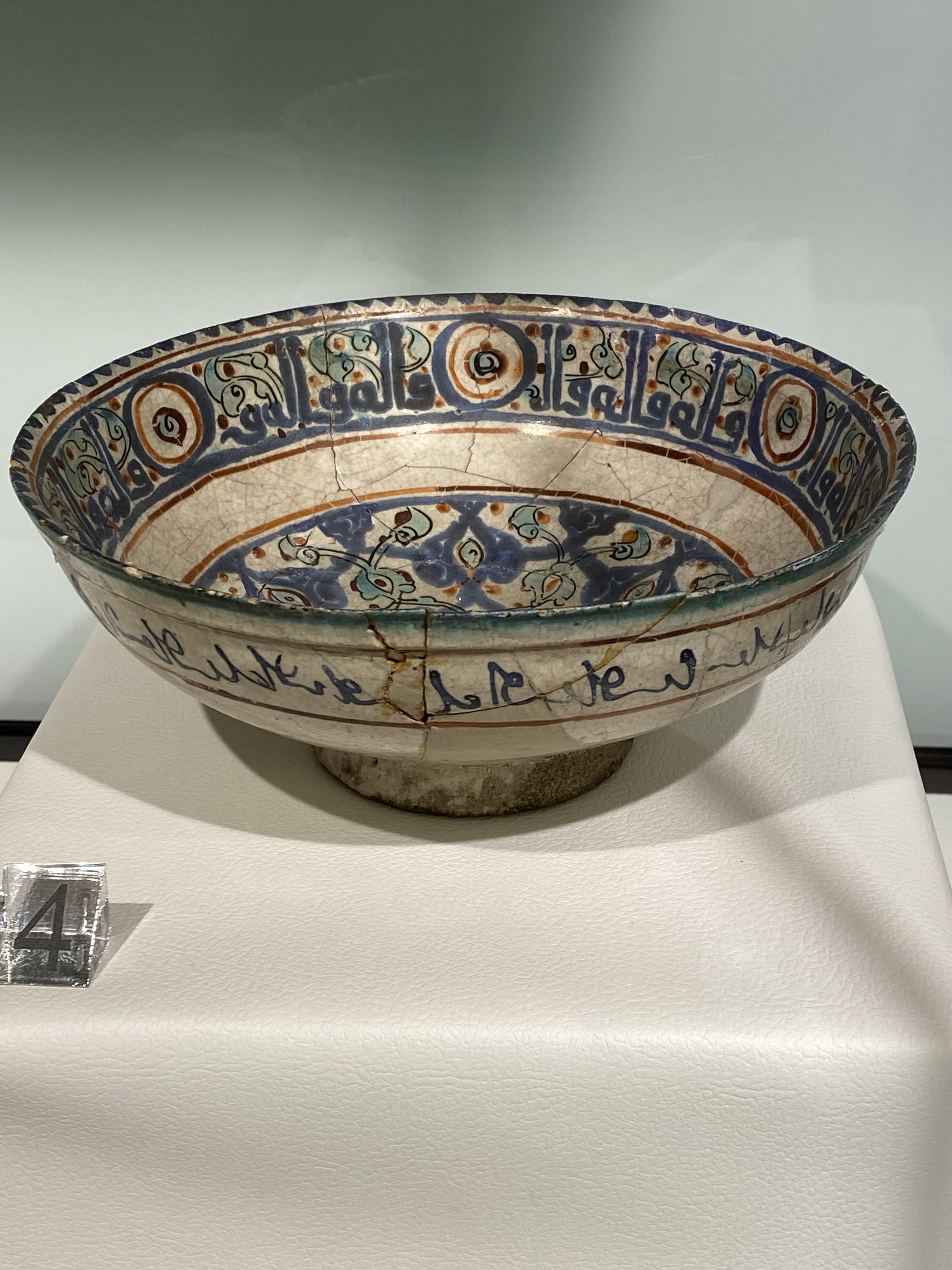
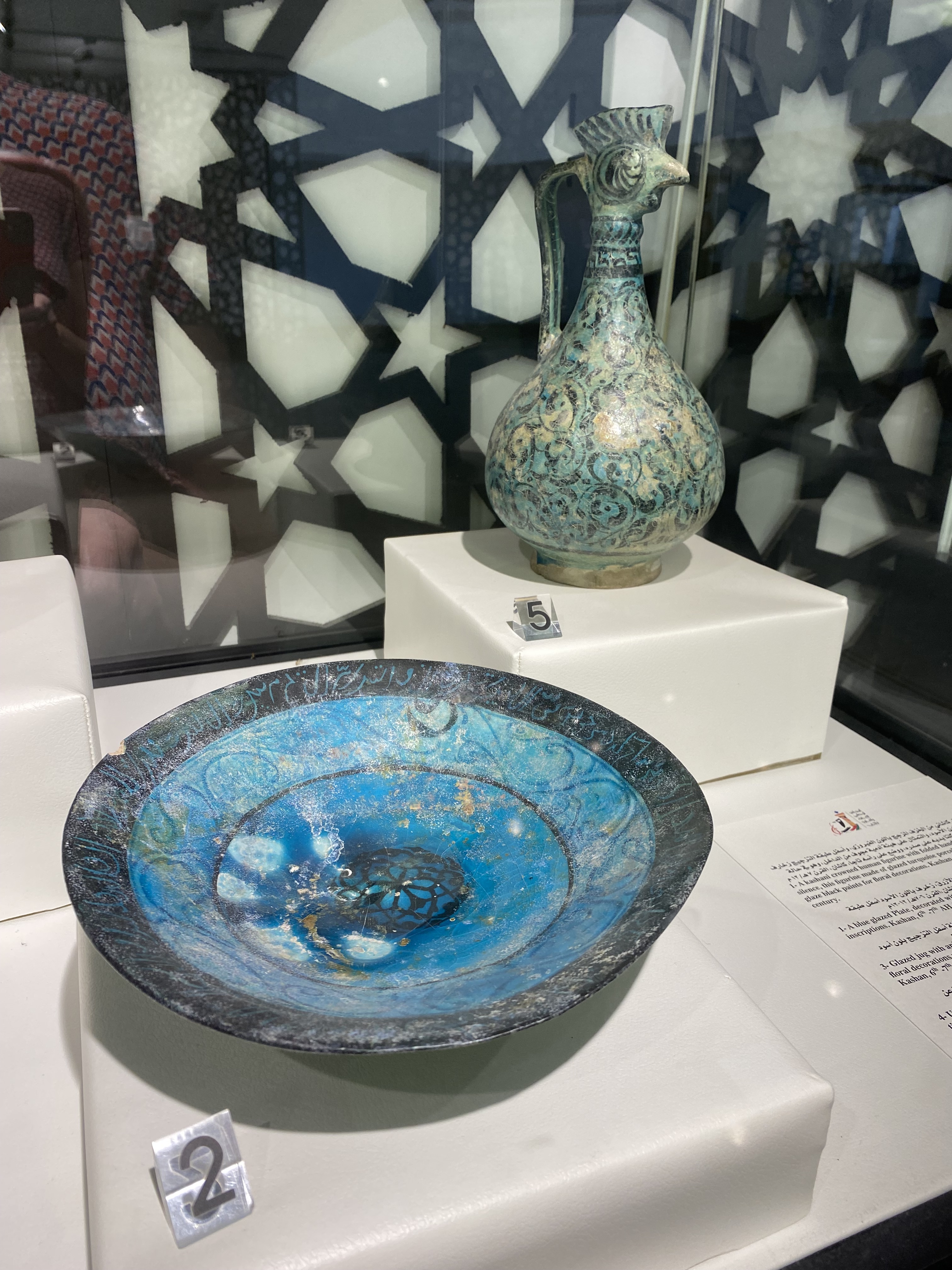
The third and final open gallery displayed stunning examples of handmade Qurans, with precise neat script and pages filled with intricate floral patterns. (Very much like the illuminated manuscripts Christian monks used to produce.) The space also displayed bright and lovely bowls and decanters dating back to the 12th century and heavily carved wooden doors. All very beautiful objects which were a delight to see.
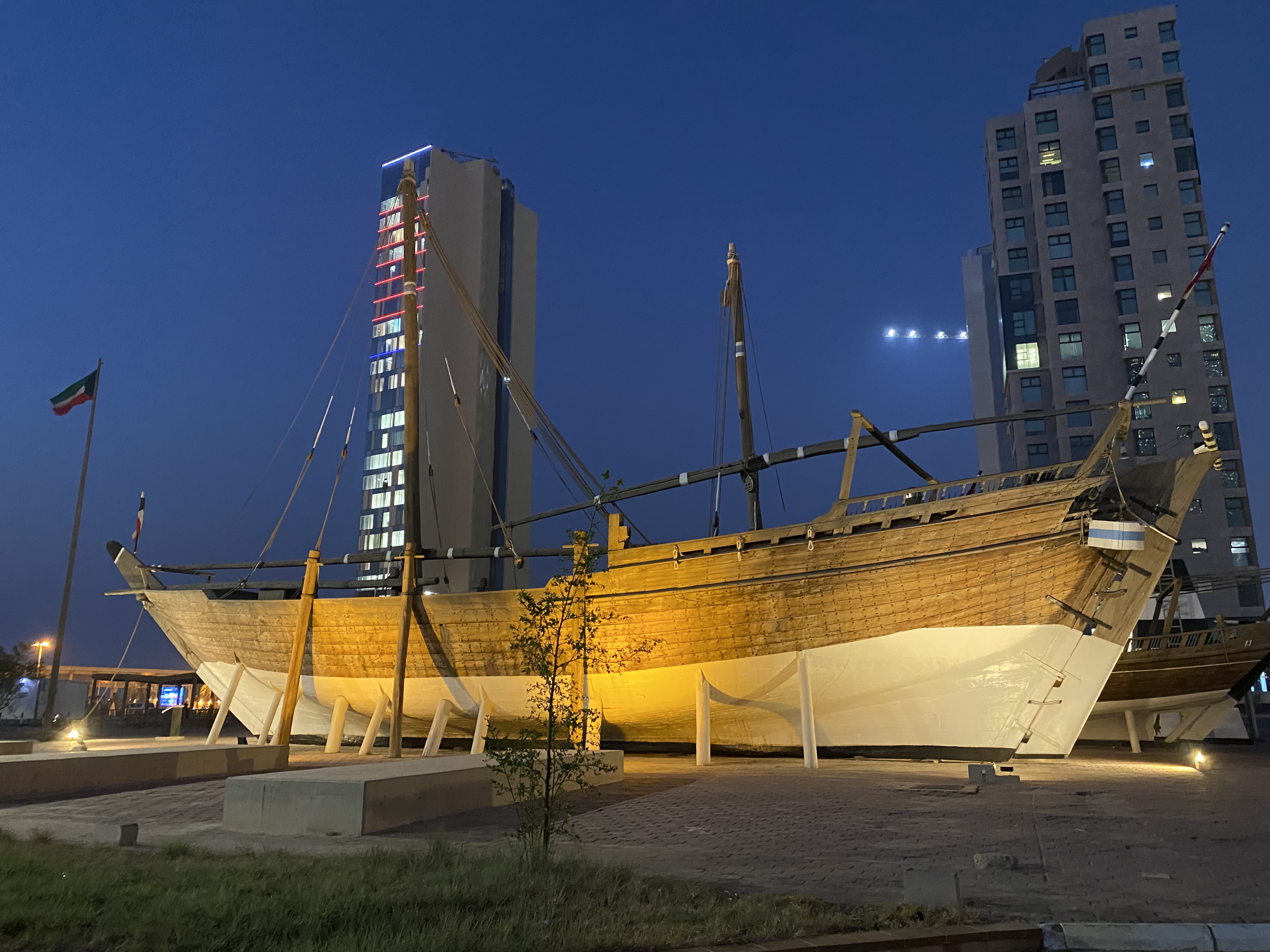
Outside, back in the muggy heat, we walked the length of the museum to view the unusual site of a giant wooden ship, a dhow, dry docked between the museum and the busy Gulf Road. We’d previously driven by but this was my first chance to view it up close. Well, sort of. They won’t let you get very near it. The ship was originally built in 1937 but was burnt during the Iraqi invasion (as was much of the museum) and rebuilt in the mid-1990s as a testament to Kuwaiti culture.

We weren’t quite ready to head to dinner, so Wil suggested we check out the nearby Kuwait Maritime Museum. After another round of somewhat confusing Google directions, we rounded a city block, drove through a couple of empty sandy lots before spotting more dry-docked ships, with the museum nearby. Wil parked in the empty lot, next to an abandoned set of men’s loafers. A scrawny kitten greeted us and attempted to enter the museum with us but the lone guard appeared and shooed him away.

No pictures were allowed inside the museum. We had the place to ourselves again, apart from the ghosts the kids became convinced also occupied the museum, as the main lights went completely off not once, not twice, but three times during our visit, prompting the guard to scurry by with his flashlight each time to flip some sort of breaker or timer.
These days, we think of Kuwait as a nation reliant on its rich oil reserves and exports. But for centuries, it was not the desert, but the sea which fueled the local economy. Kuwait was a center for pearl diving and for maritime trading within the Gulf region, and by the 18th century, to India and east Africa. Kuwaiti ship builders had an excellent reputation. The end was swift, though. Within a decade of the exporting of oil in 1946, nearly all Kuwaiti maritime-related activity stopped. The museum attempts to capture that lost era, through boat reconstructions, photographs of long-dead sailing crews, and displays of ship building tools, pearl diving equipment, and musical instruments used to accompany sea shanties.
It’s incredible to think of all of that bustle and activity, and cultural heritage, simply disappearing. And for that to happen apparently purely for economic reasons, not from direct oppression from another nation, as we’ve seen again and again in history.
Kuwait is not an easy place to unpeel its past. This is a nation where many of its citizens still dress on a daily basis as they would have done for centuries – the women in black abaya and the men in white dishdasha – but the traditional dress is almost jarring against a backdrop of modern malls and city blocks with tall buildings revealing no trace of their origins. Some of the emphasis on the modern, I’m sure, has to do with the construction necessary after the devastation wrought by the Iraqi war. And a lot has to do with the vastly improved financial situation that oil brought to the citizens. There is an understandable desire to look forward, to build shiny new things and to embrace the luxuries that great wealth brings. But, at least to this outsider, it means this place, populated for centuries, often feels as if it’s only been home to its people for a few decades.
So I’ll keep seeking out the old. As I said at the top of this post, there are still places and experiences left on my bucket list. Humbly, I know there is much I don’t understand, and probably never will. But I know that there is history, culture, heritage, to be found here – I’ll just have to keep digging to find it.
Keep scrolling for a few pictures from our outing.
National Museum:


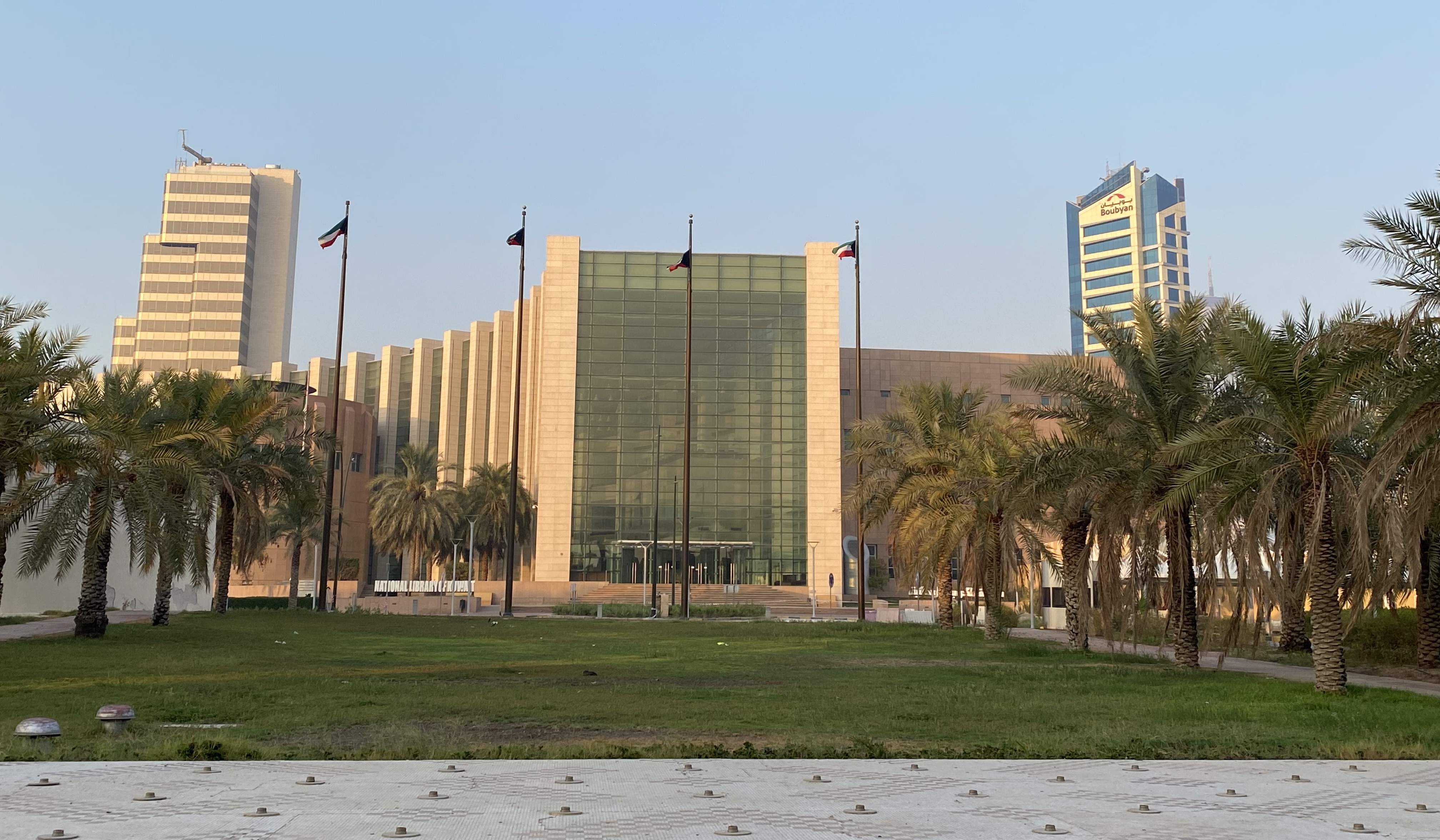
The National Library (also on my bucket list!) is across the street:
Highway and parking lot views (on way to Maritime Museum):


Dhows outside Maritime Museum:

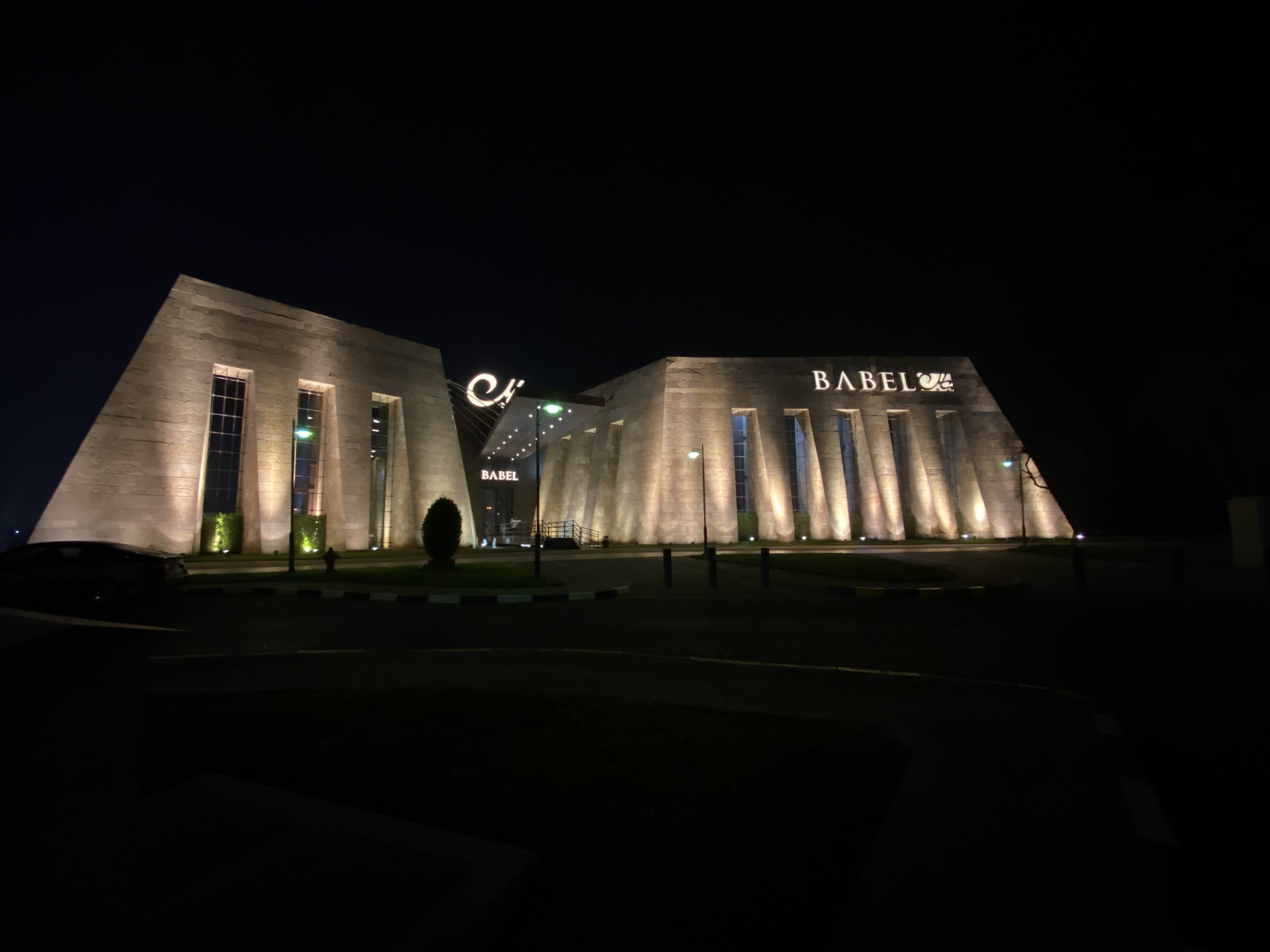
Our dinner destination – a Lebanese restaurant which occupies an iconic building on the Gulf:
 susan dalzell
You must be logged in to post a comment.