When Kuwait celebrated National Day and Liberation Day in February, we flew south along the Arabian Gulf to the island nation of Bahrain. We selected a hotel with a beautiful pool and multiple restaurants and—as I’m unable to imagine a trip of any length that does not involve at least one museum and historic site—we also scheduled a day-of-cultural-fun with a tour company to include one of the world’s largest mosques, a desert fort, and even an ancient tree of life. (More on that soon.)

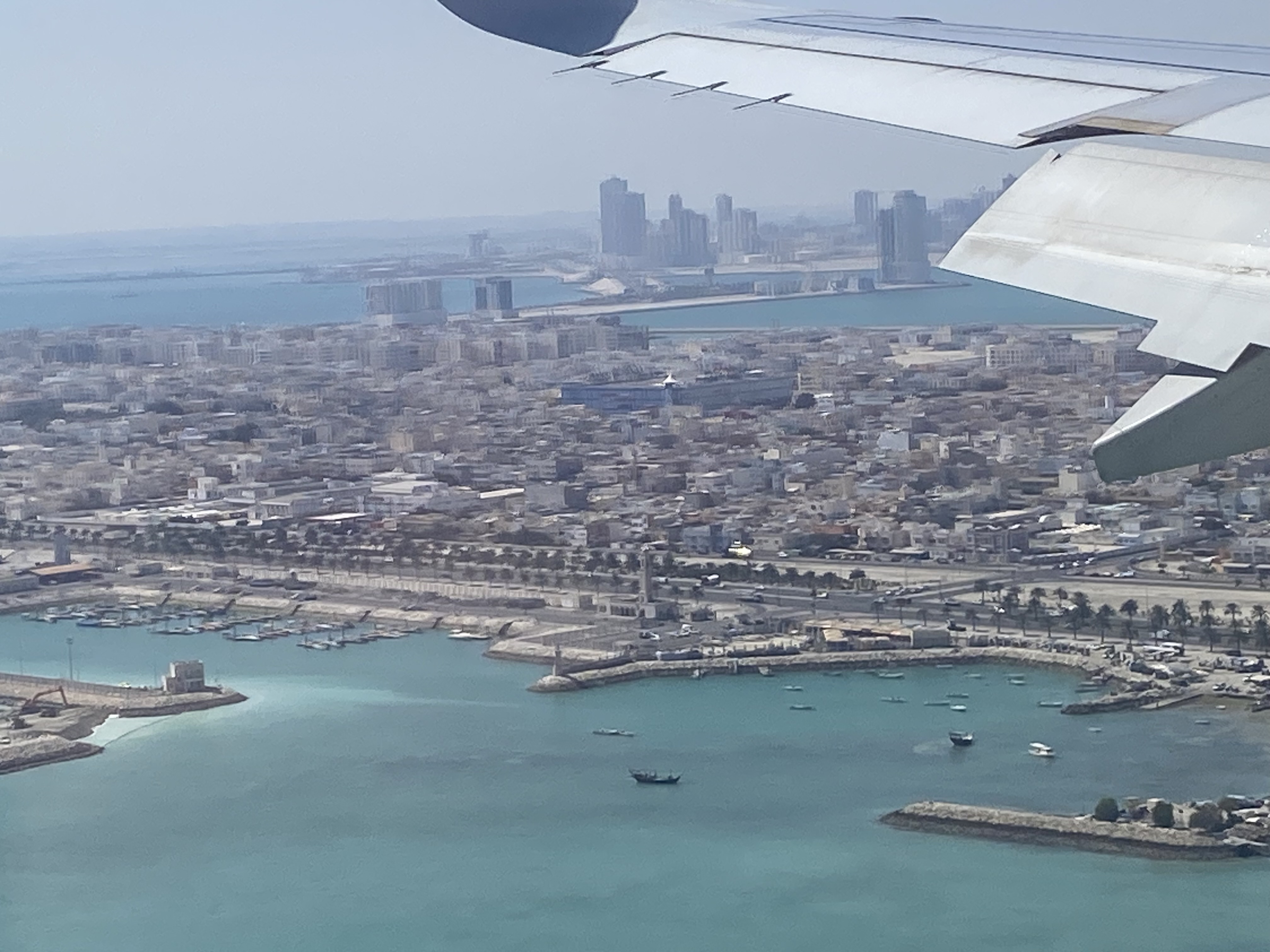
Our flight saw us coasting into the island over the aquamarine sea characteristic of the Gulf. The water views continued so long after we began our descent that I started to wonder if we were going to find land prior to touching down. Our arrival in the capitol city of Manama had a very Kuwait start – in the airport we were greeted at the exit by a traditional Kuwait sword dance by 20-some men in traditional dress. In researching this blog, I discovered video from the event was posted on Bahrain Airport’s Instagram. (If you squint, you can see the three of us watching the performance at one point.) We travel light, so missed out on the Kuwait-themed gift boxes handed out at baggage claim.
The airport itself was sleek, modern, pristine, and…empty? Not quite, but even for the return trip, we found ourselves in expansive spaces with very few fellow travelers, an unusual, but rather pleasant, airport experience. Additional research shows me the terminal opened in July 2022 and cost a whopping $1.1 billion.
The hotel was opulent although a bit past its prime; we appreciated rotating through the cuisines on offer, including Japanese and Mexican. (When you already live in the Middle East, it can be quite fun to get to eat non-local food.) We had Mexican on two nights, as we met up with American friends from Kuwait who also chose to be in Bahrain for the break. Their family opted for a roughly six-hour drive through Saudi Arabia. They said the trip was eerie, as most of it was through unpopulated desert with only a few cars on the highway.
Our hotel pool was appealingly blue and palm tree lined. Wil and I found it a bit chilly in the water, but Liam had a blast splashing about while we lounged and read books. Onward to culture, as I doubt most of you are keen to read about me sitting by a pool, turning the pages of a novel.
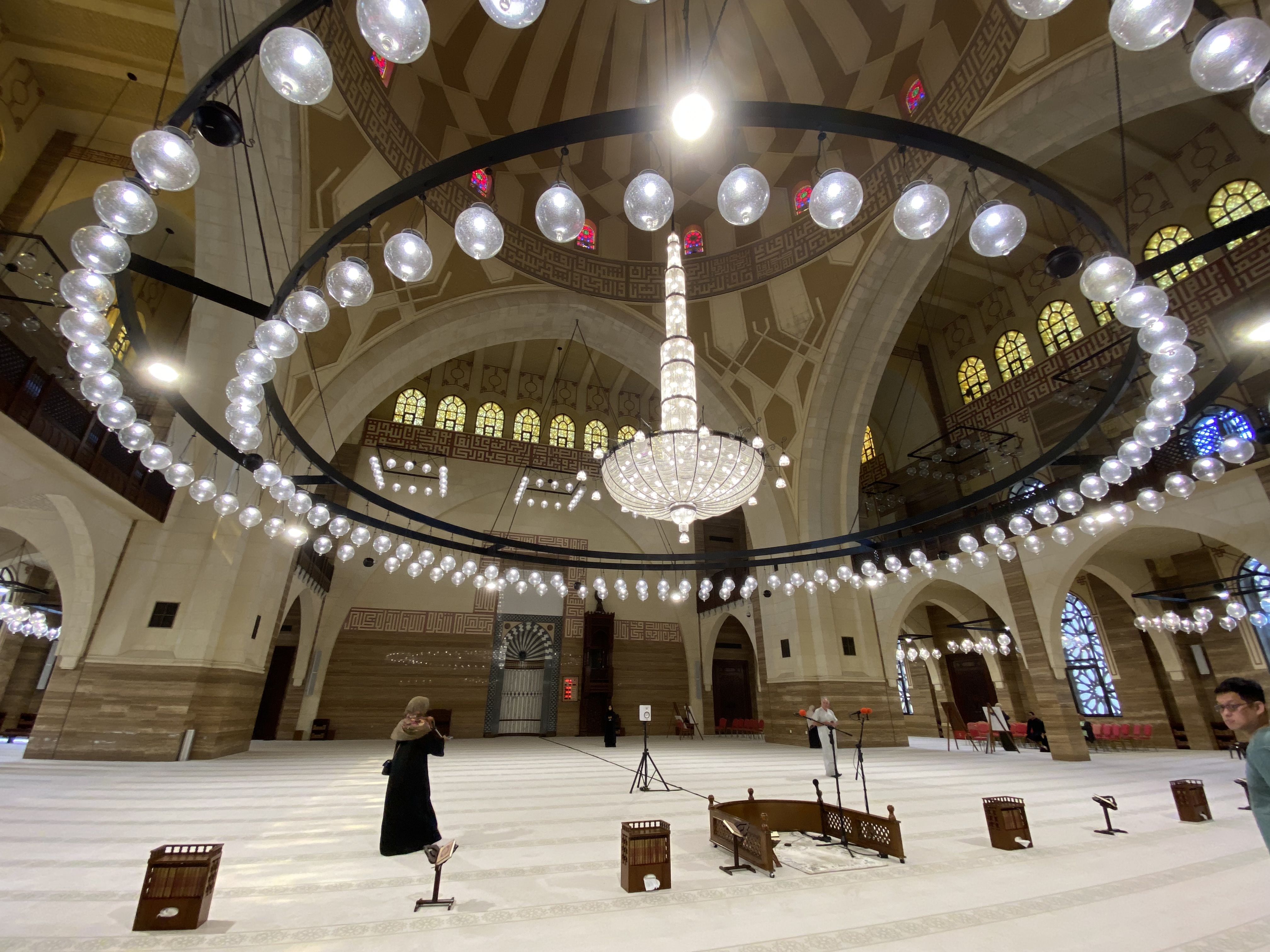
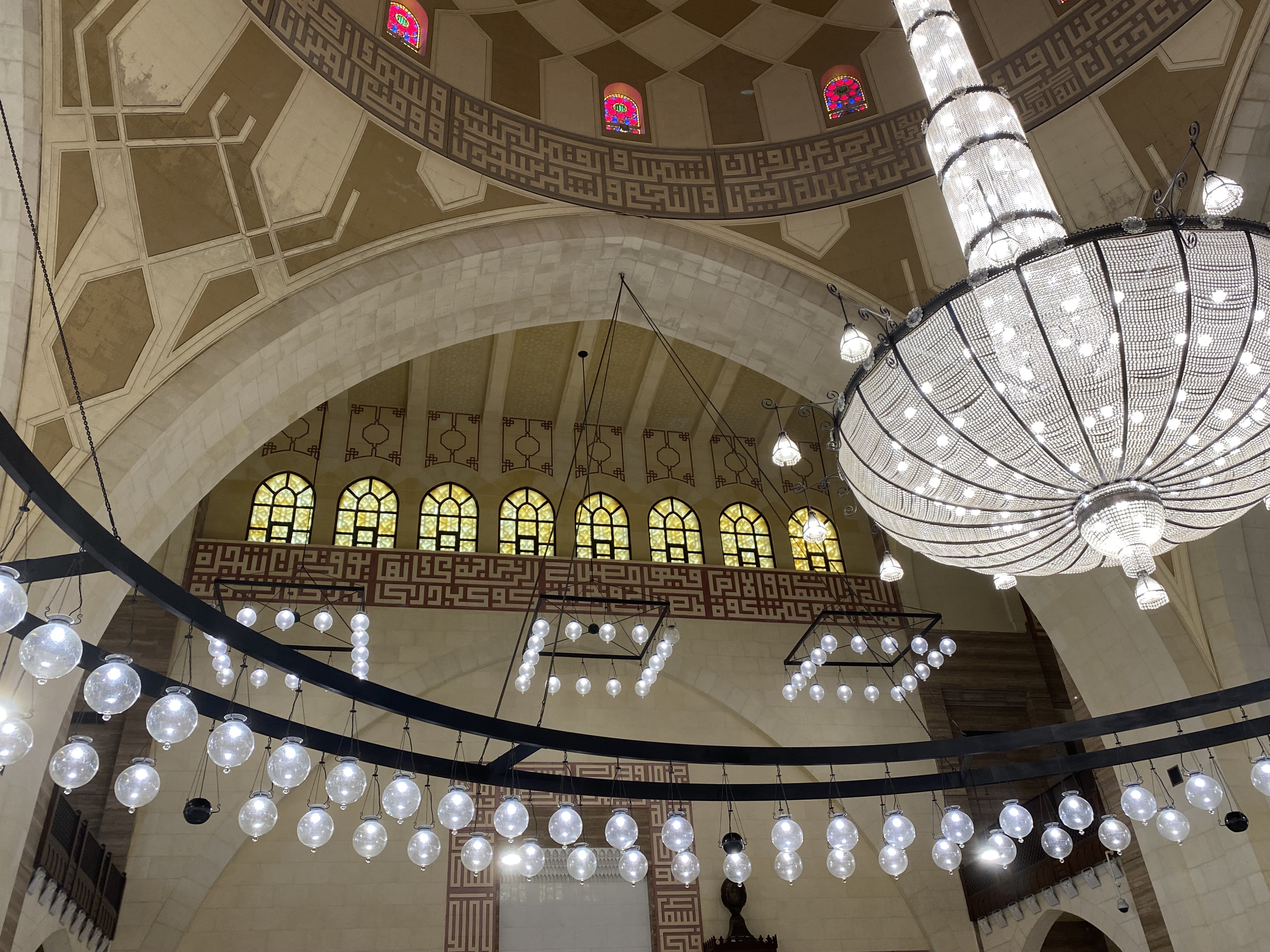
Remember that large mosque I mentioned way back at the top of the post? Well, patient reader, let me say the Al Fateh Grand Mosque was large to the tune of 6,500 square meters and capable of holding 7,000 worshippers, topped by the world’s largest fiberglass dome. Built in 1988, it wasn’t quite what I’d call austere, but its interior was refined and elegant with teak doors from India, Italian marble floors, and lanterns hand blown in Austria. You can glean that from Wikipedia though. To stand in its vast space, after donning a robe and head covering, was an awe-worthy experience. Worshippers kneel on the ground, shoulder to shoulder, so the experience is different from some of the vast cathedrals we’ve visited on our travels. The space is mainly empty and soft carpet is underfoot.
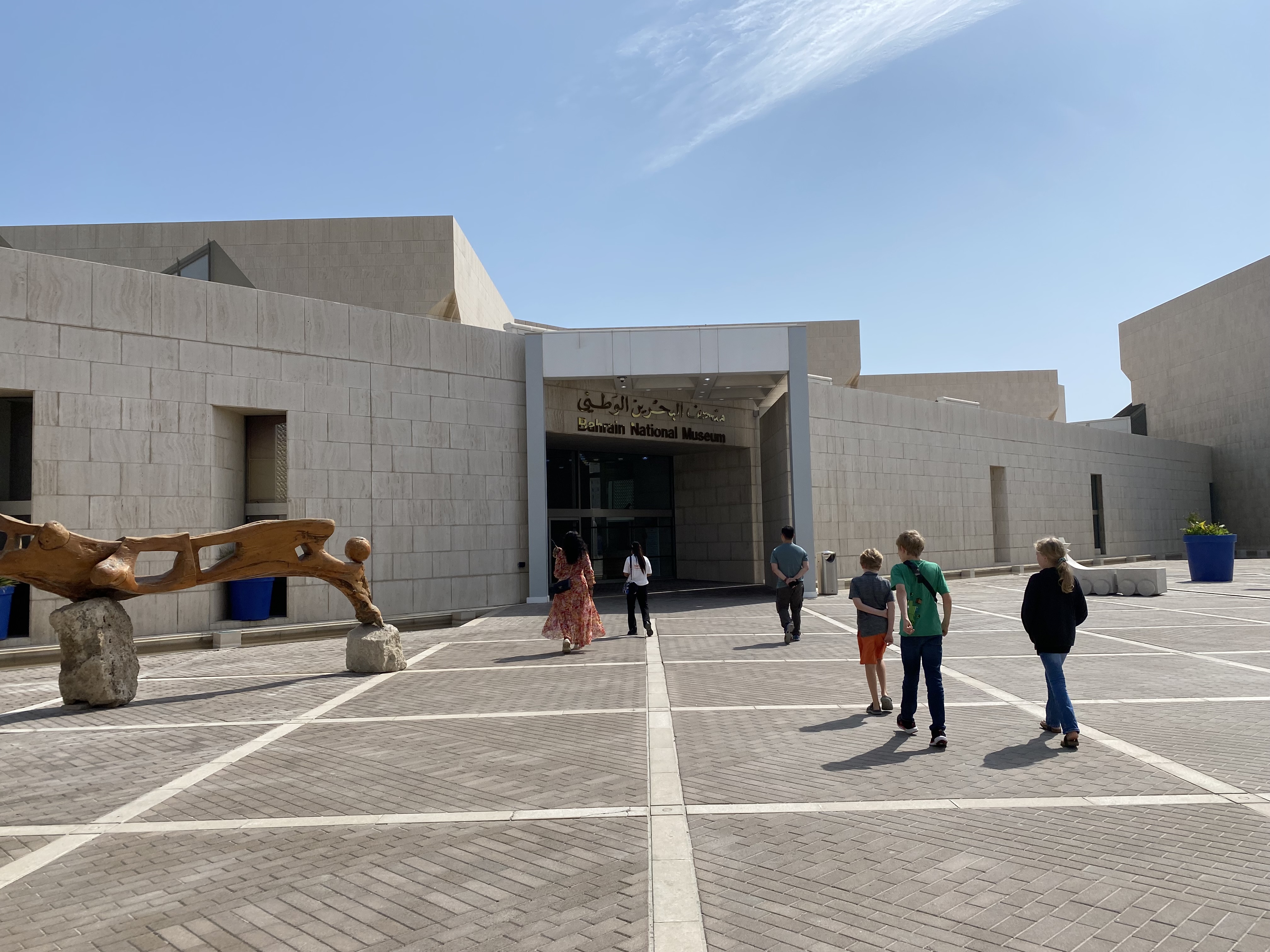
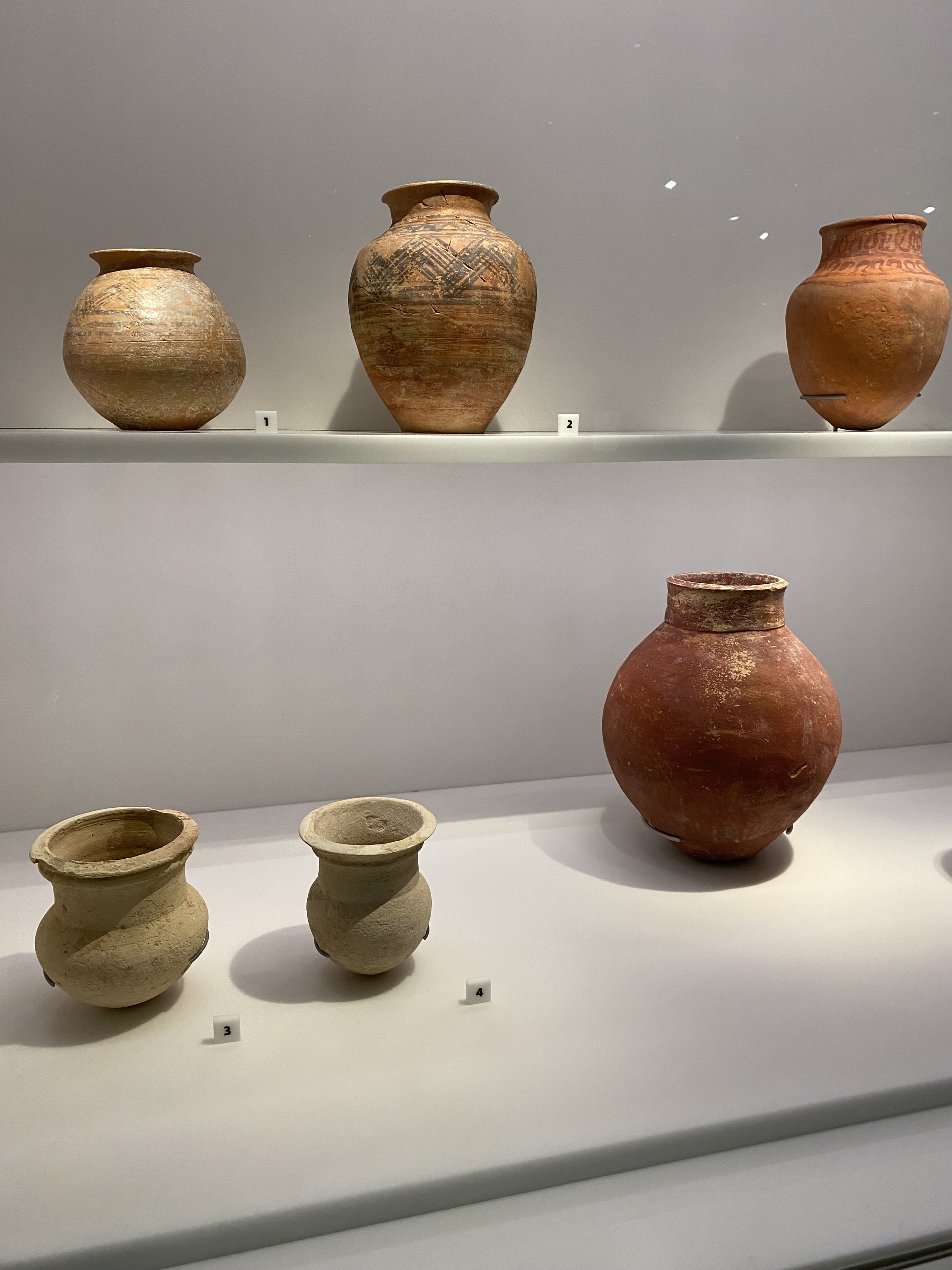
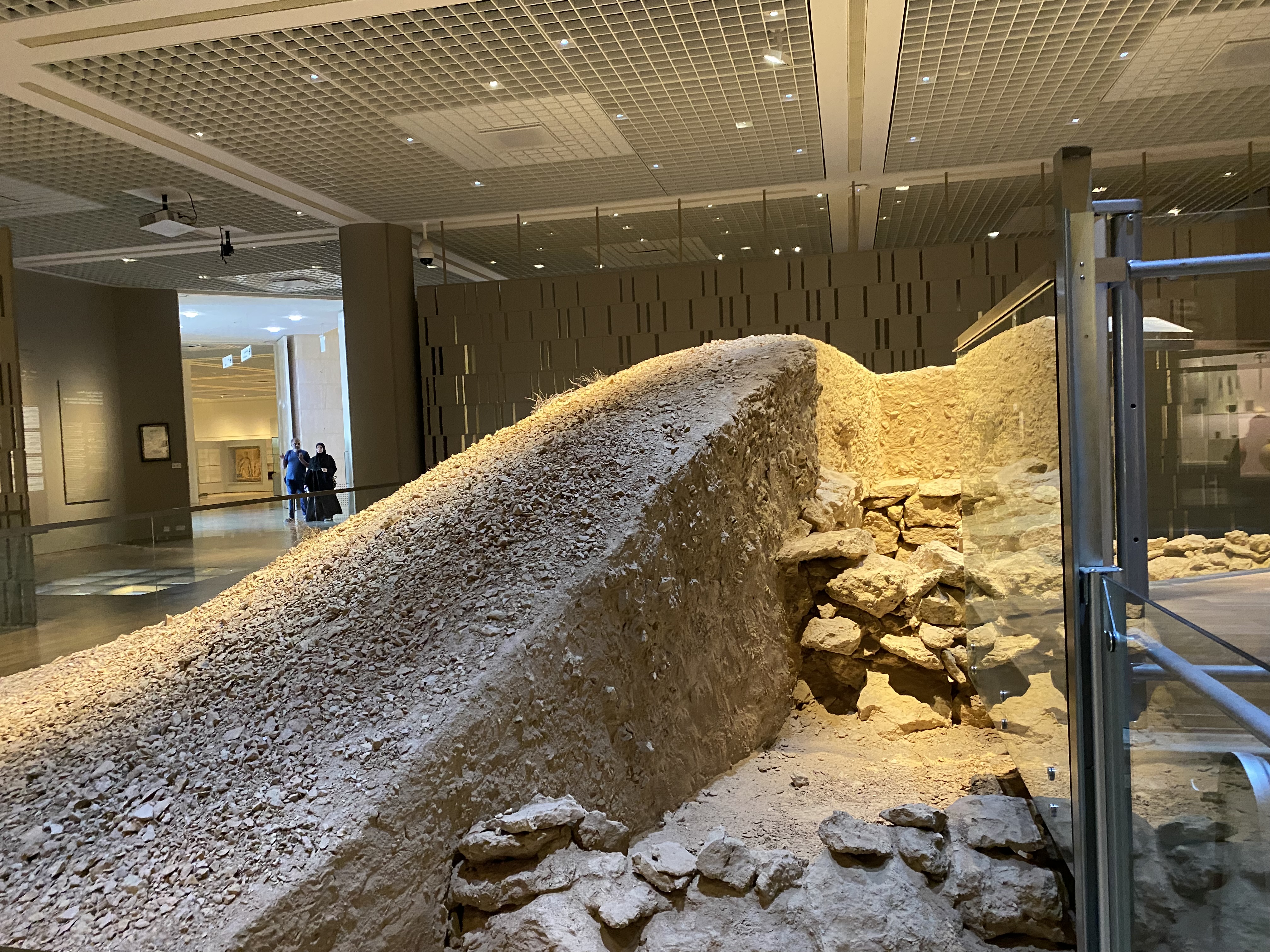
Our day included a quick swing through the Bahrain National Museum, where we learned about Bahrain’s ancient roots as the home of the Dilmun civilization on through to its independence from Britain gained in August 1971. I love a good life-sized diorama, and the museum had plenty on offer, providing insights into traditional culture, family life, local traditions of weaving, basket making, pearl diving, and fishing, and a walk-through souk showcasing stalls.
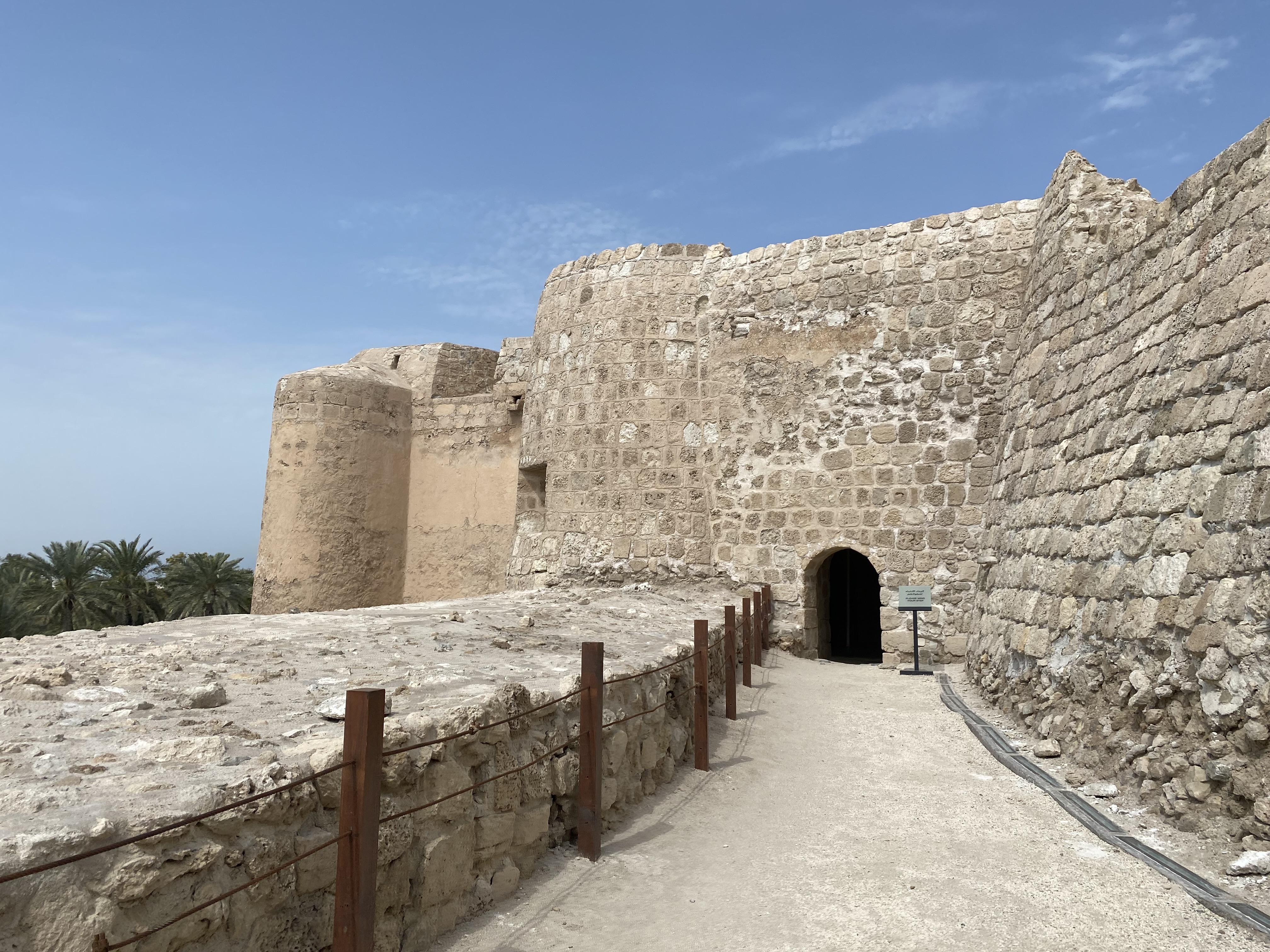
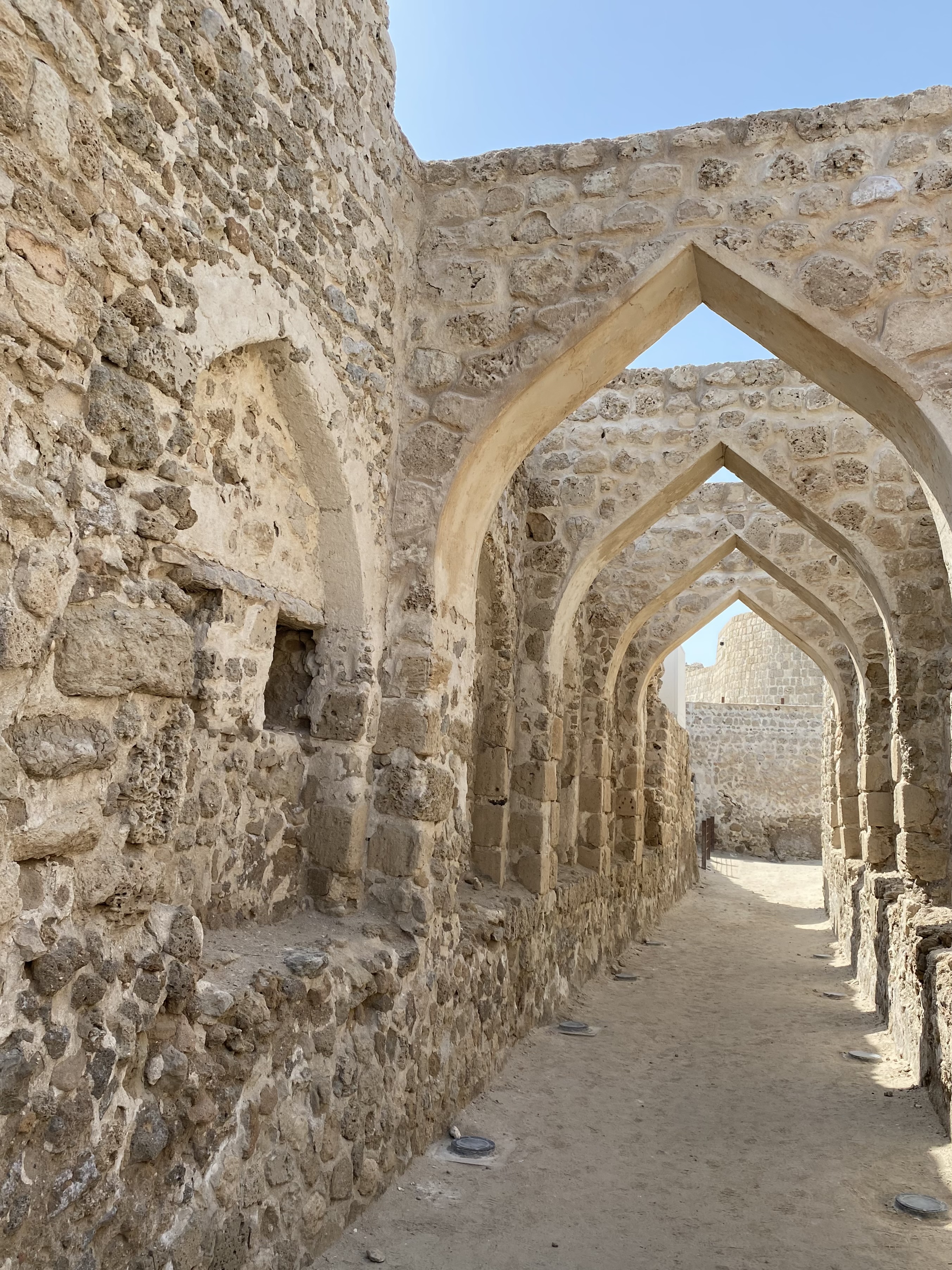
Outside the city, we ventured to Qal’at al-Bahrain, a UNESCO World Heritage Site. The Dilmun civilization flourished in 2000 BC and were living and trading on the site by 2300 BC. All of that activity has resulted in the site now being an artificial mound, due to layers of occupancy. The coastal fortress we wandered through is more recent, dating from the 15th-17th centuries, when it was abandoned by the Portuguese when the channel providing ships access silted up. We were encouraged to explore the meandering site on our own and spent a pleasant hour imagining how the ruins—some rubble, some very much intact—might have looked originally.
More ancient history awaited us when we stopped, in the city, at the site of Dilmun burial mounds. Somewhat incongruously, as we seemed to be in a residential neighborhood, our bus pulled over and we got out to view a large sandy field comprised of low burial mounds constructed nearly 4,000 years ago.
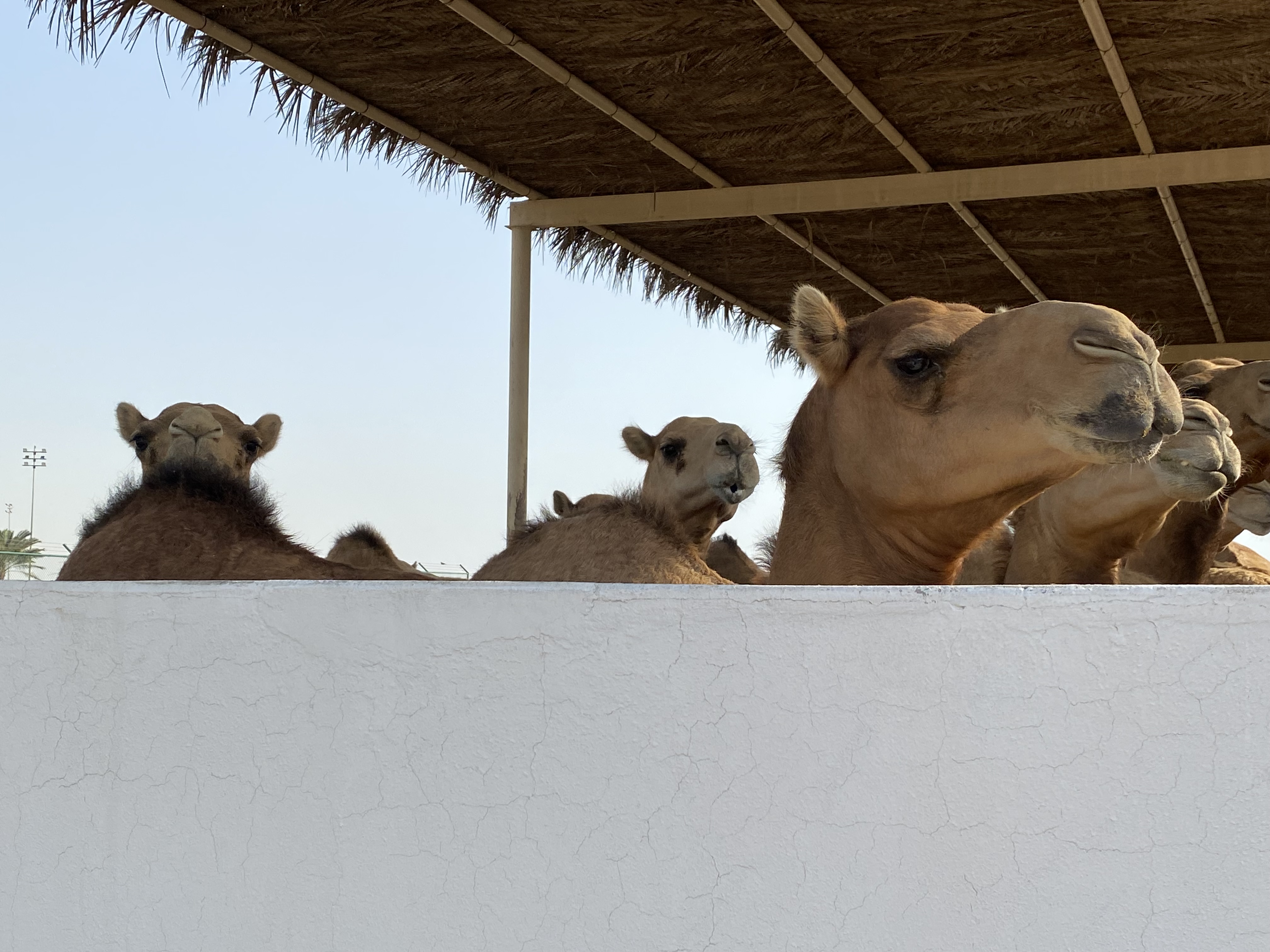
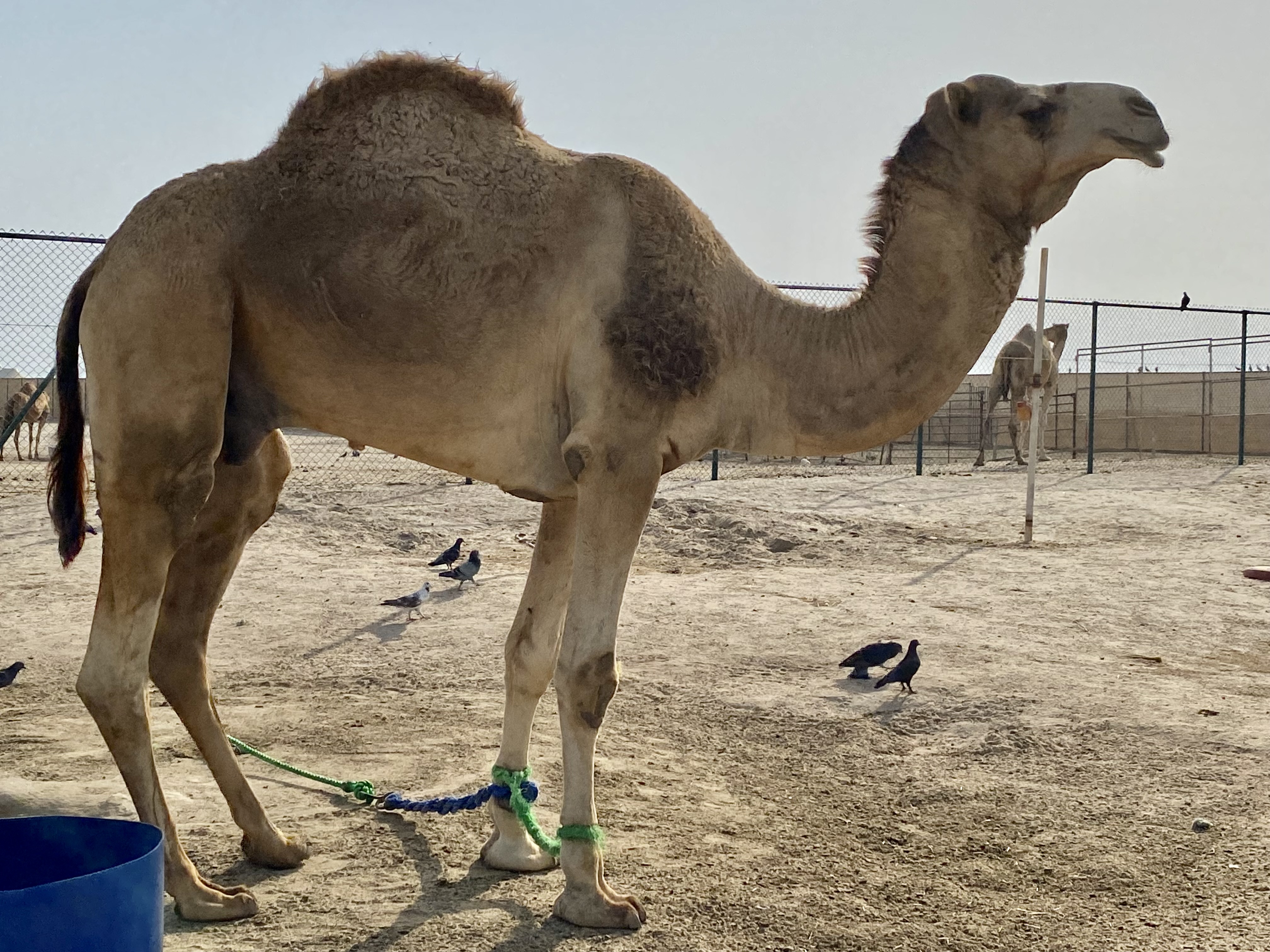
Further out in the desert we stopped by a camel farm. The female camels were tethered, but not behind a barrier, so we were able to walk near them. We’ve seen some camels while living in the Middle East who did not look cared for, but these animals were clean and friendly. Their shepherd beamed with pride as we tourists oohed and awed over them. They seemed to nuzzle him with affection when he gave them pats. Wil was the recipient of a warm lick to the ear by one particularly friendly camel who took a special interest in him.
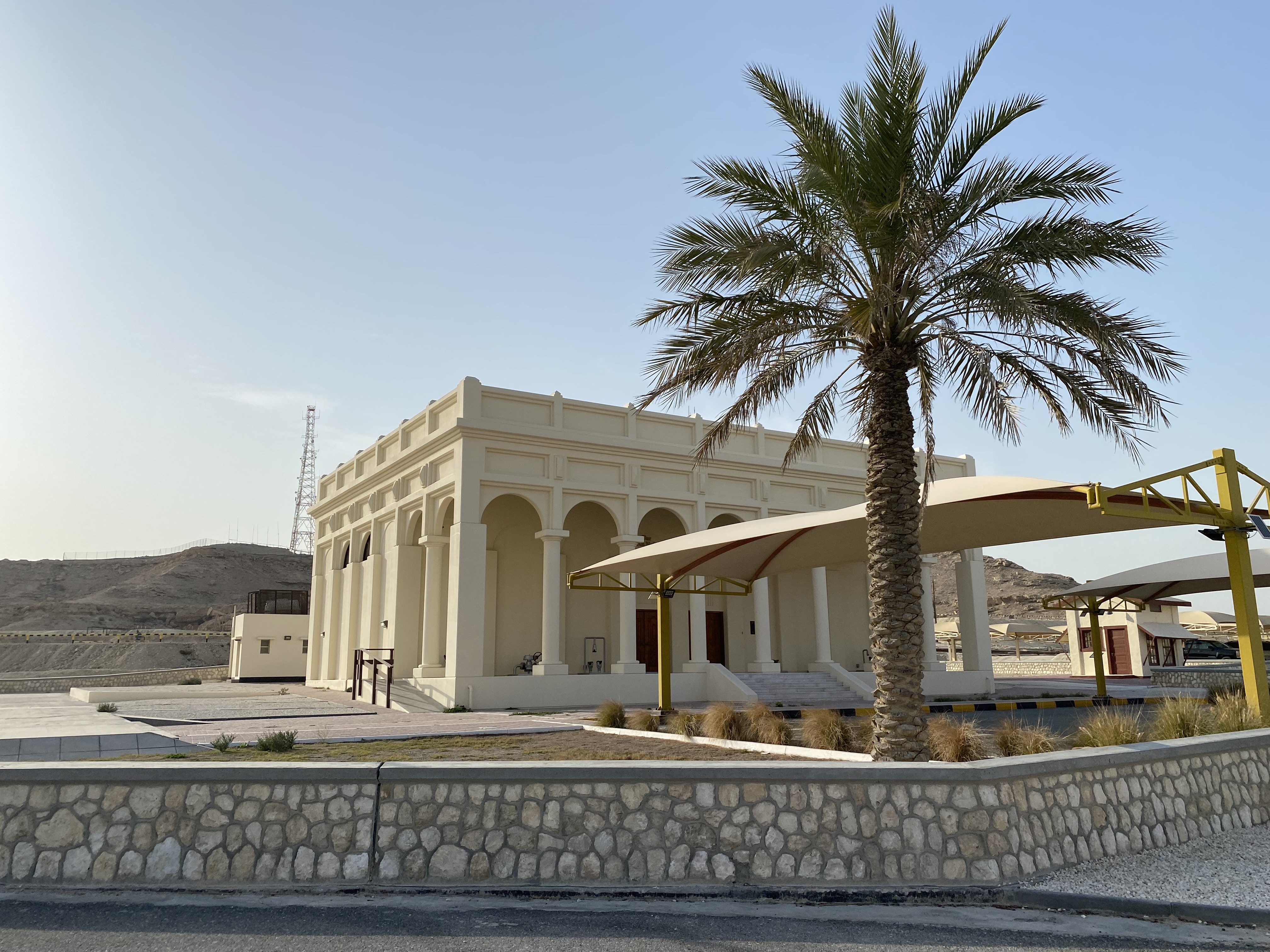
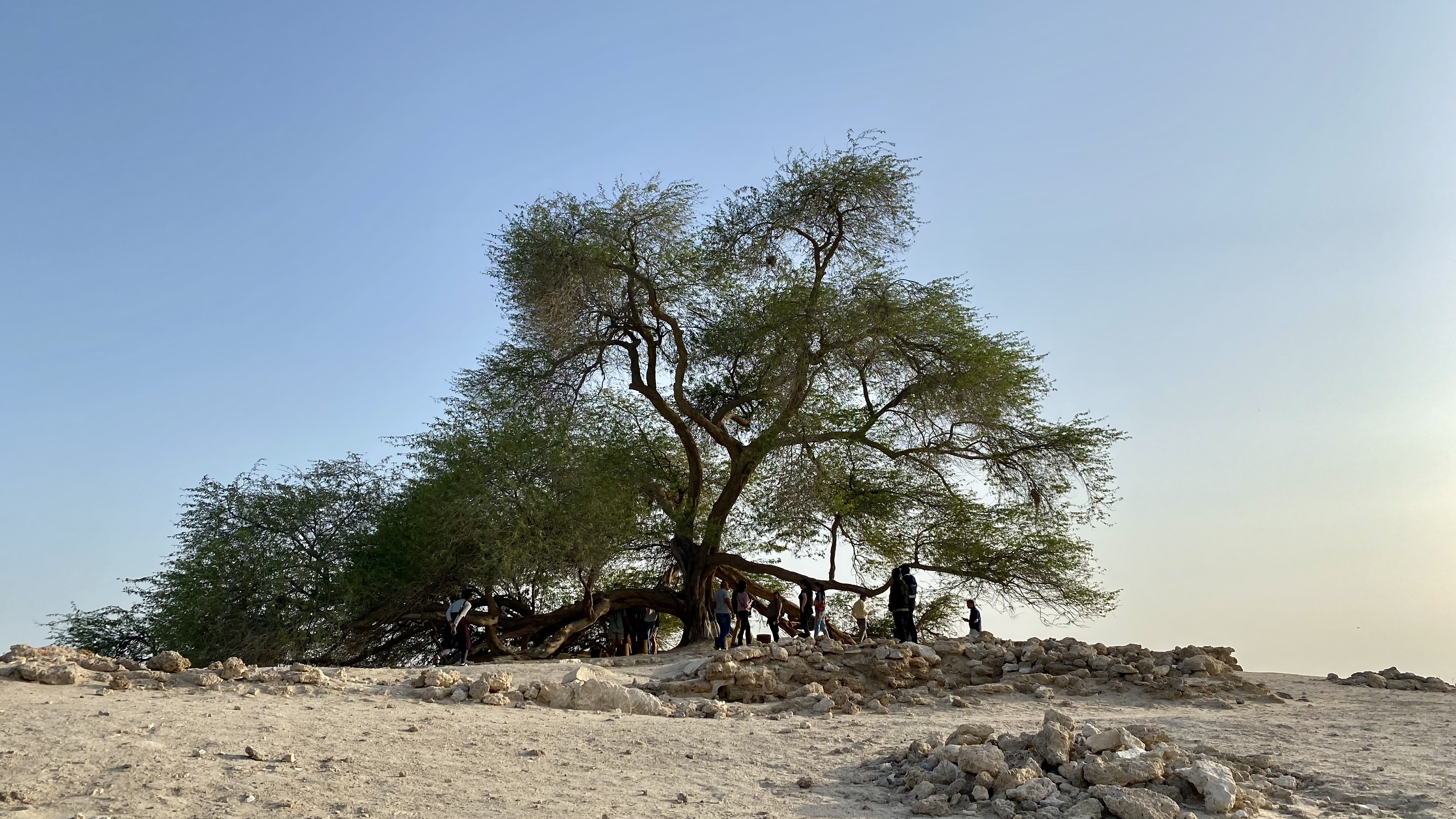
We stopped by the well where oil was discovered for the first time in Bahrain in 1932. From there, we went on to one of the highlights of the day: A 400-year-old mesquite tree—the Tree of Life–that has survived on its own in the desert and baffles scientists by continuing to grow despite no known water source. A miracle, if you will, a hardy and tenacious living being who thrives despite the odds.
Scroll on for pictures from our trip, including a few stops not highlighted above.
Flight and arrival:

Al Fateh Grand Mosque:


Bahrain National Museum:

Qal’at al-Bahrain:




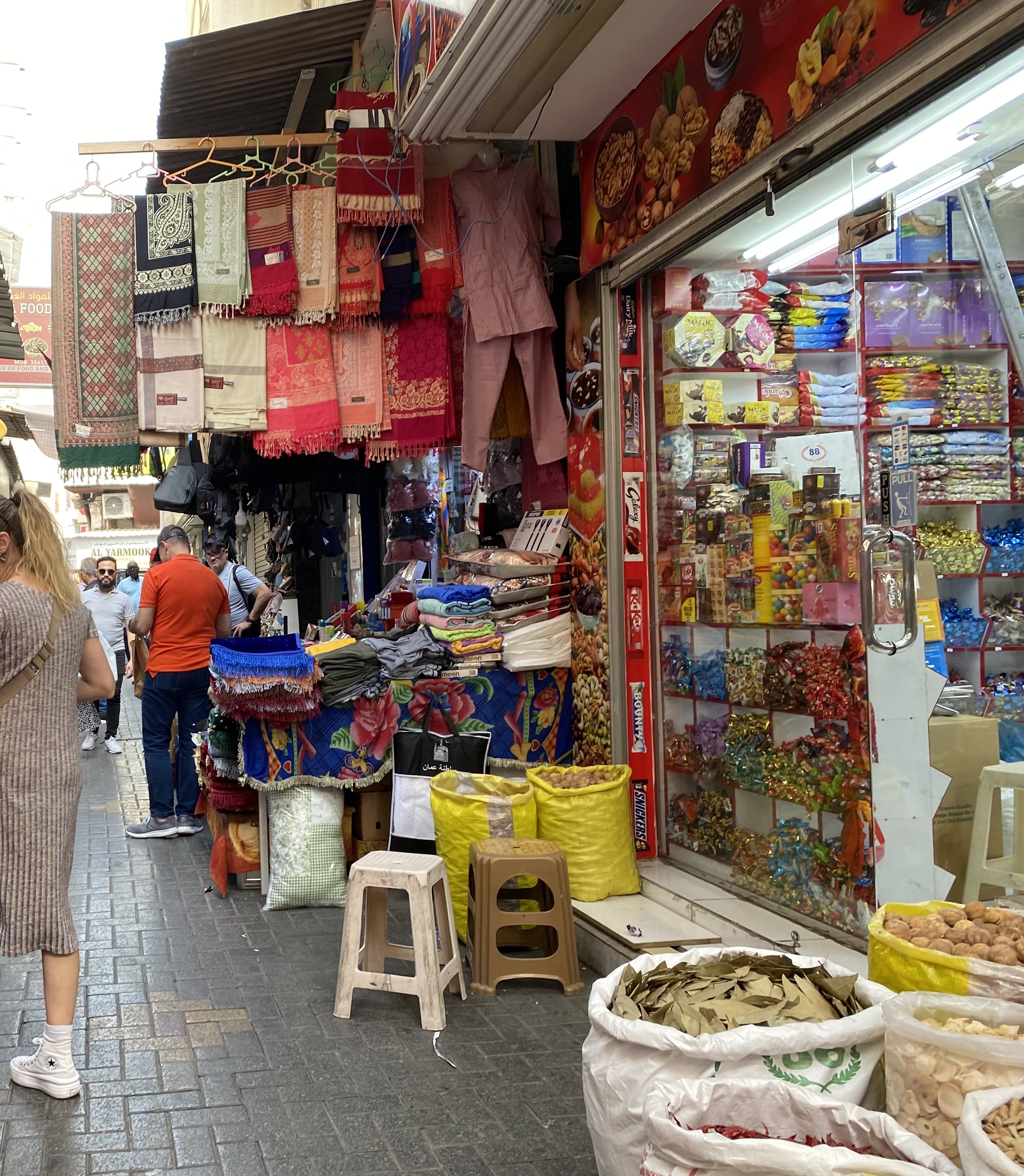
Bab el-Bahrain Souk:




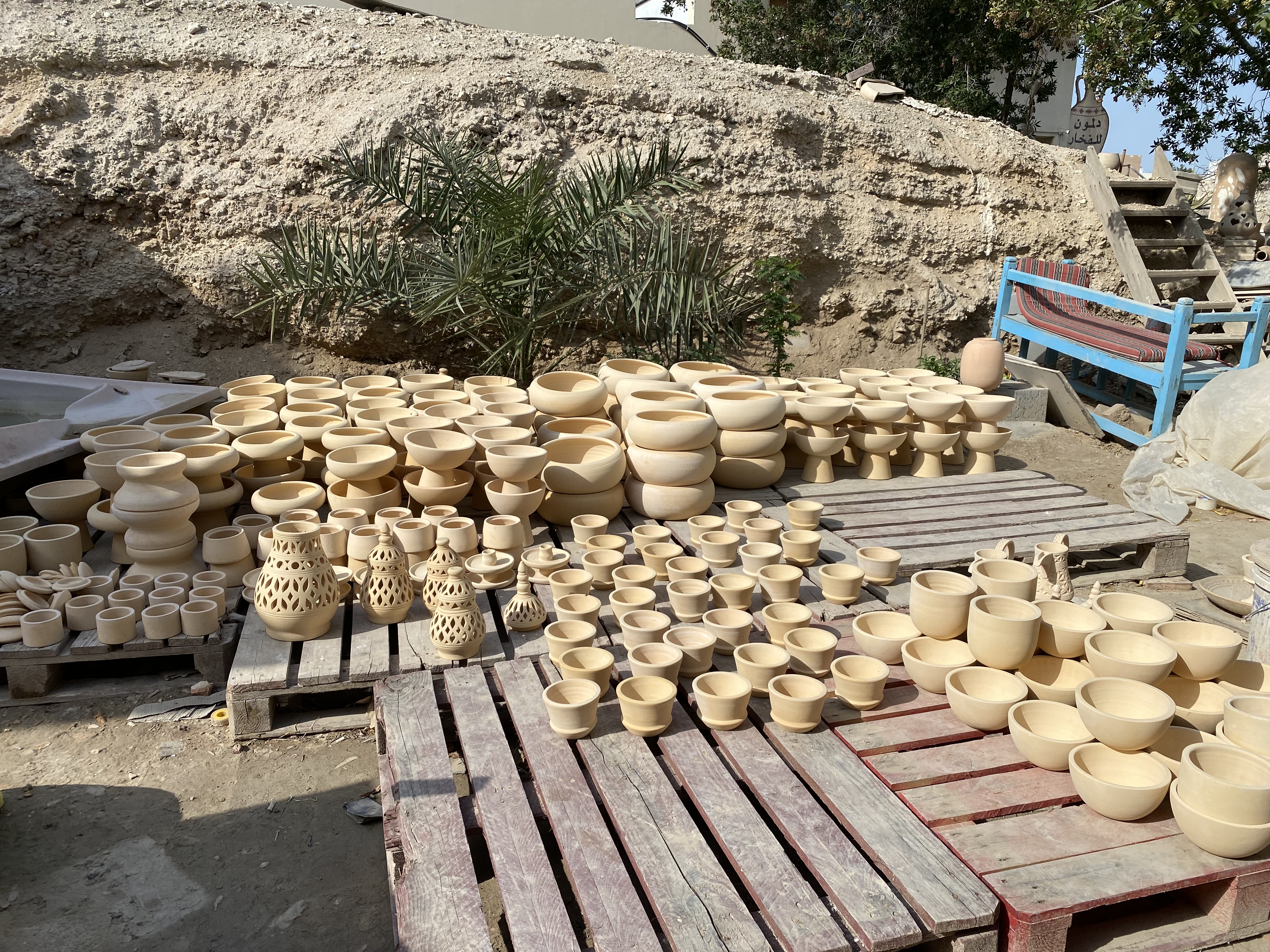
Delmon pottery factory:

Camel farm:

Dilmun-era burial mounds:

First oil well in Bahrain:

Tree of life:


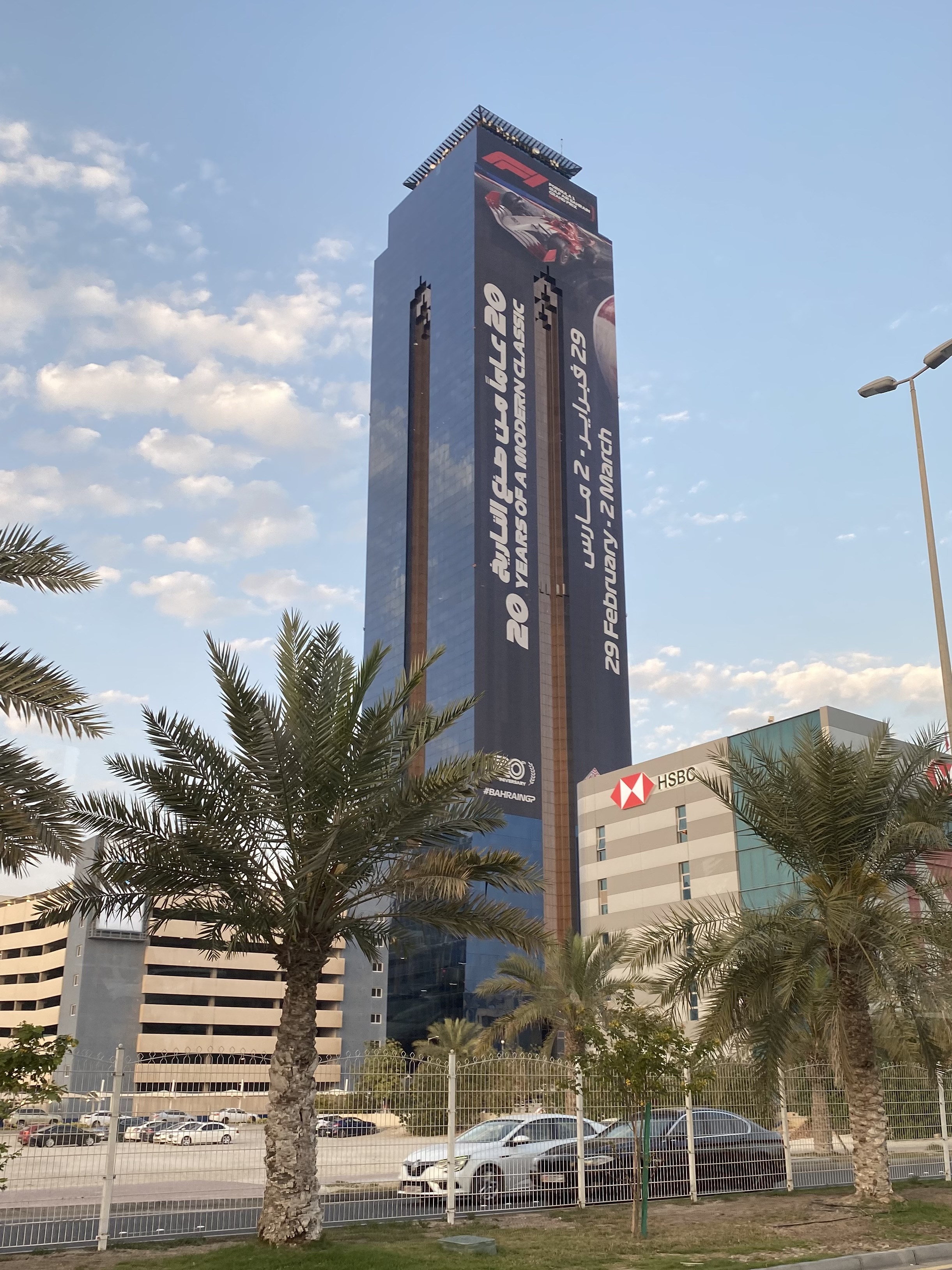
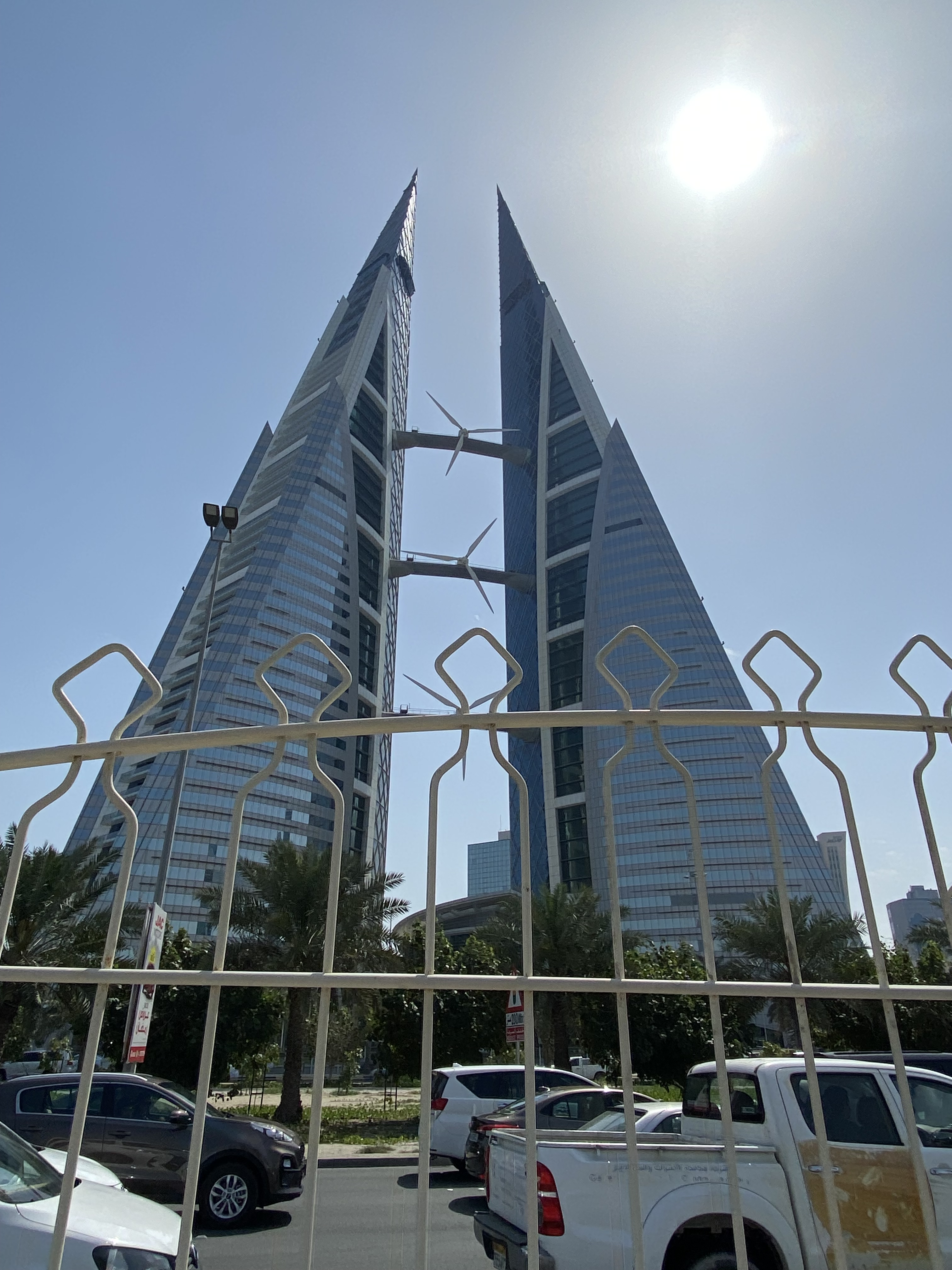
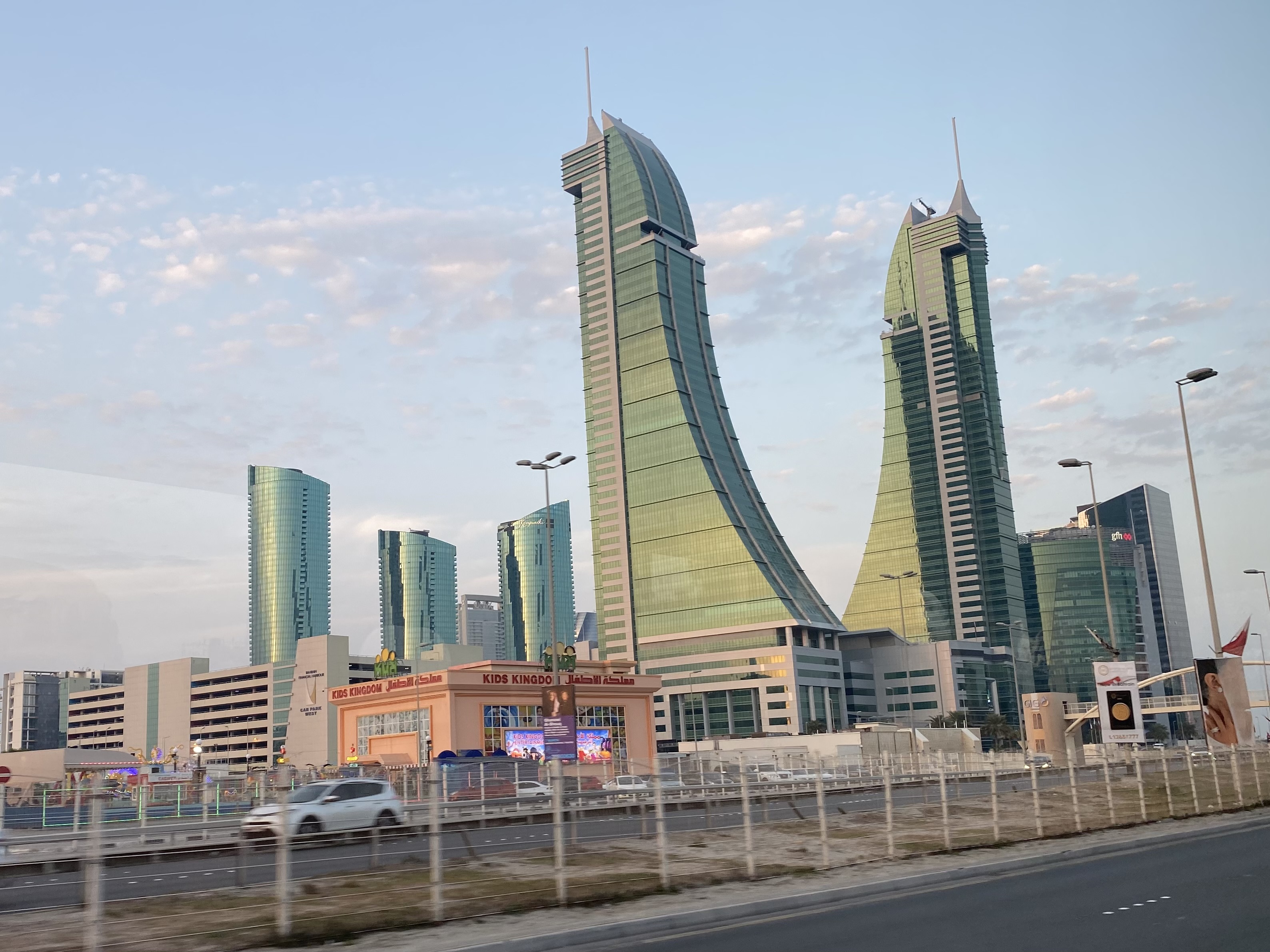
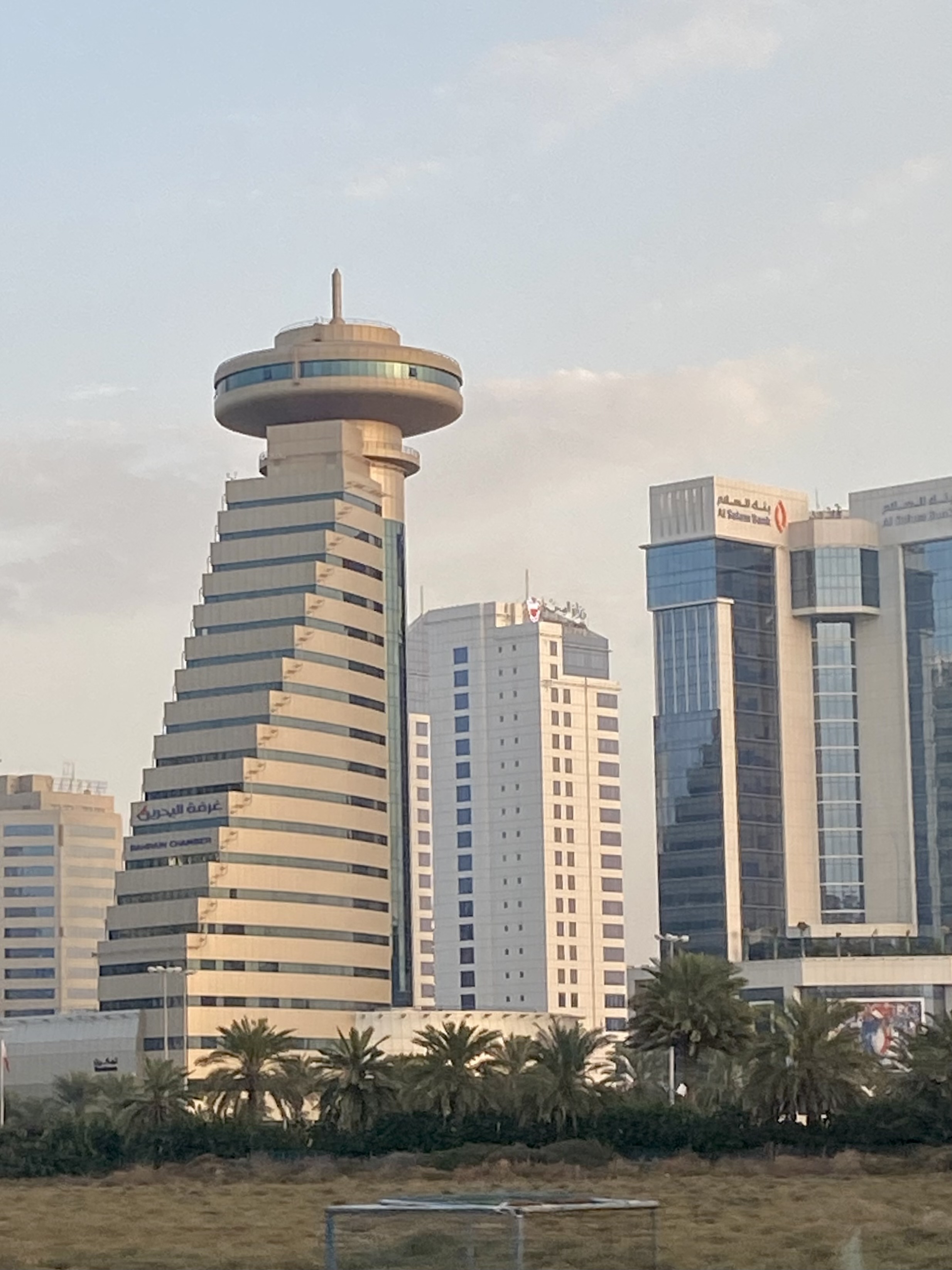
Out and about around Manama and Bahrain:


Home, Kuwait airport, decked out with the Kuwait flag:

Thanks for scrolling all the way to the end!
 susan dalzell
Gre
LikeLike