One night in Romania, as we were walking to dinner after a visit to the Communist Consumers Museum, my friend and I fell behind momentarily. Our husbands and sons forged ahead but we were stopped in our tracks by the view of the illuminated Three Holy Hierarchs Cathedral peeking through the trees above us.
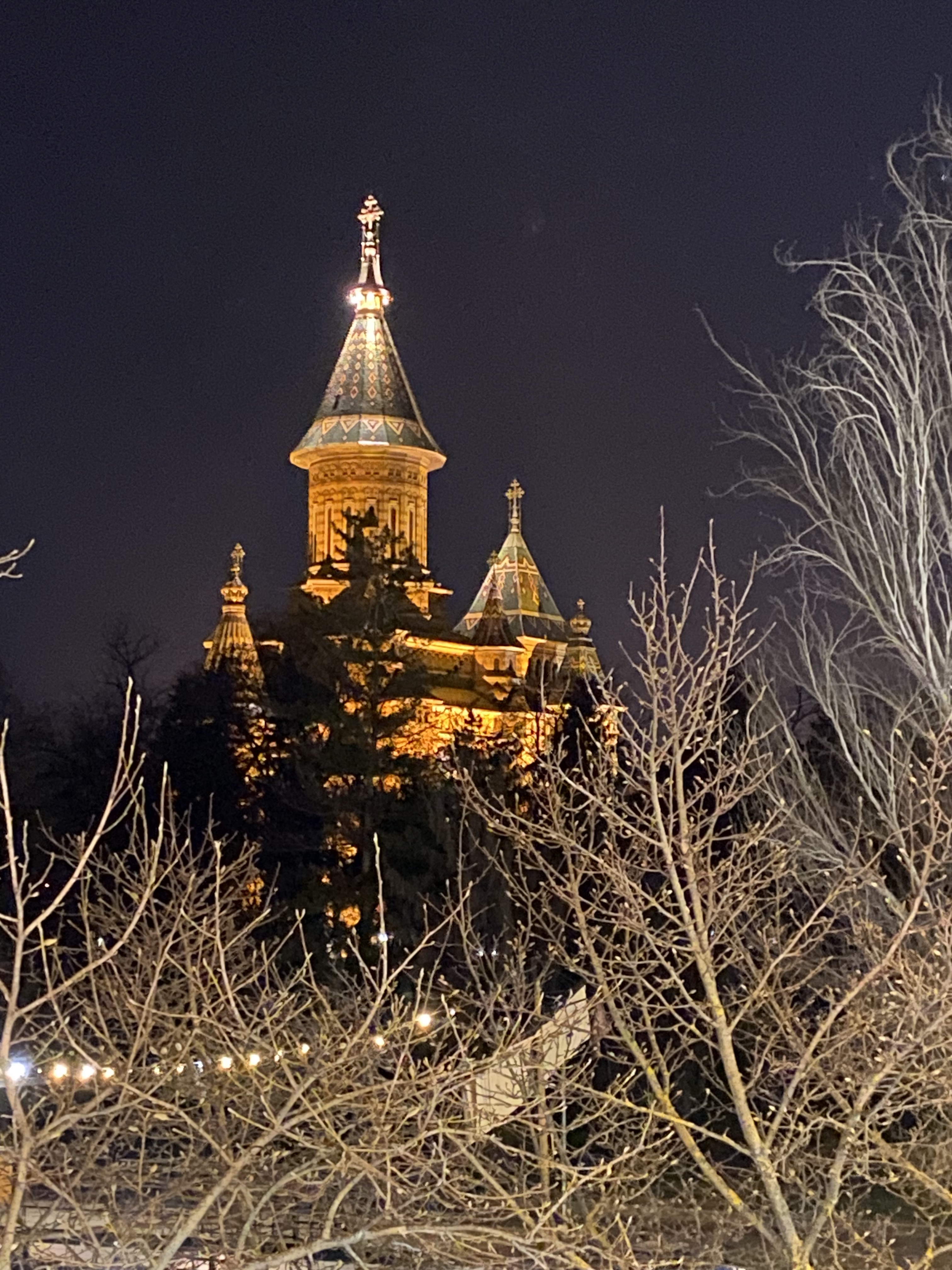
The cathedral’s steeples and tiled spires were bathed in a golden light against the black sky. An unexpected moment of pure beauty and bliss, exactly the kind I hope to have every time I take a trip.
This one lasted as long as it took for my annoyed husband to realize I’d stopped, yet again, to take a few photos. His shouted “Hey! Susie!” carried through the air, slicing through the moment but not the memory. Giggling, my friend and I ran to catch up.
Big reveal: Since last I posted on this site, we’ve moved back to Ohio, the state where I was born and raised.
You can put the girl back in Ohio, but you can’t keep her there. Wanderlust is strong. I can’t help but want to keep exploring new parts of this beautiful world and trying to make sense of what I see. In the words of my fellow Ohioan, the late poet Mary Oliver: “Instructions for living a life. Pay attention. Be astonished. Tell about it.”
While in Kuwait, we made dear friends with a family who have since moved to Belgrade. As it happens, their sons’ February school break aligned with Liam’s February school break. We took it as a sign that our plans for a trip to visit this family in Serbia at some hypothetical point should become plans to visit this family on specific dates, this year.
We arrived on a gray Saturday morning, after three flights and nearly 24 hours, to Belgrade’s small-ish international airport. (Funny enough – It’s not that easy to get from Ohio to Serbia.)
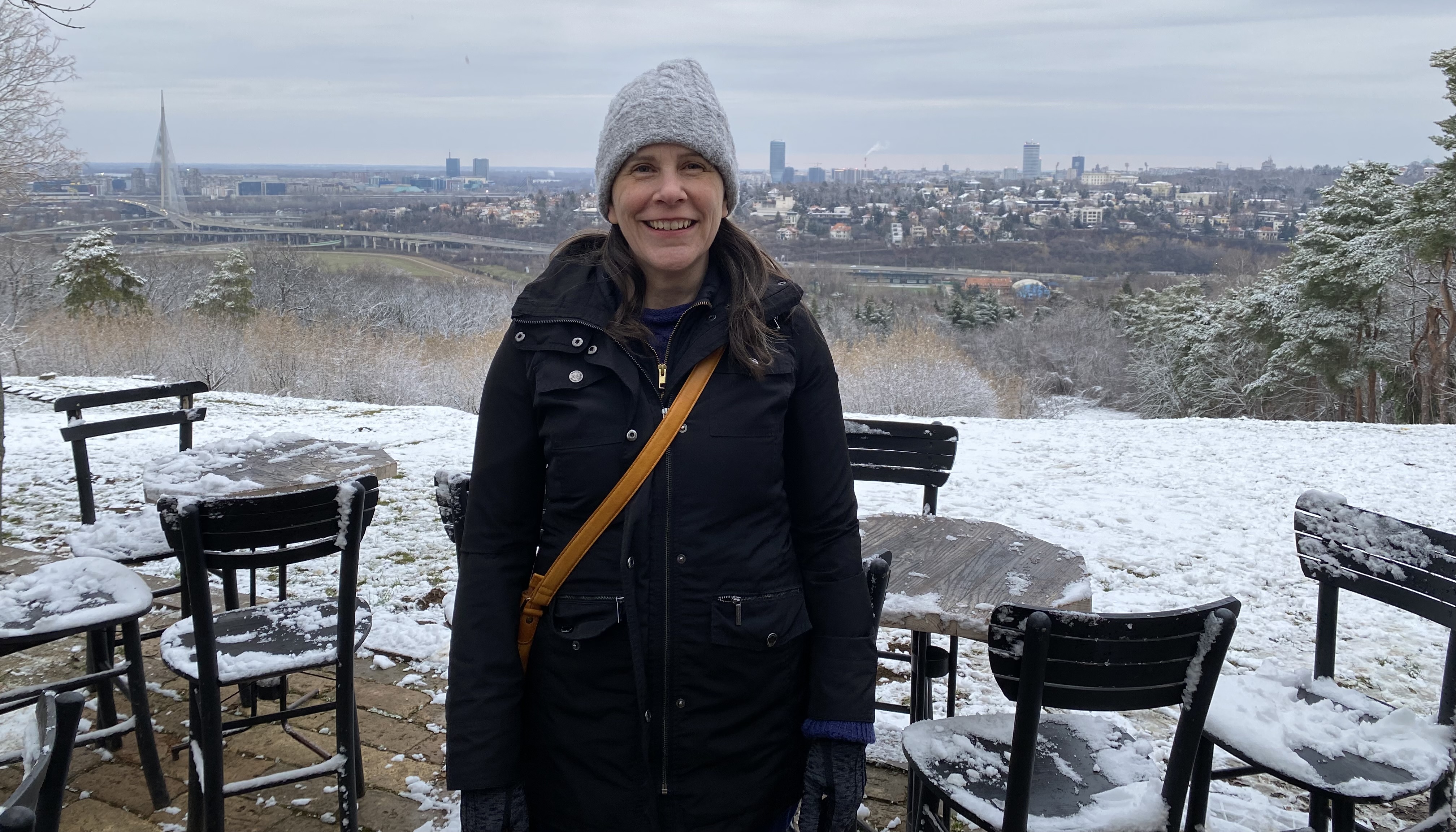
All good. We were tired but eager to see our friends and explore an entirely new country, in a region of Europe – the Balkans – which was also new to us. As part of our planning, we also plotted a road trip to nearby Romania, for an overnight stay in Timișoara.
This was a walking holiday, which suits our style just fine. I don’t mean much actual hiking – just a lot of exploring cities on foot. How much walking, you ask? My friend let her phone calculate: 56 miles. In one week.
What is Belgrade like? My best handle on it is calling it the Pittsburgh of Serbia. The capital city is built on hills, leading down to two rivers, the Danube and the Sava. It’s a gritty but attractive city, with cars tightly packing its neighborhoods’ narrow, hilly streets, and grim-looking communist-era apartment buildings mingling with grand late 19th century structures. Candy apple-red trams glide along the boulevards. There is a generous sprinkling of graffiti on walls and along highways. It’s not all old-world, though. An urban development on the waterfront features sleek new apartment buildings and trendy restaurants.
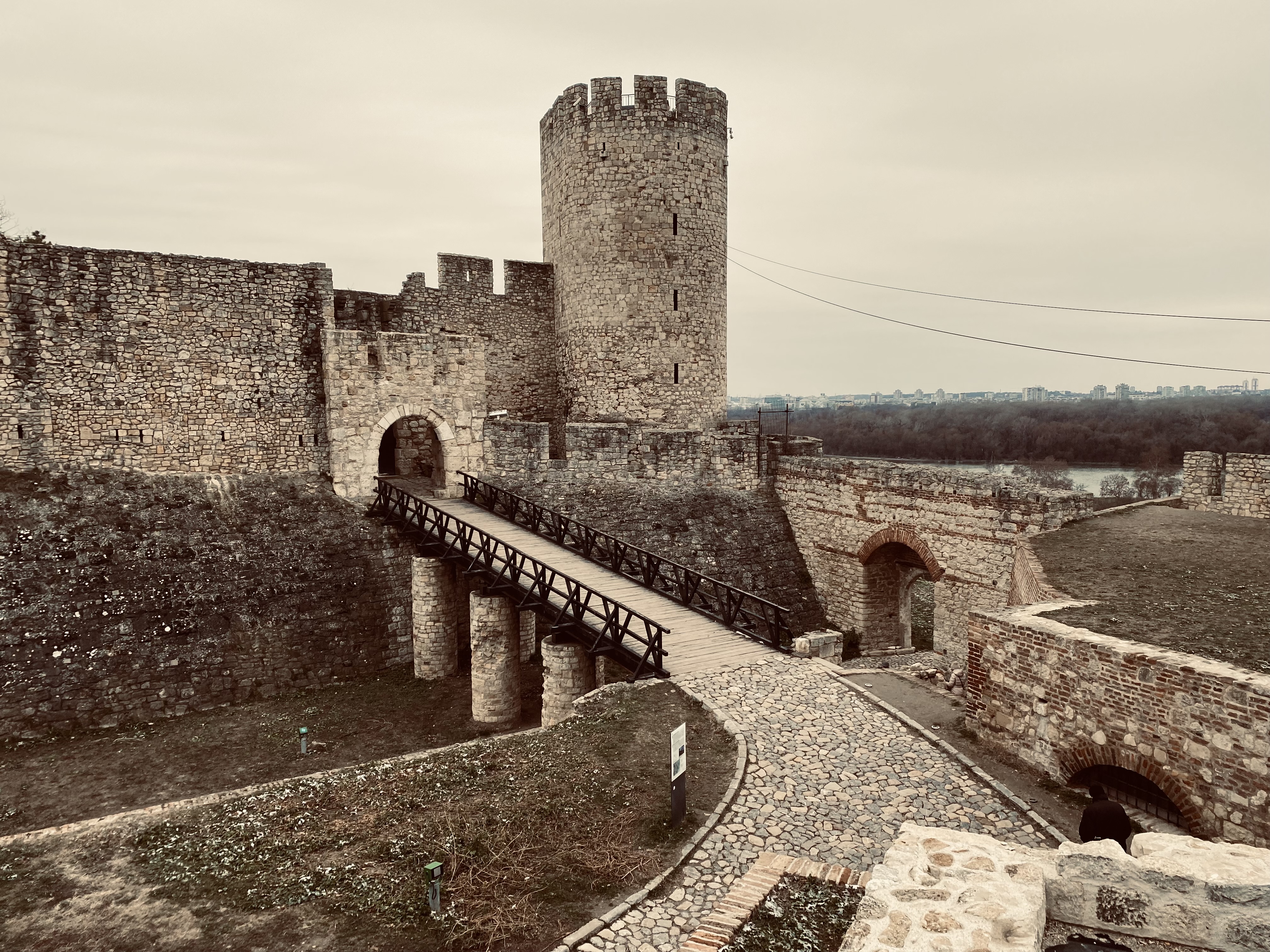
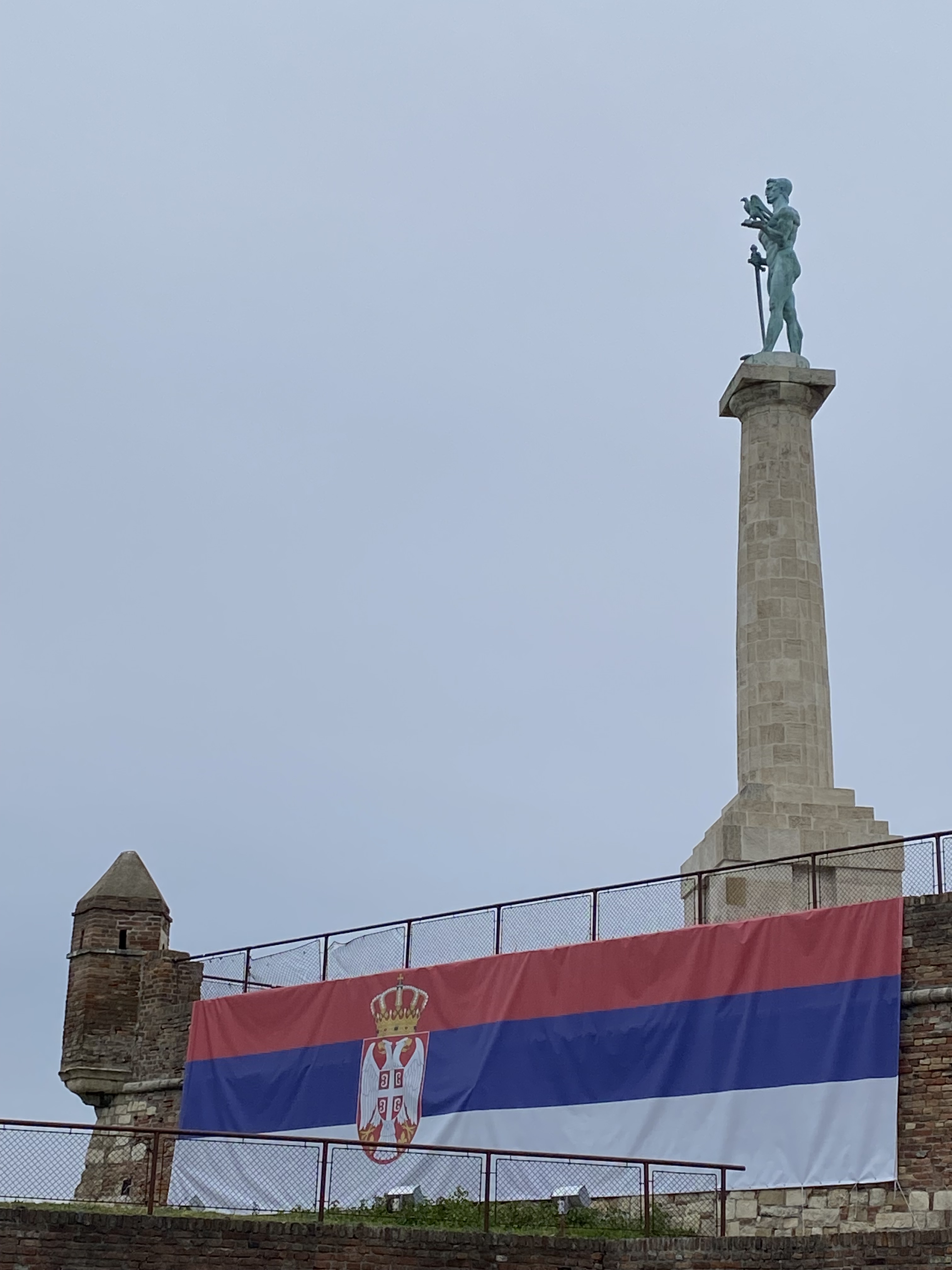
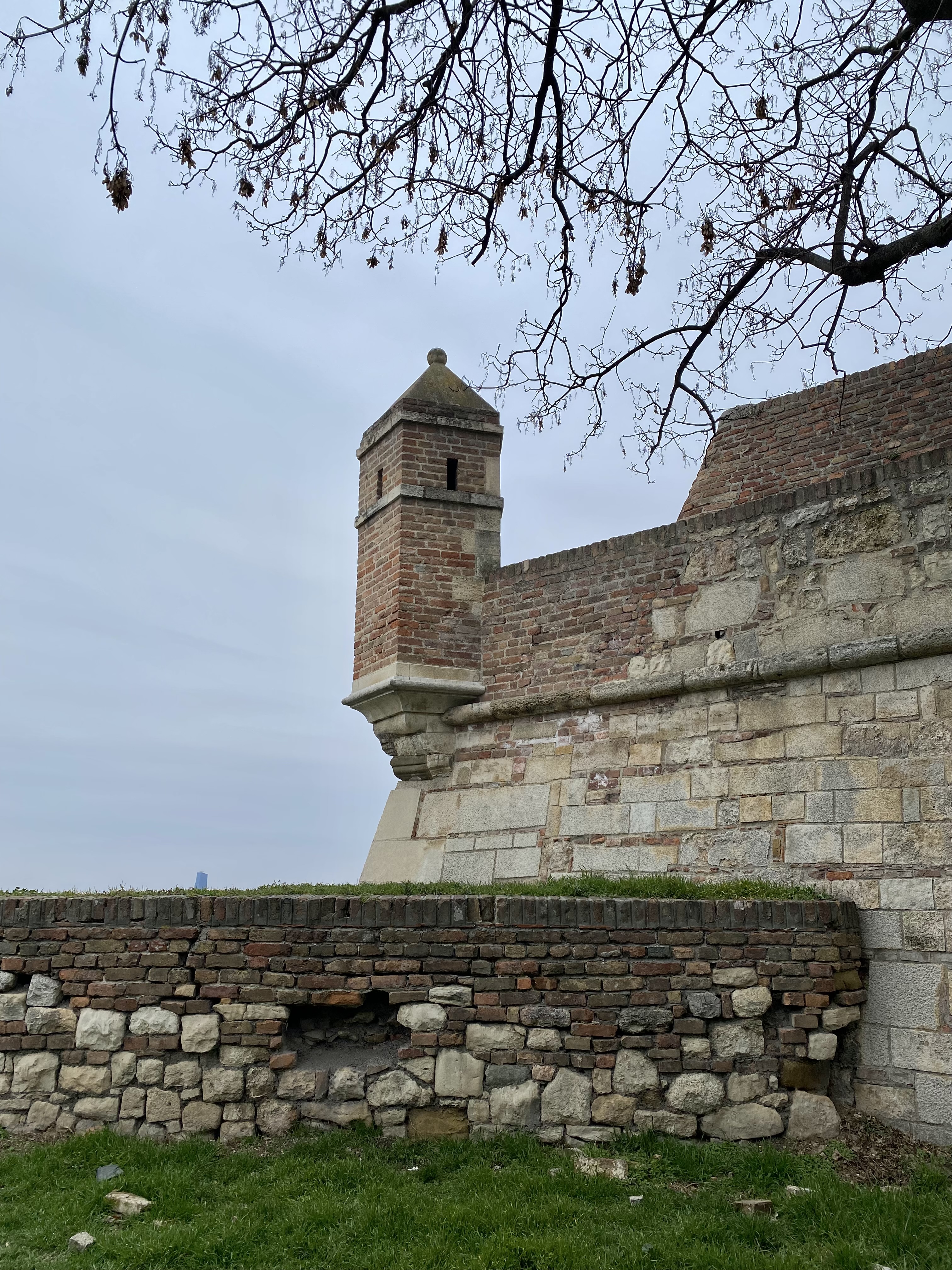
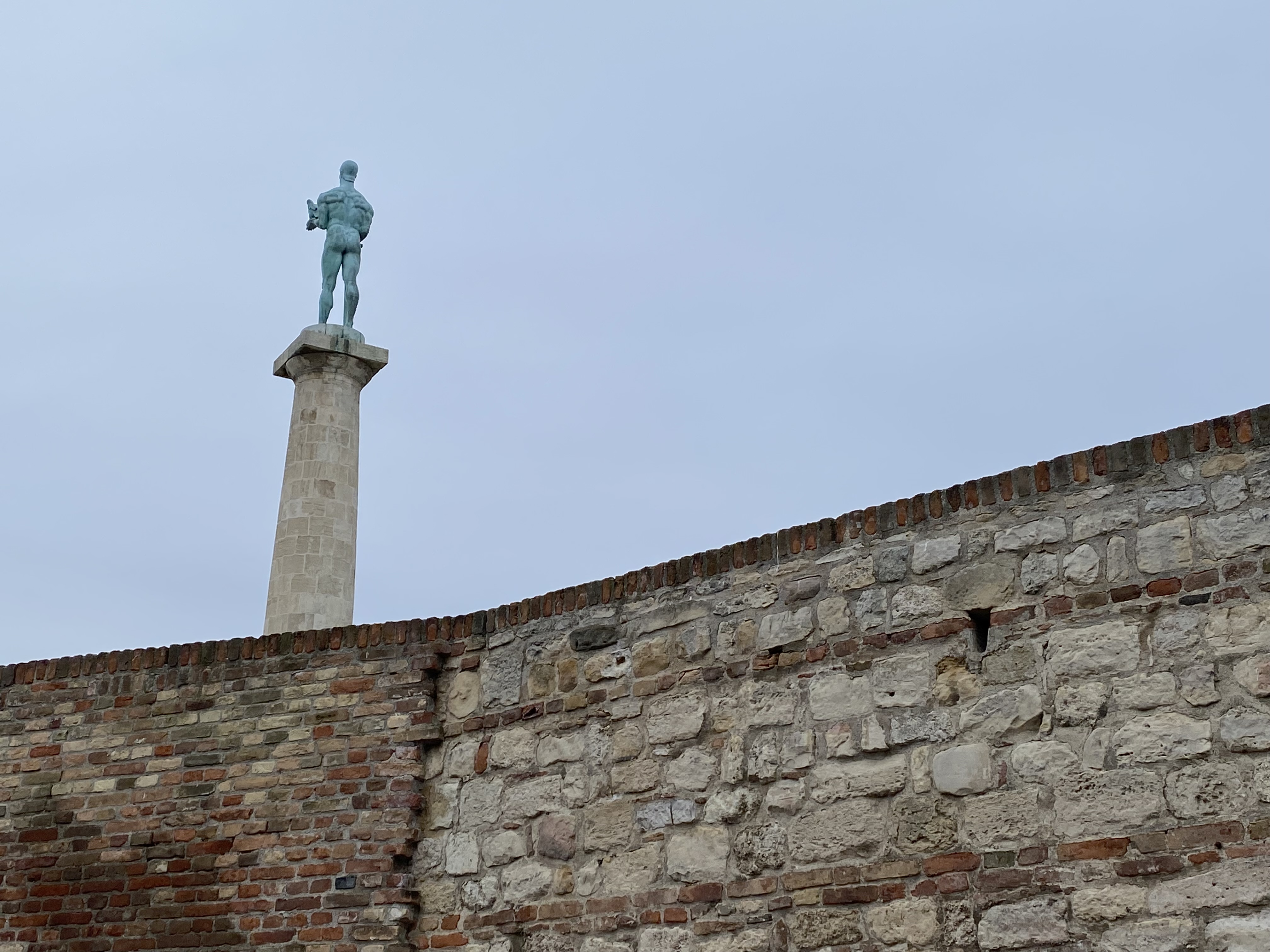
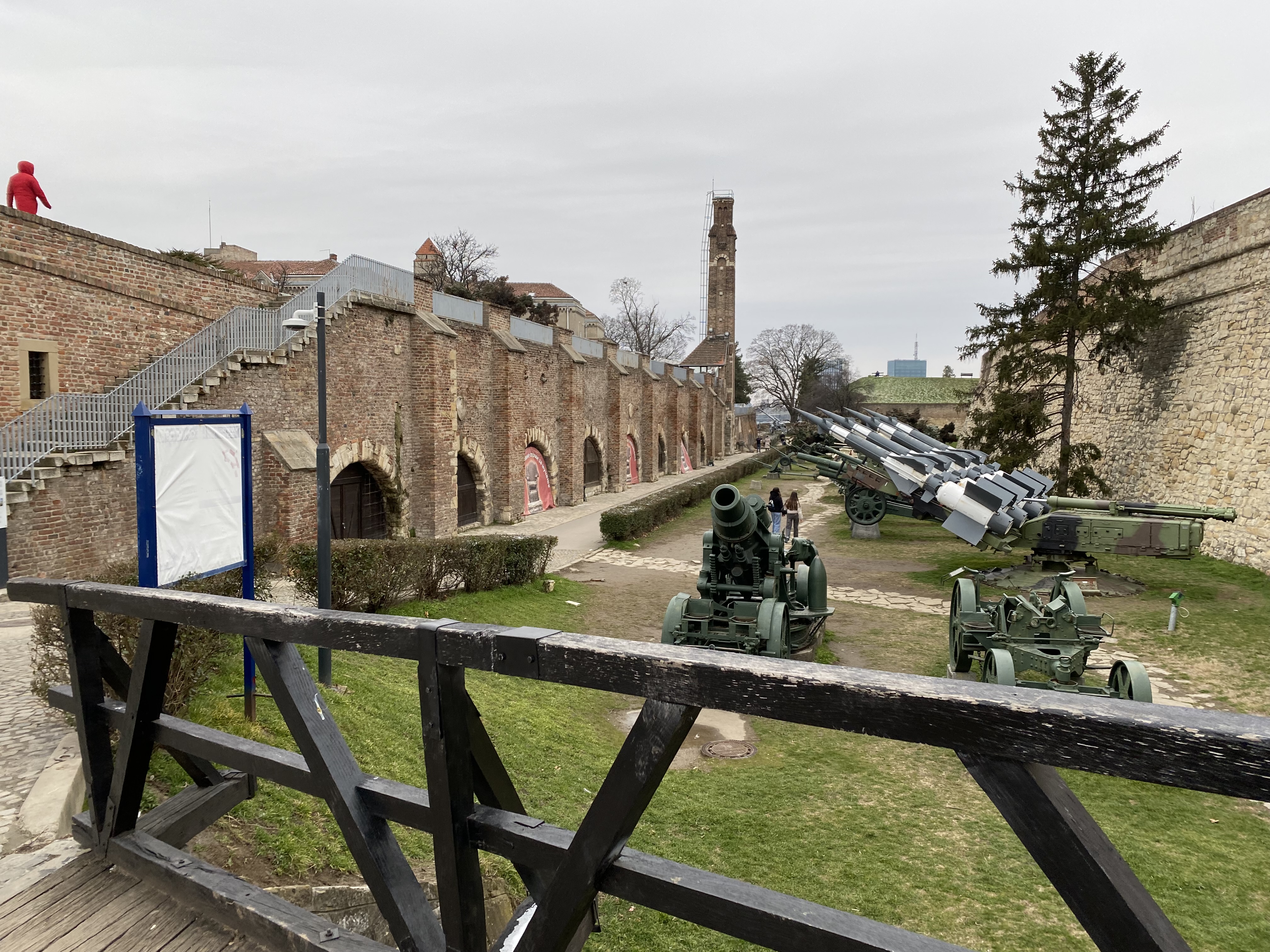
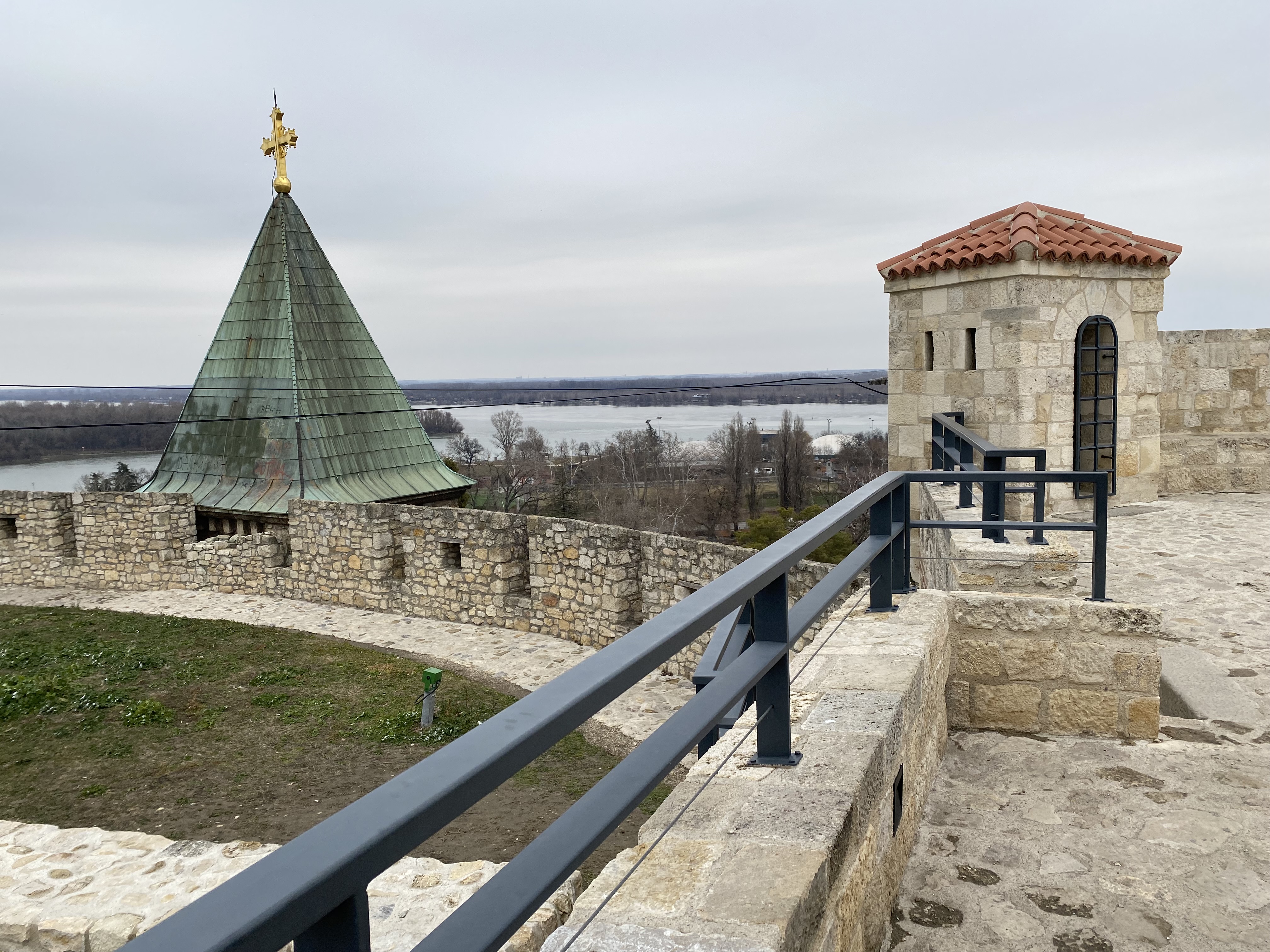
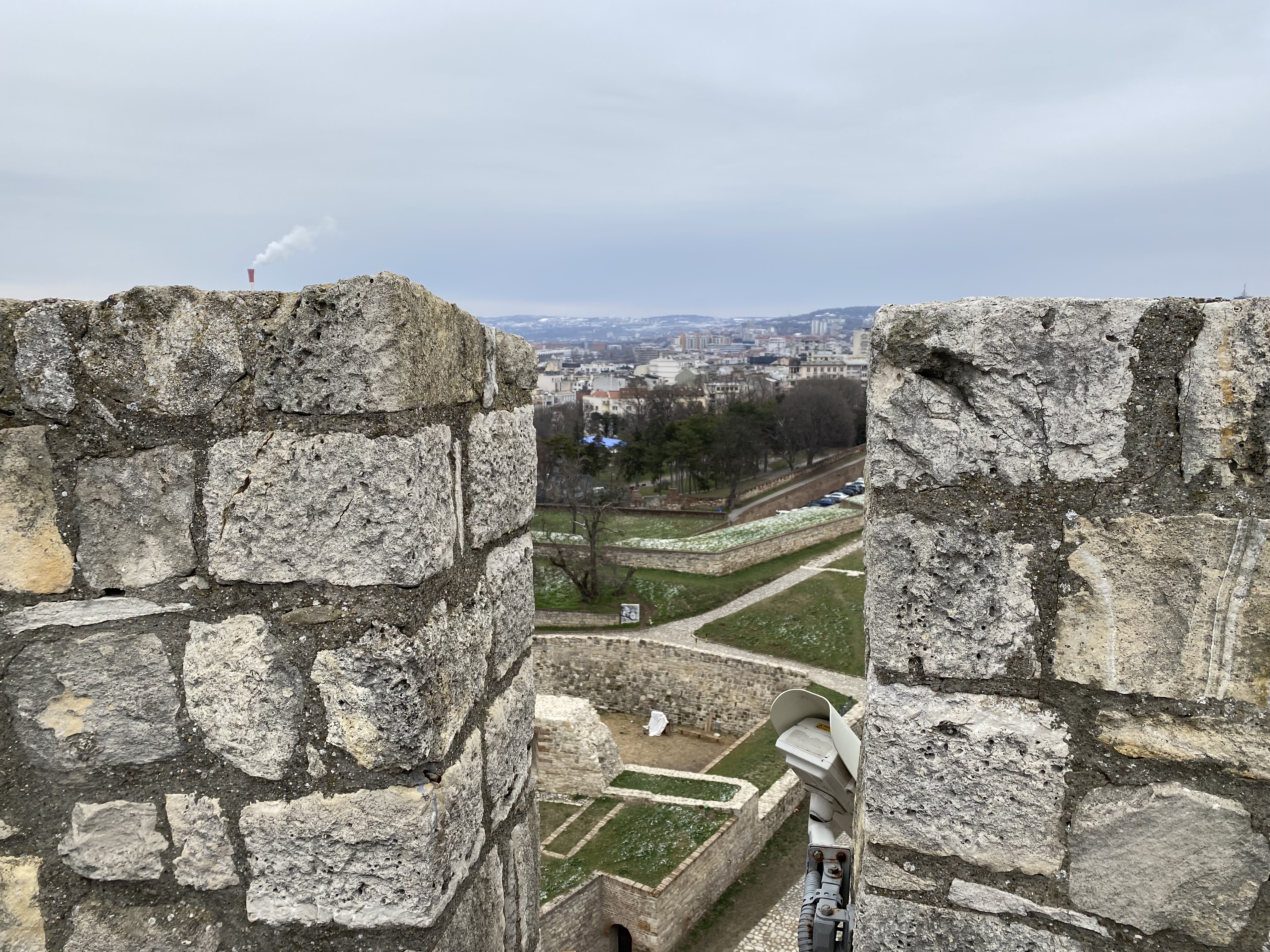
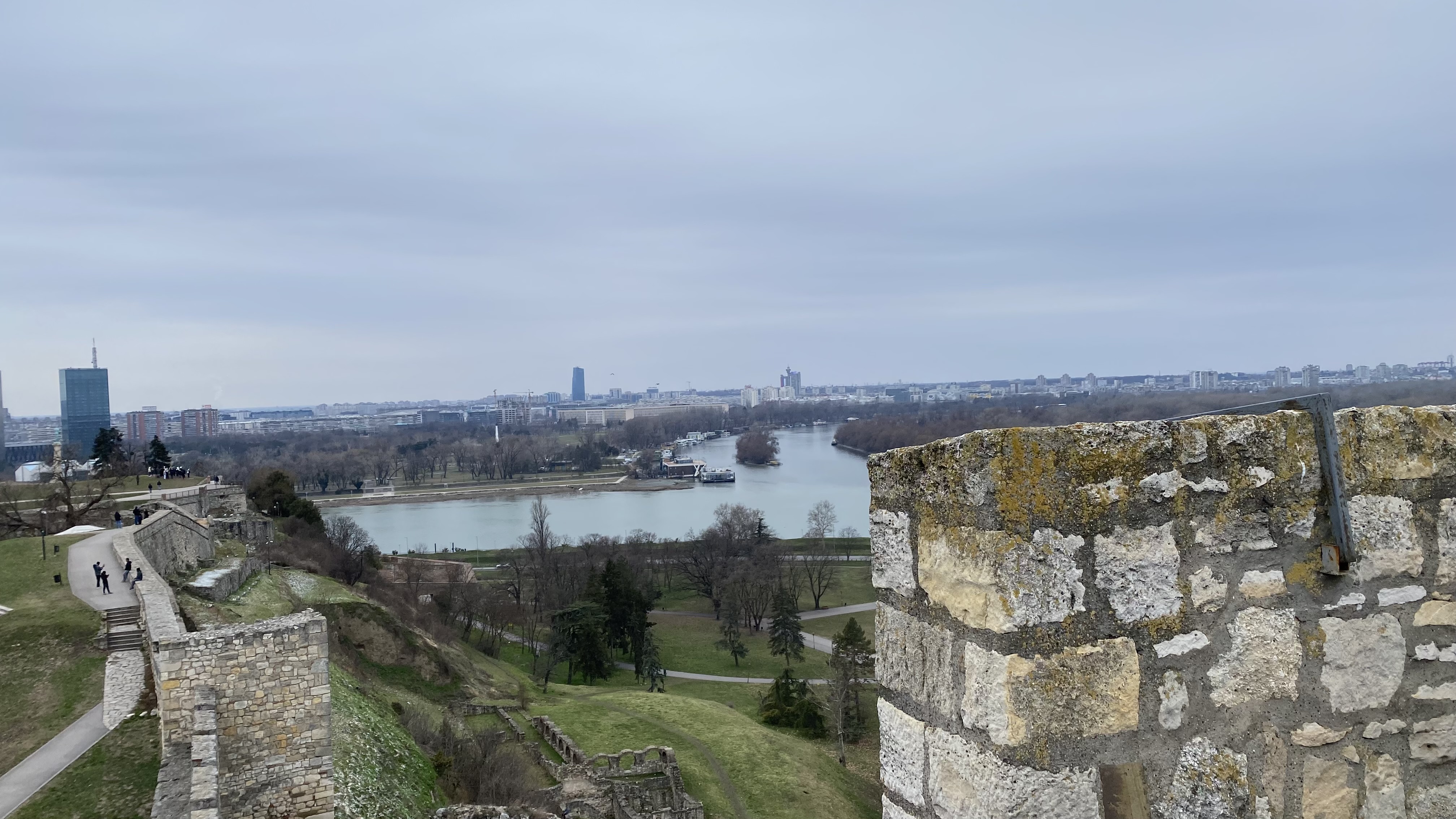
A large ancient fortress holds court just above where the two rivers meet, anchoring the city to a long and storied history of occupiers and residents including Celts, Romans, Byzantines, Serbs, Bulgarians, Hungarians, Turks, Austrians, and Nazis. We spent the better part of an afternoon there. Kalmegdan Fortress is free to visitors and functions as a large, green city park, albeit a park with a rather bloody past.
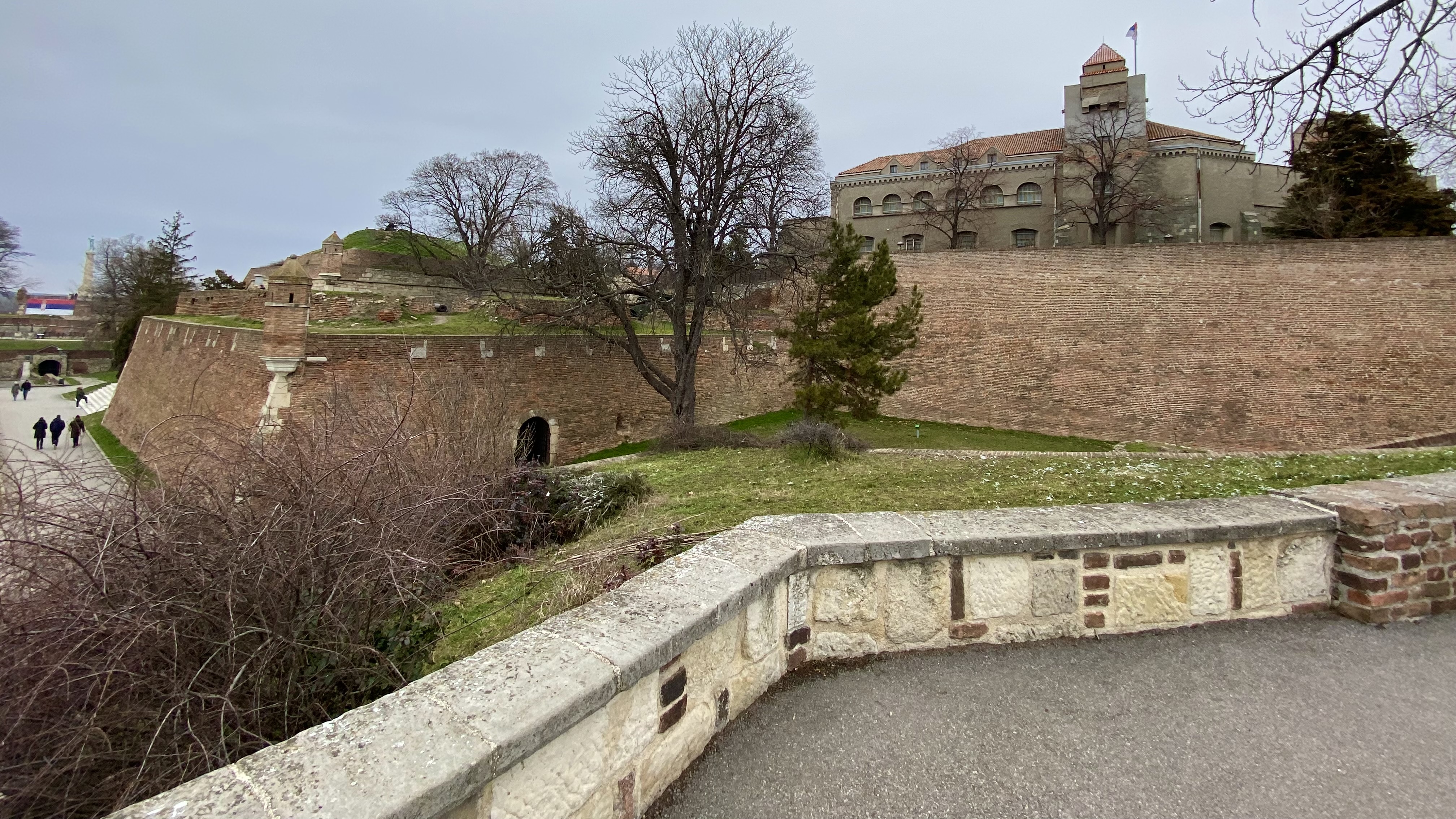
Visitors are free to scramble along the medieval ramparts, taking in a panoramic view of the valley below. It’s an expansive outdoor museum, essentially, with plaques in English and Serbian scattered throughout to provide context to the structures and ruins. Since 1928, a naked man on a 46-feed high plinth has overlooked the premises, erected to celebrate a decisive victory in World War I. (Reader: There is no loin cloth.)
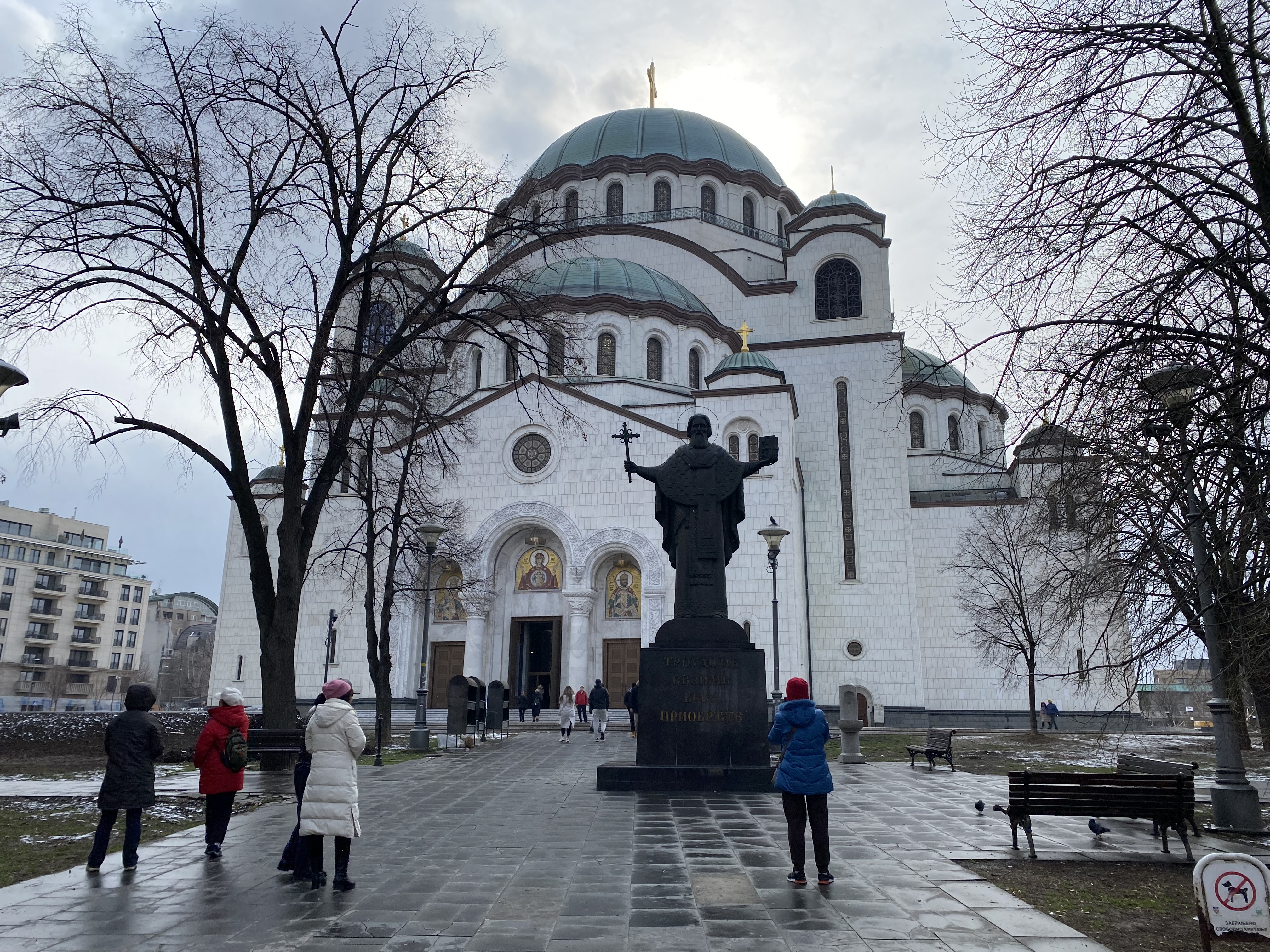
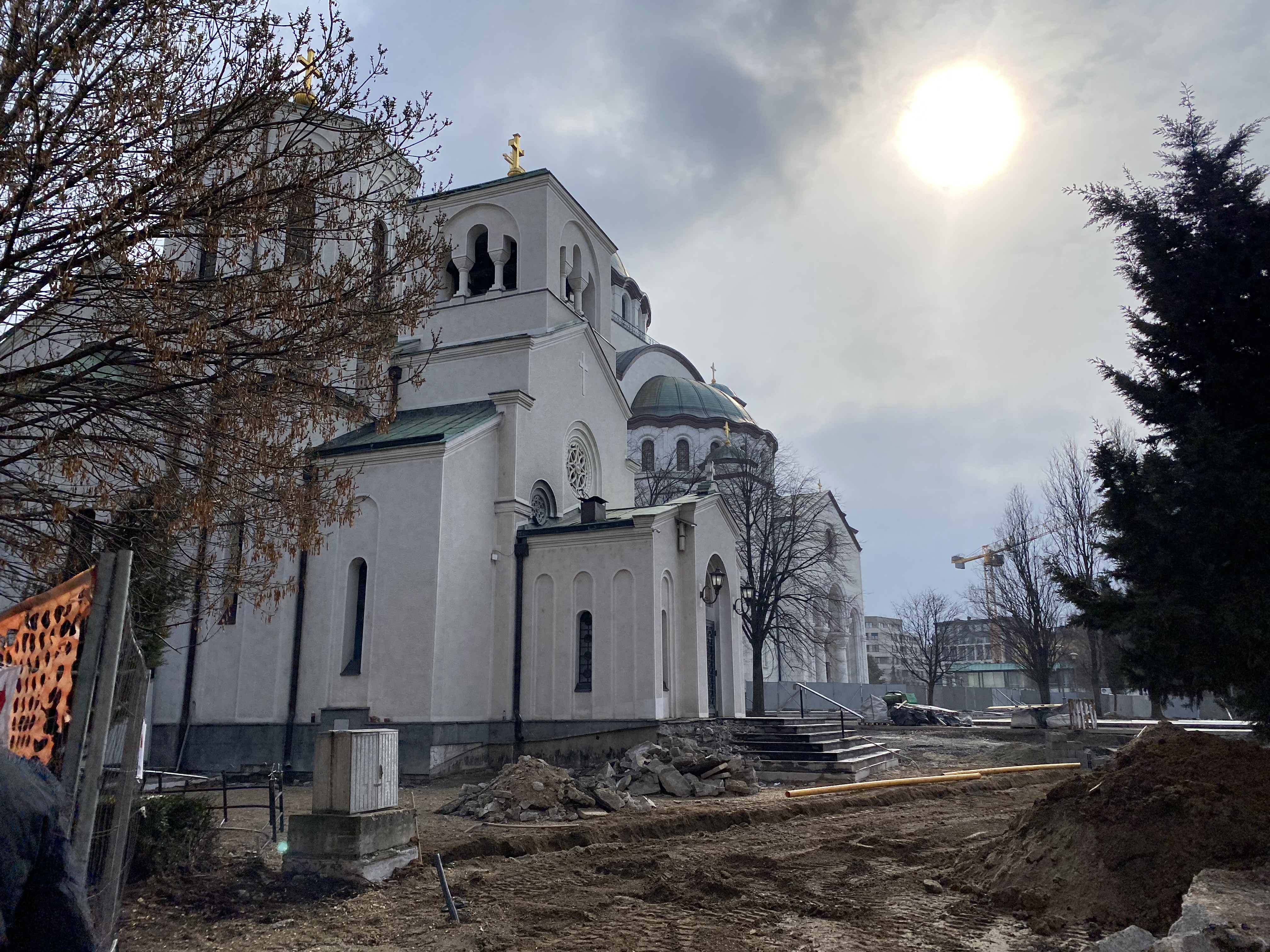
The fortress is one iconic symbol of Belgrade. Another is the stunning white edifice of St. Sava Temple. In Serbia, 84% of the population is Orthodox Christian, despite the area having been under Islamic Ottoman rule from the 14th to 19th centuries. As I’ve previously shared on this blog, I love visiting churches, mosques and temples. It’s fascinating to see how much the culture and history of a country comes to life when visiting a house of worship.
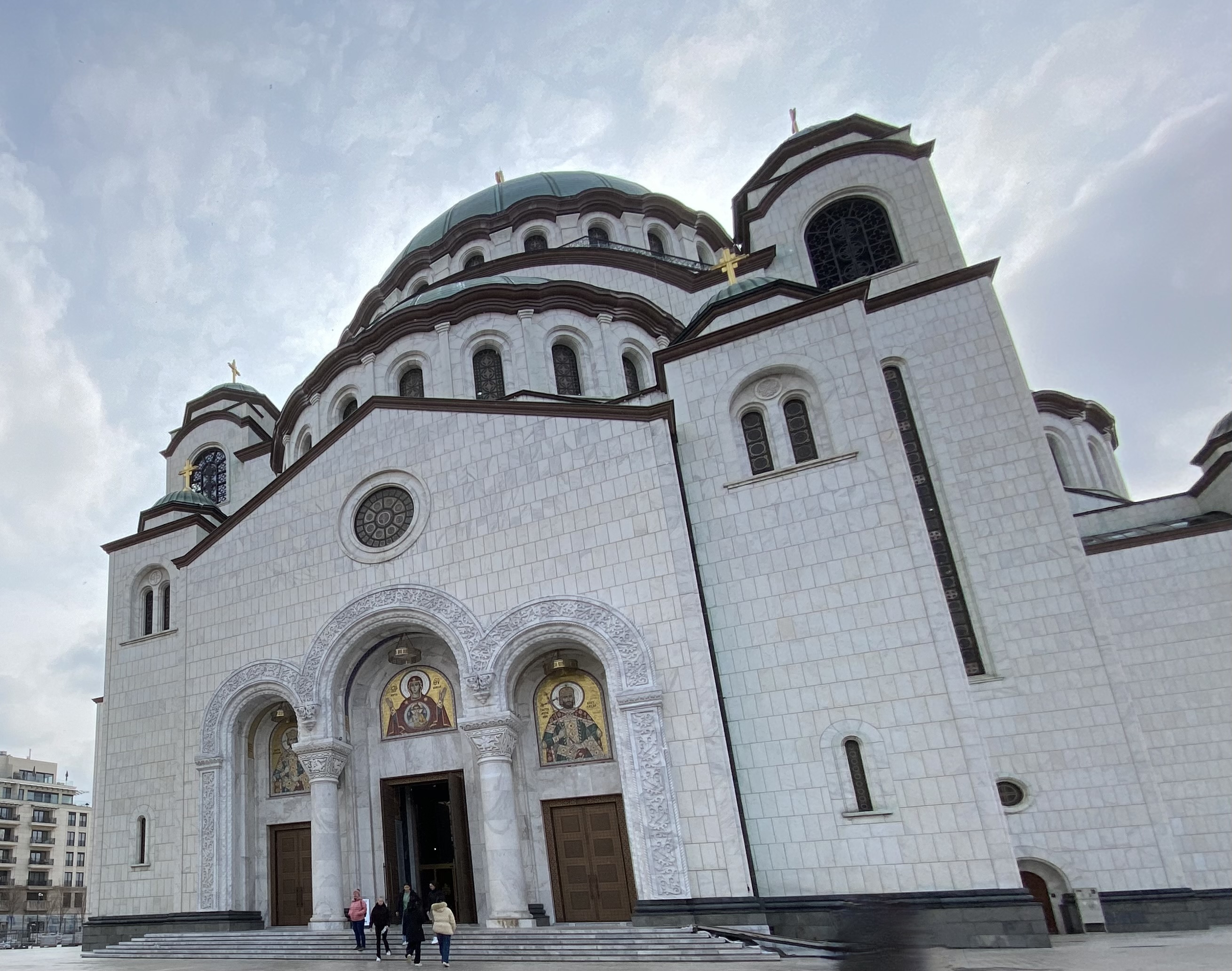
In this case, the history of the temple dates back to the Ottomans burning the remains of Saint Sava, the founder of the Serbian Orthodox Church, on the site in 1595. The current temple had a foundation stone placed in 1935, but years of war and communist religious suppression in Yugoslavia meant proper construction didn’t begin again until 1985. It was officially finished in 2020 but we noted quite a bit of construction still visible on the grounds.
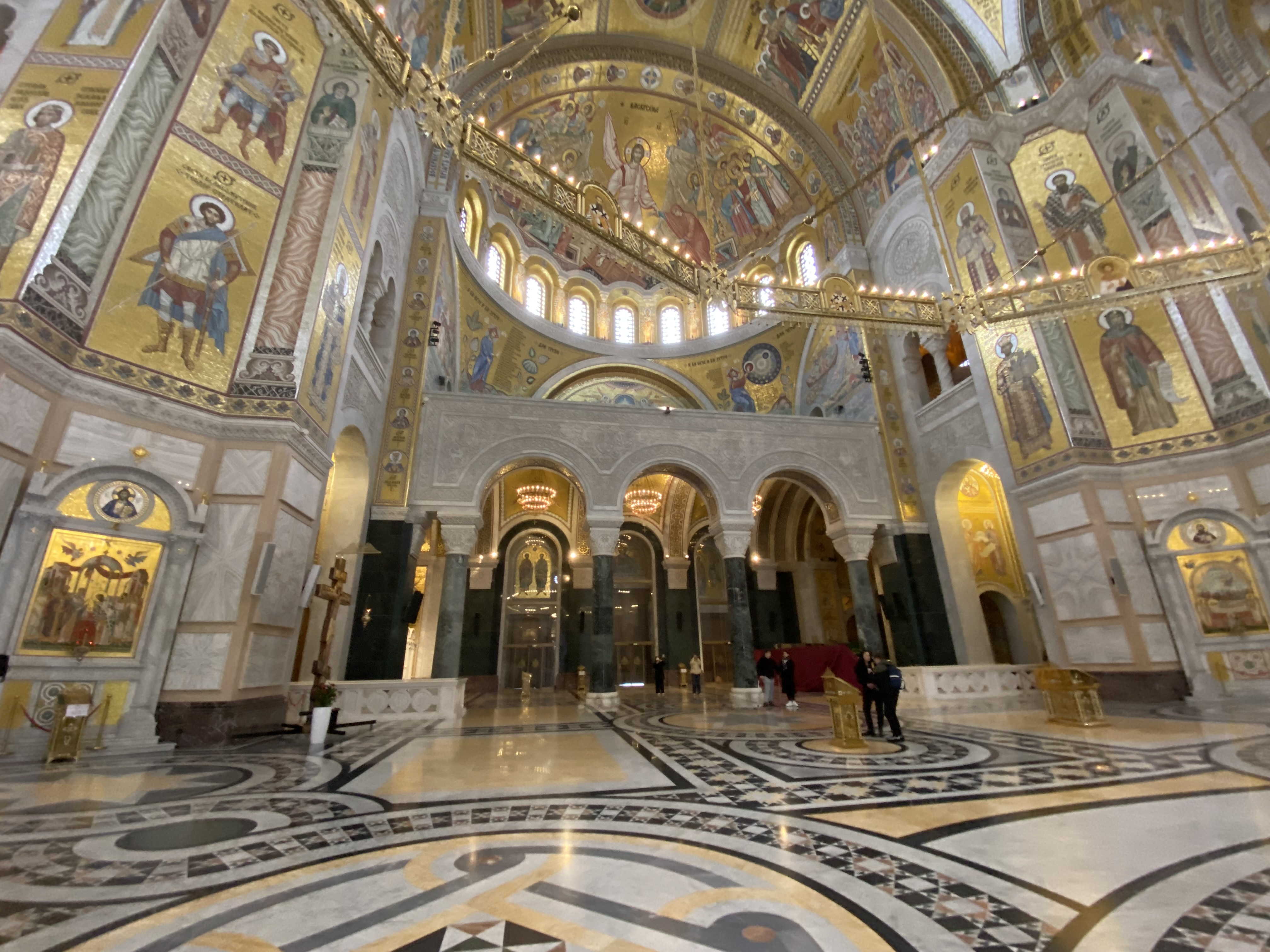
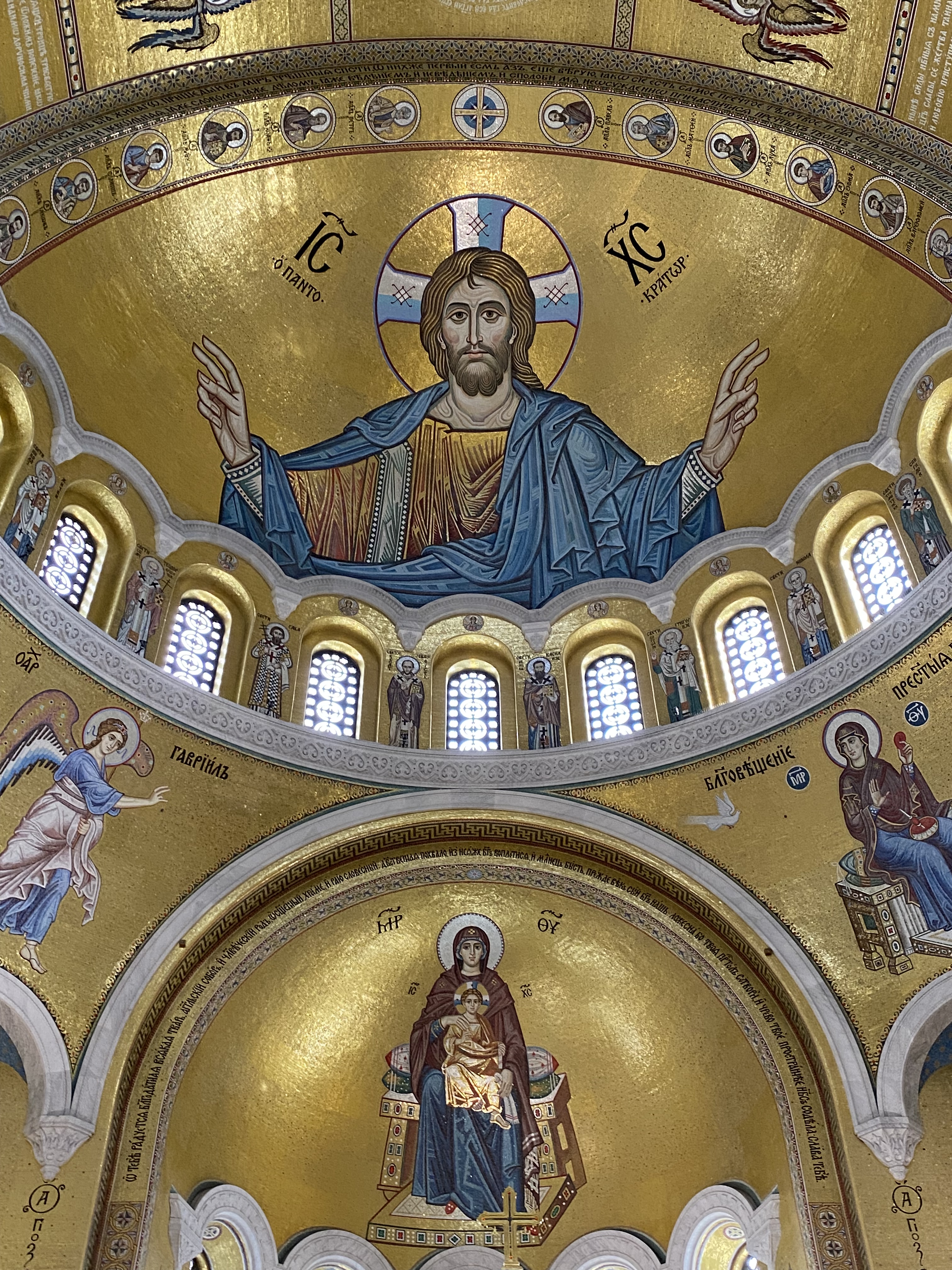
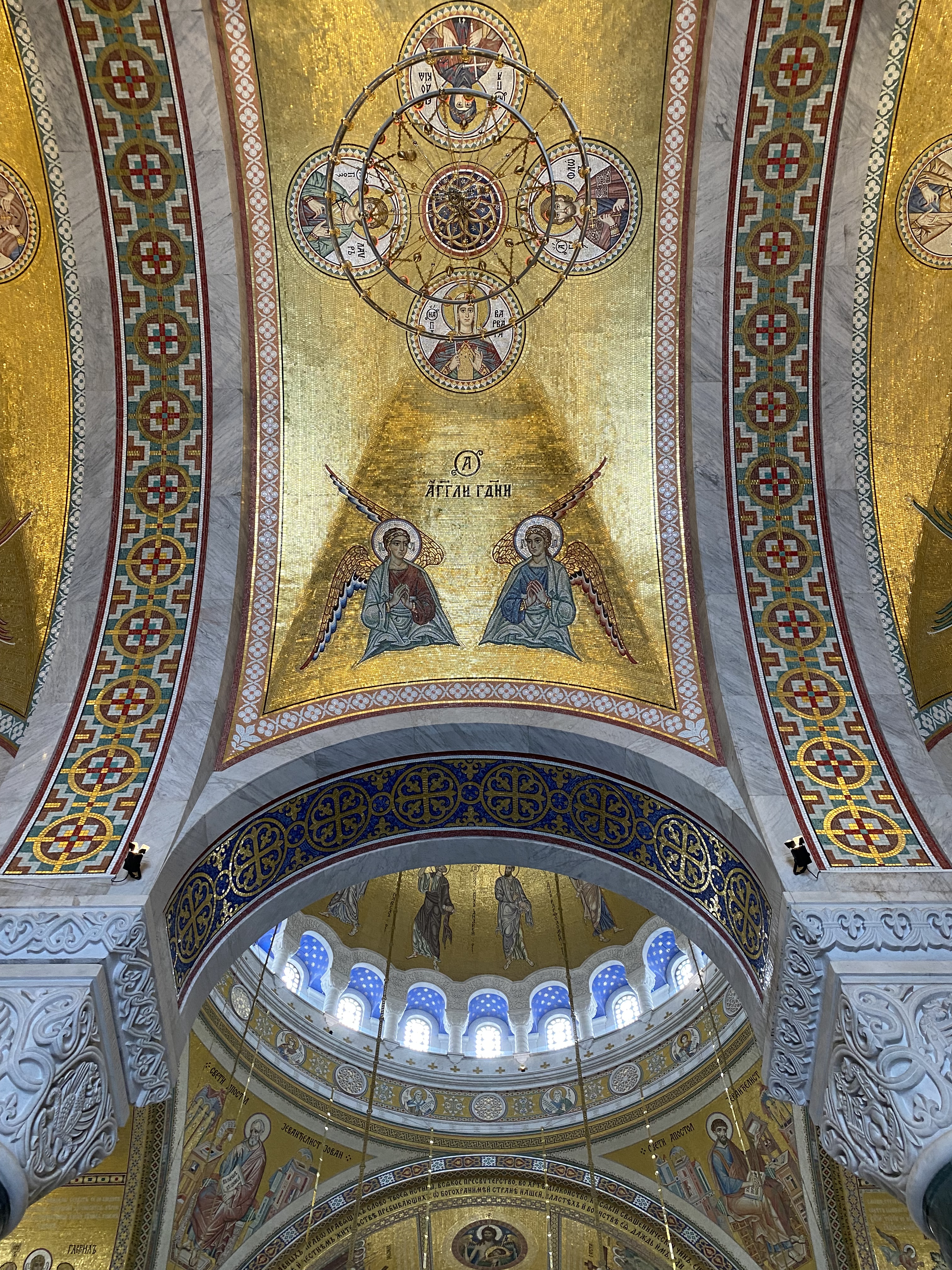
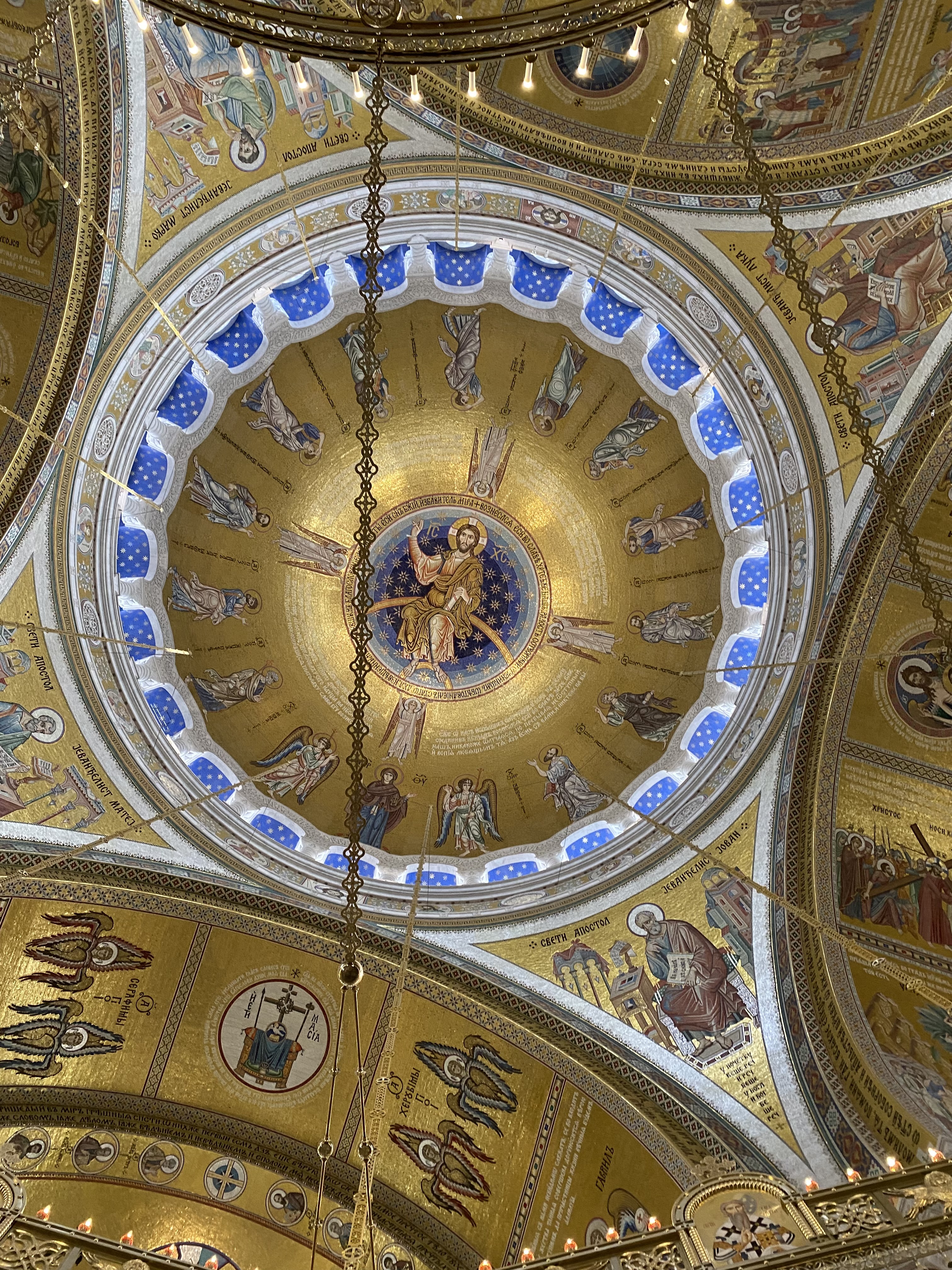
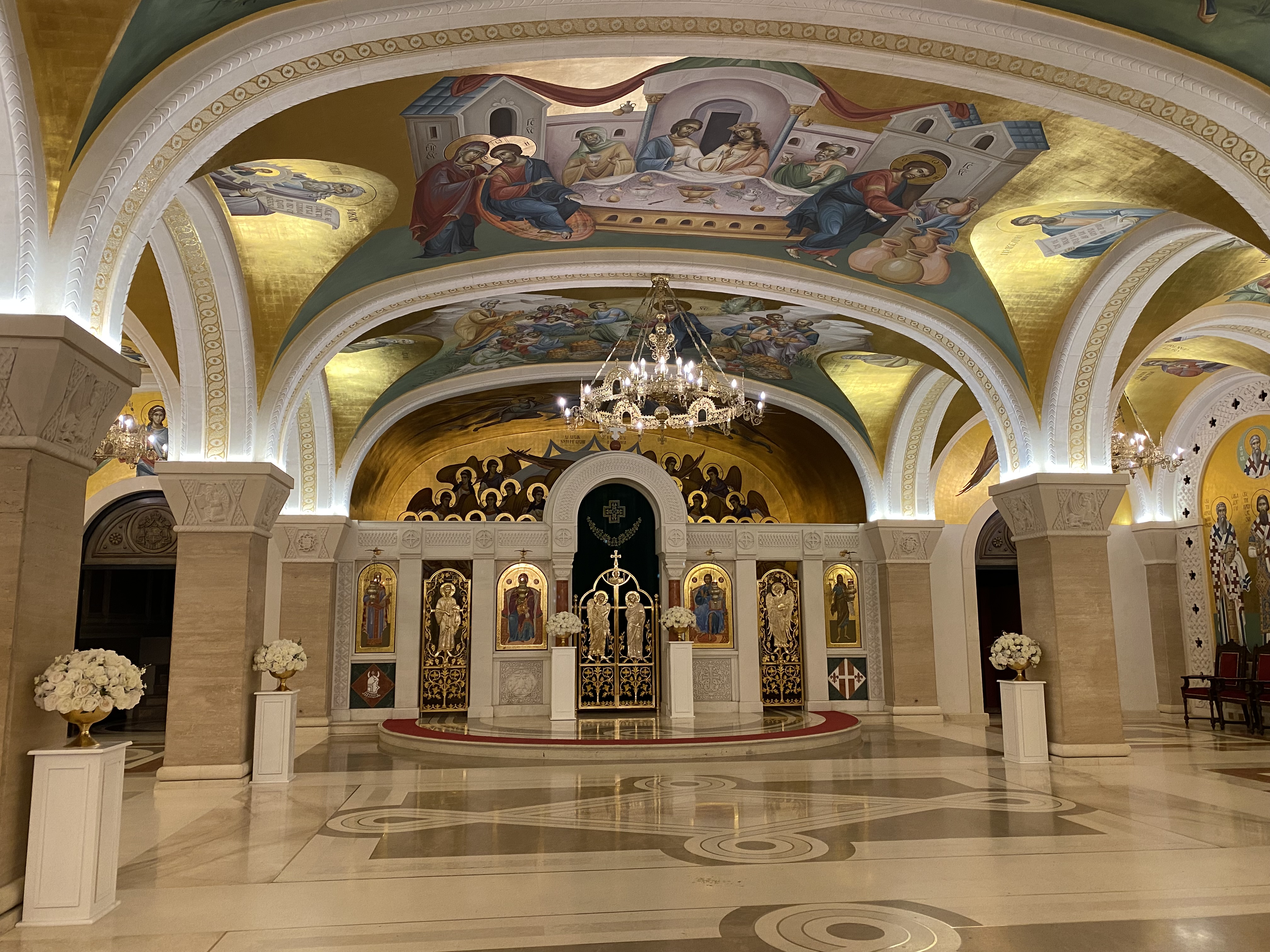
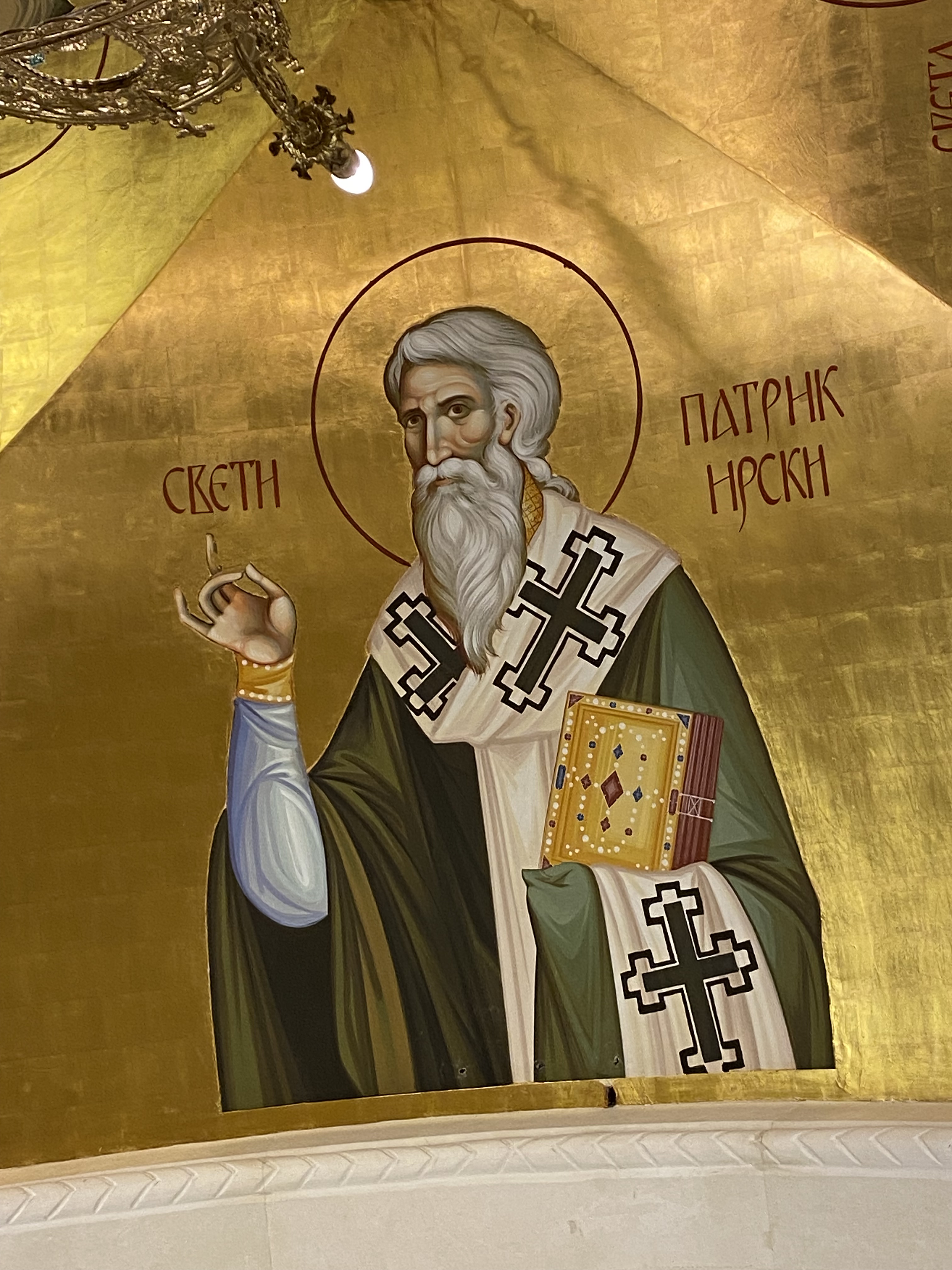
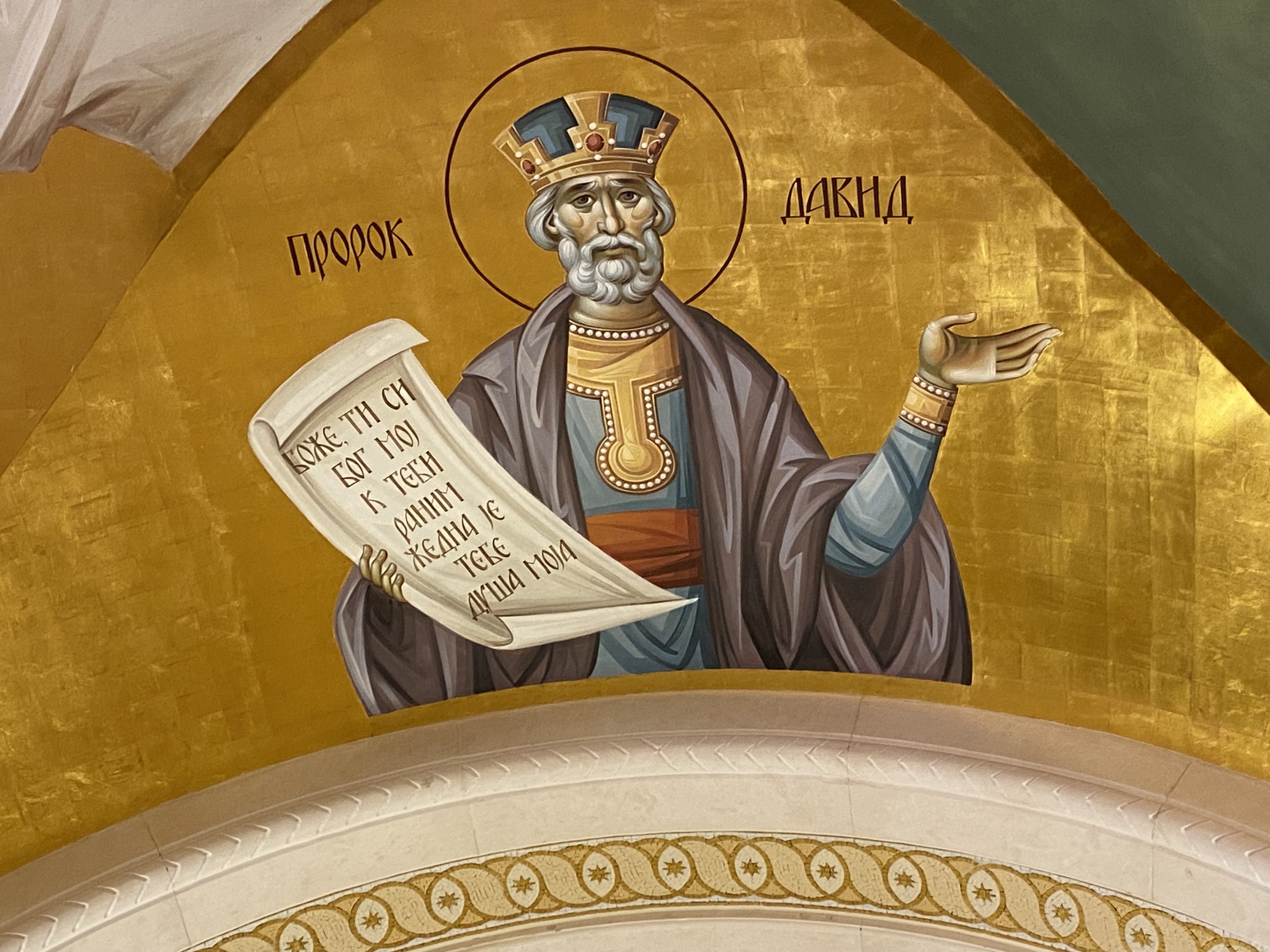
It’s a beautiful, awe-inspiring structure. The concrete dome alone weighs 4,000 tons. The exterior is white marble and granite, with a soaring interior of golden mosaics. This is a church which embraces visual storytelling. Everywhere you look, there are vivid depictions of saints and stories from the Bible. The crypt below, brighter than you might think, is similarly adorned. I was struck by the scale of the place – from the tiny tiles which combine to form the mosaics on up to the 14-ton chandelier, which some sources site as the largest in the world.
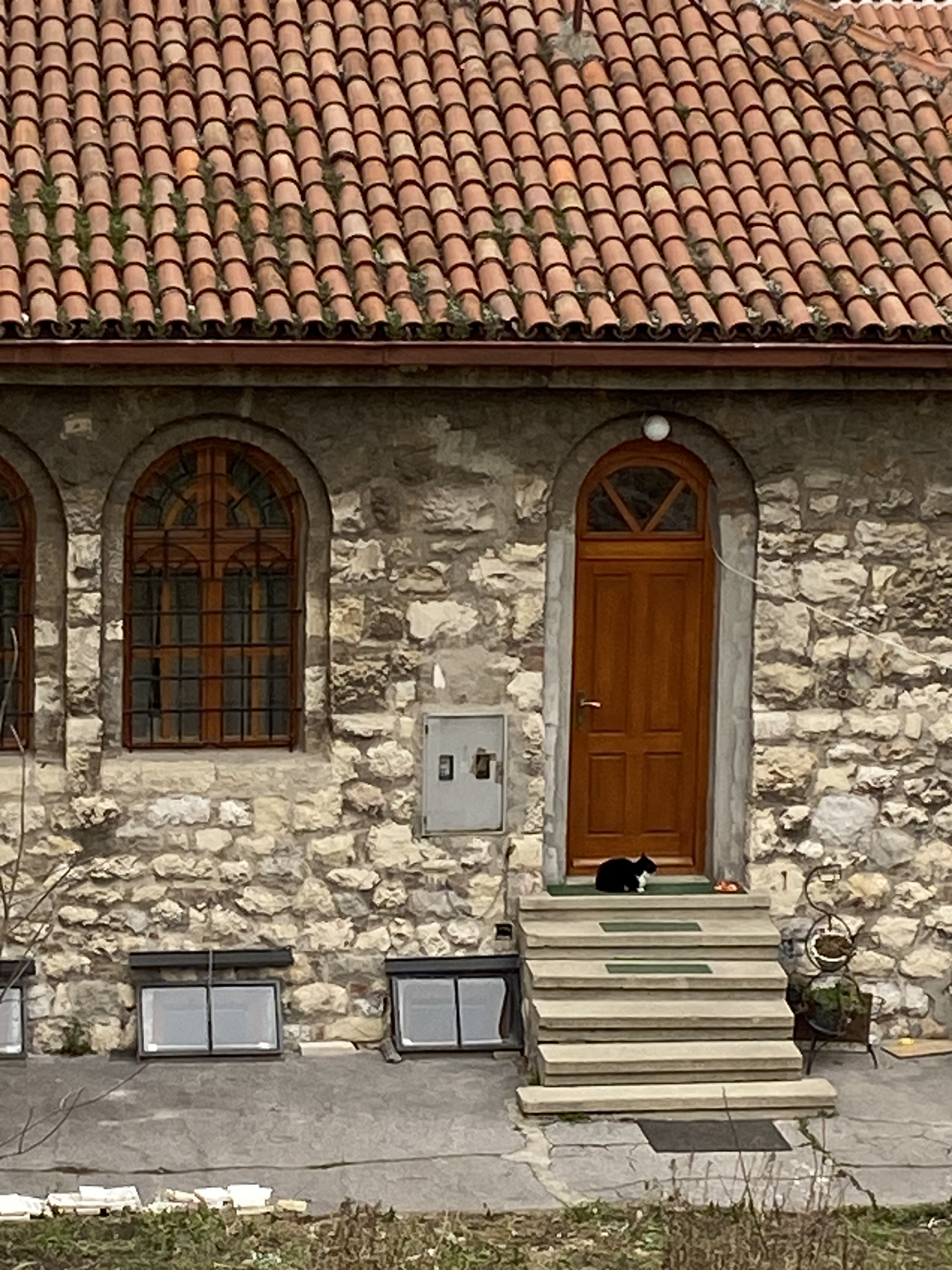
Where in Belgrade will we wander next? Stay tuned. I have more posts planned. Below, find a few pictures of the fortress and temple.
Kalmegdan Fortress
St. Sava Temple


 susan dalzell
You must be logged in to post a comment.