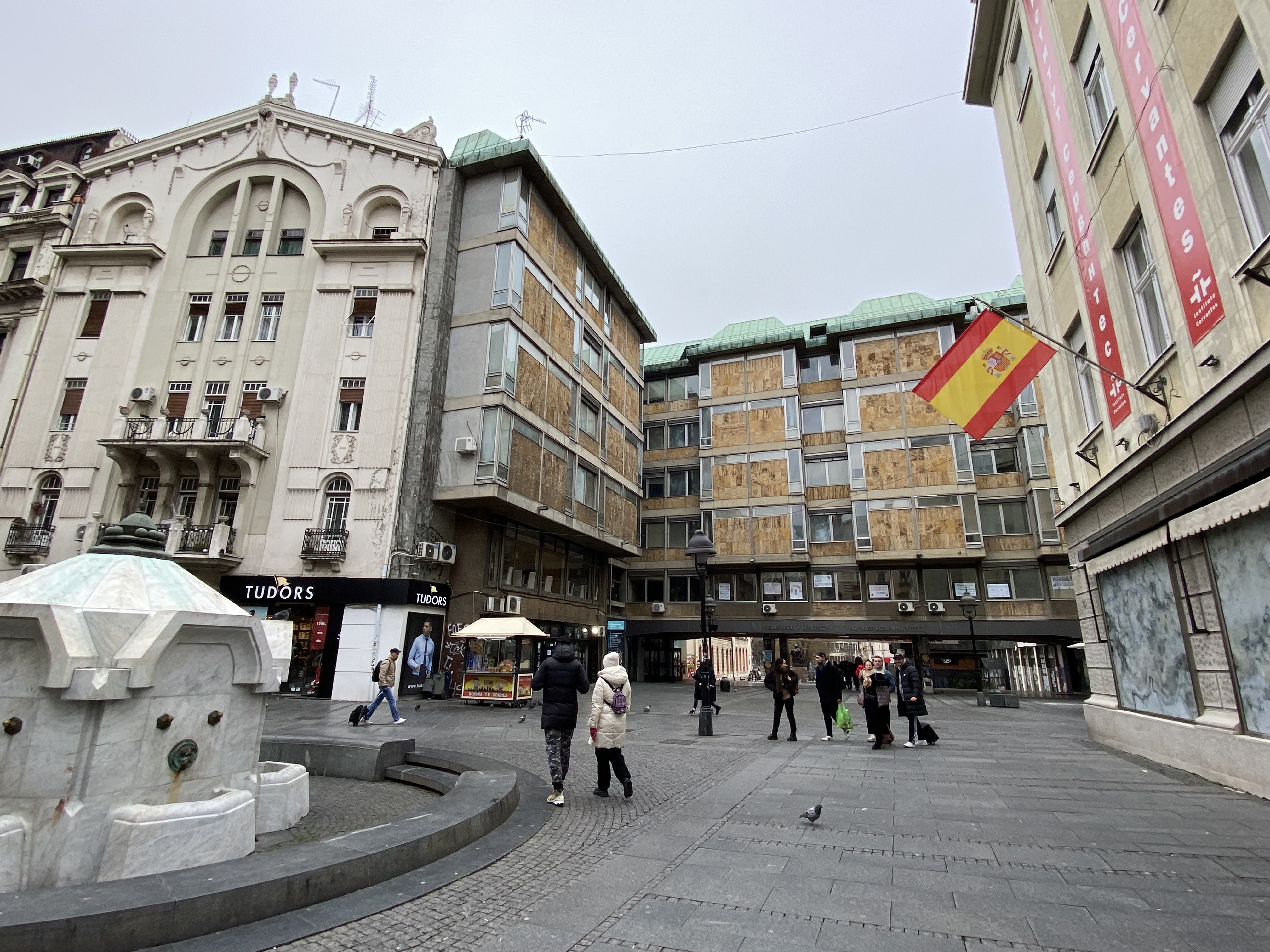
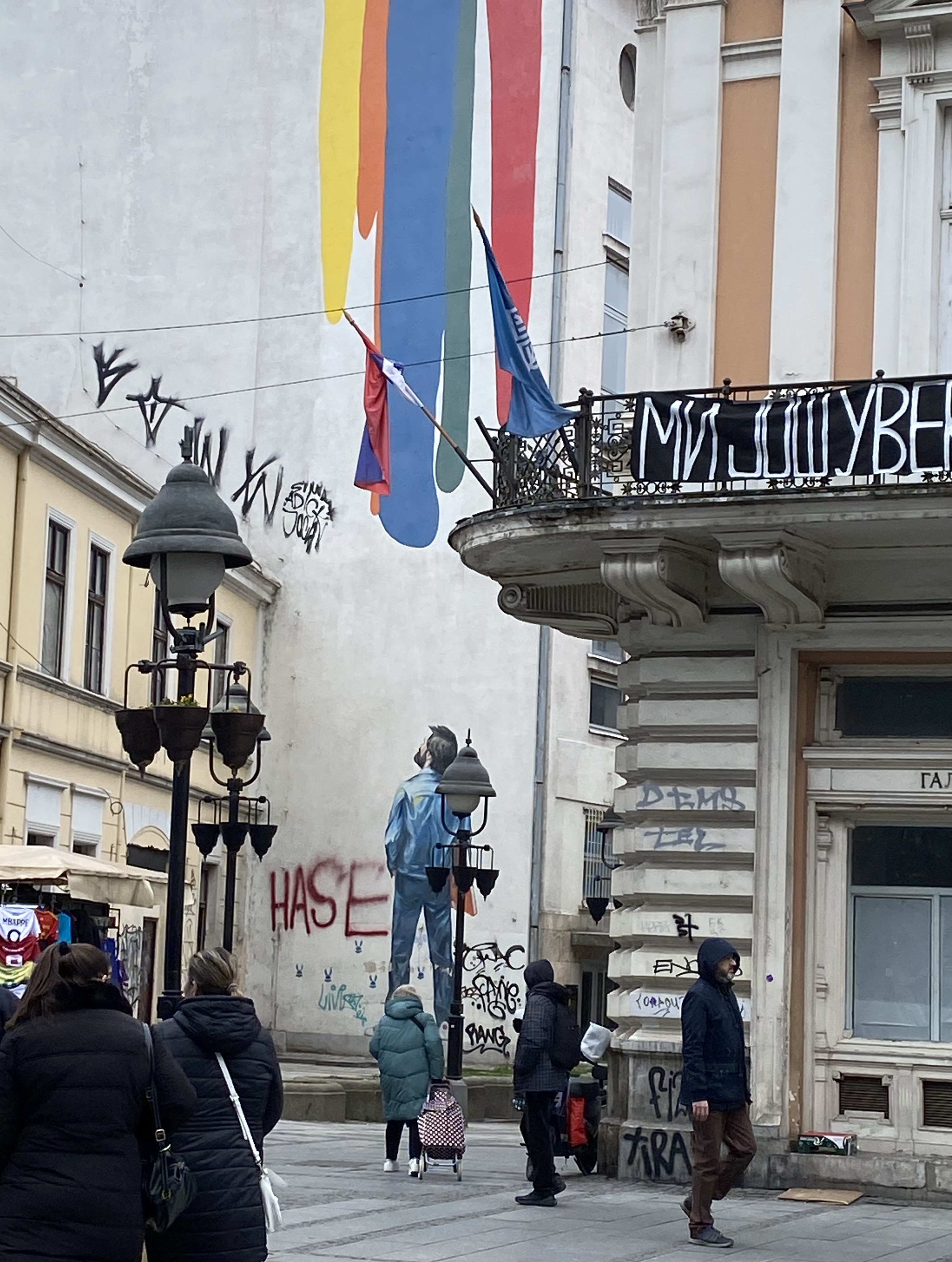
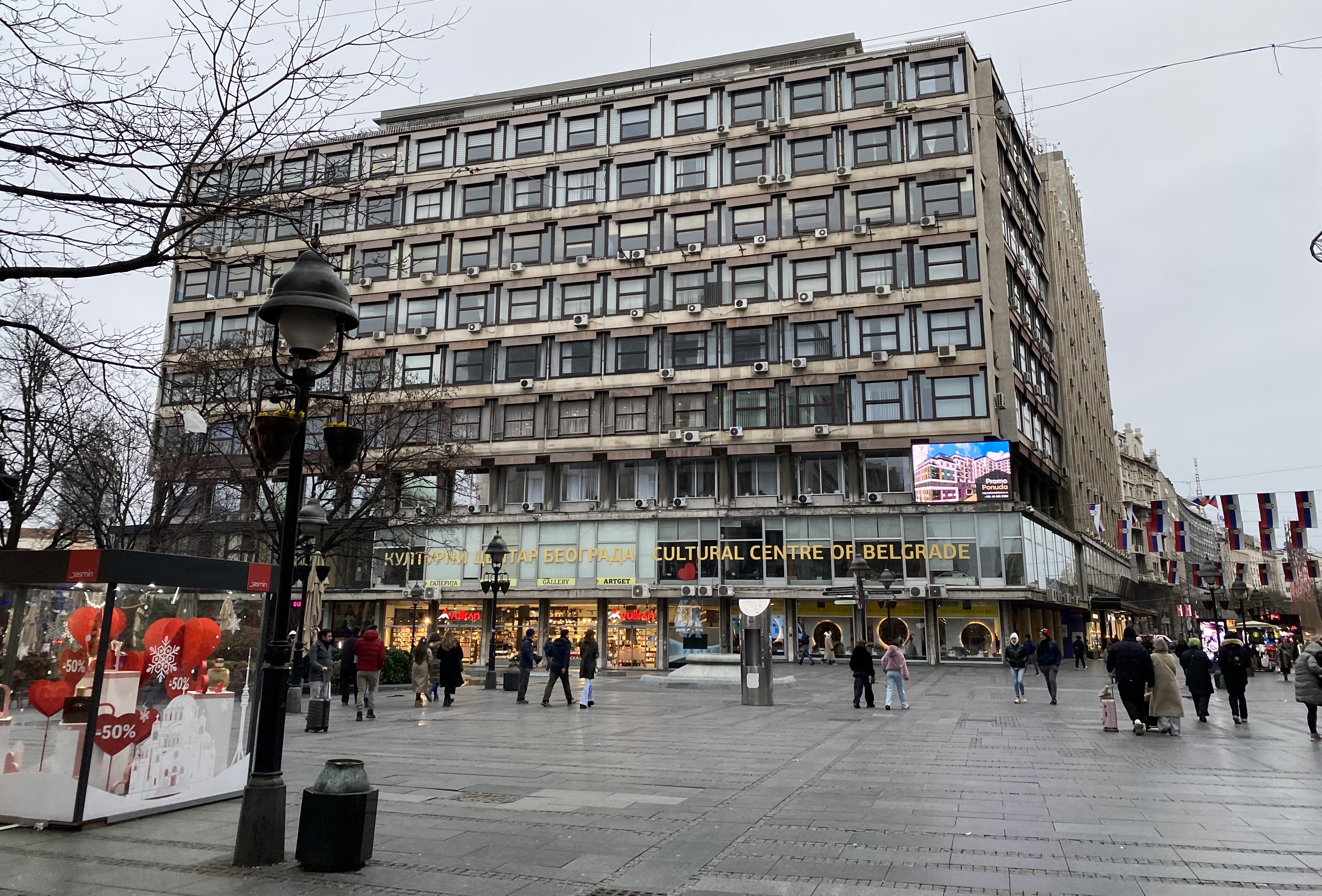
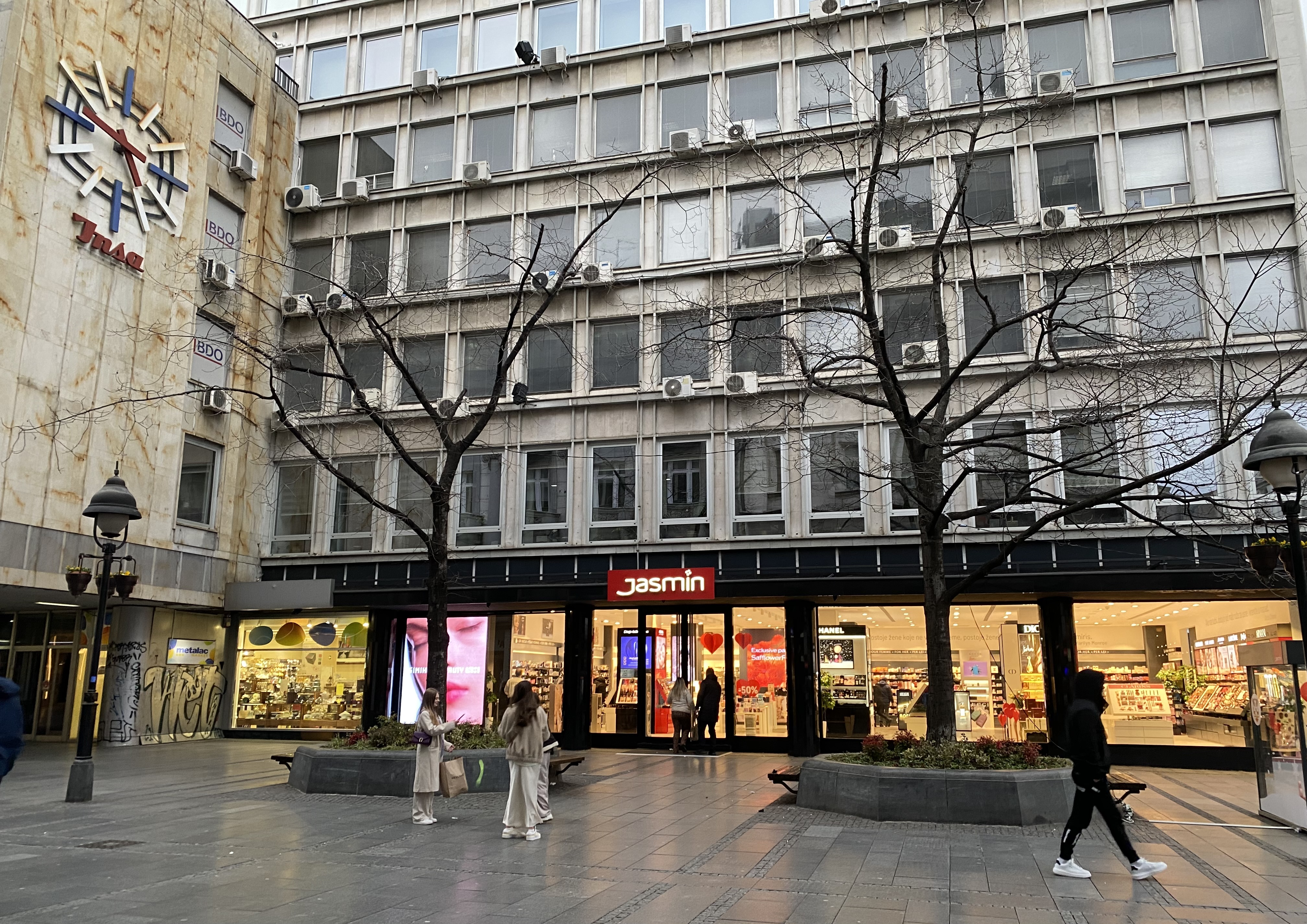
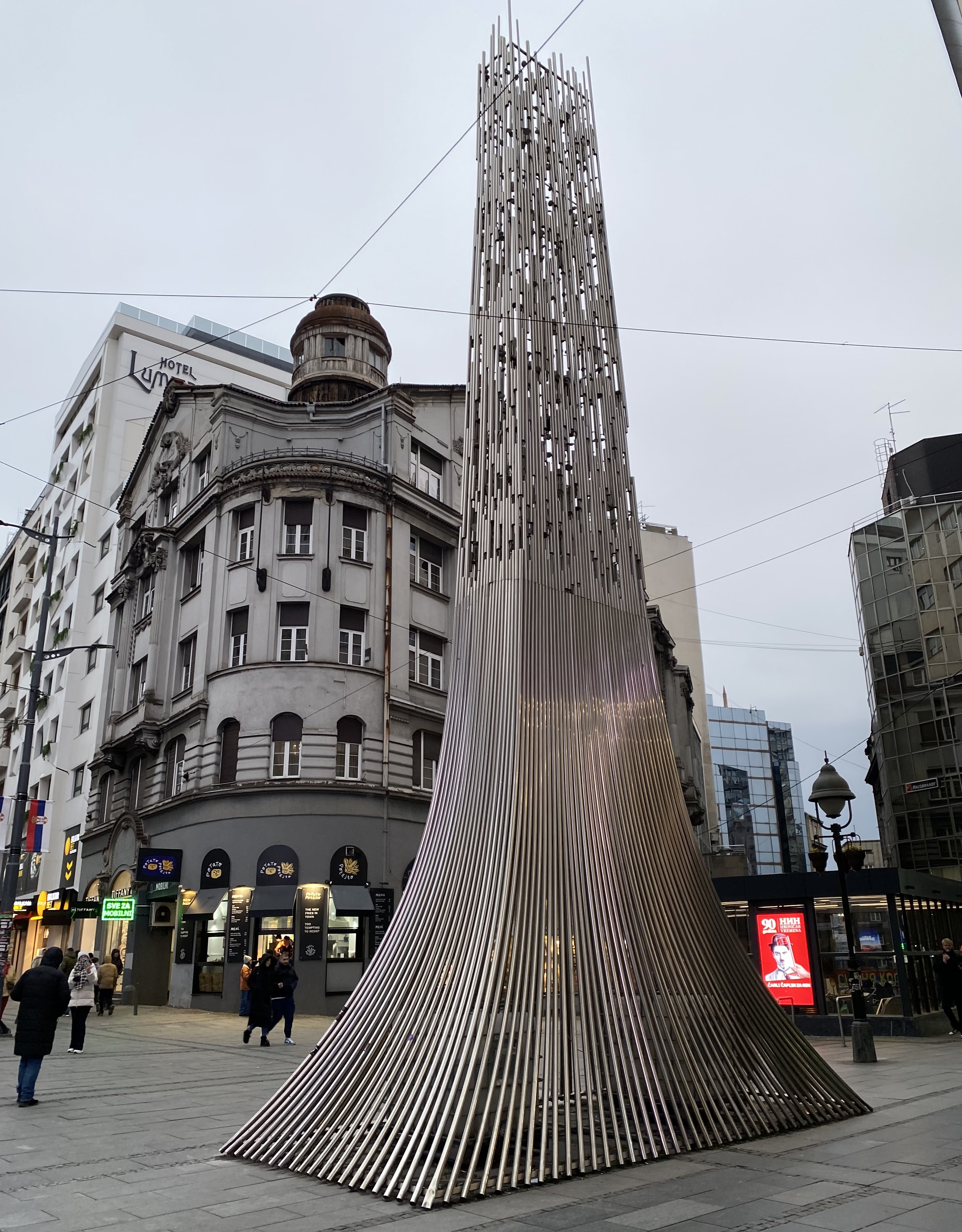
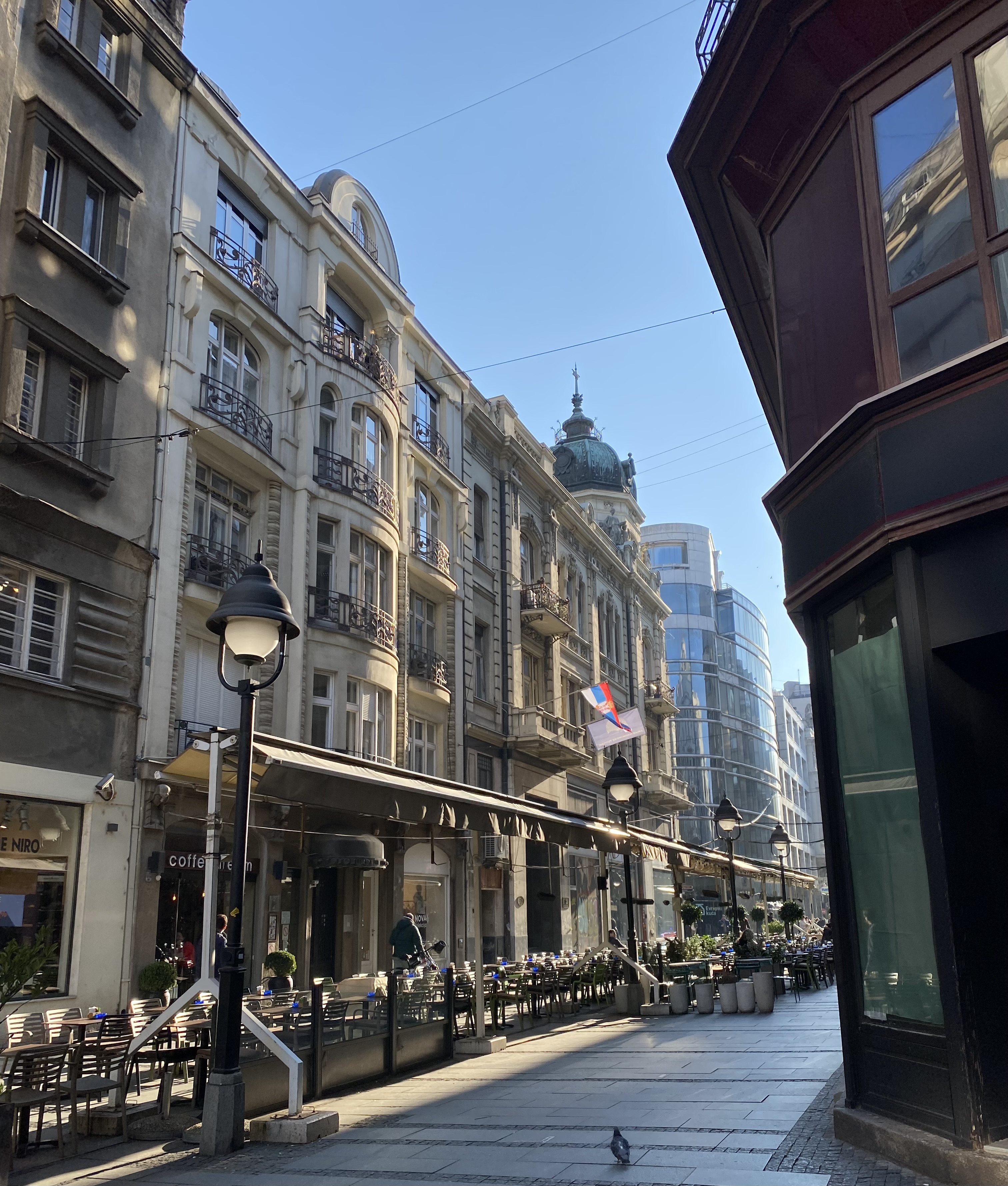
In the center of Belgrade, there is a pedestrian street which follows the straight path of the original Roman road. The Knez Mihailova Street was a trading route a couple thousand years ago. It still features a lot of goods for sale, although the items on offer now – Pandora charms, Adidas shoes and Starbucks coffee – in chain and local shops, would probably not be all that recognizable to Romans.
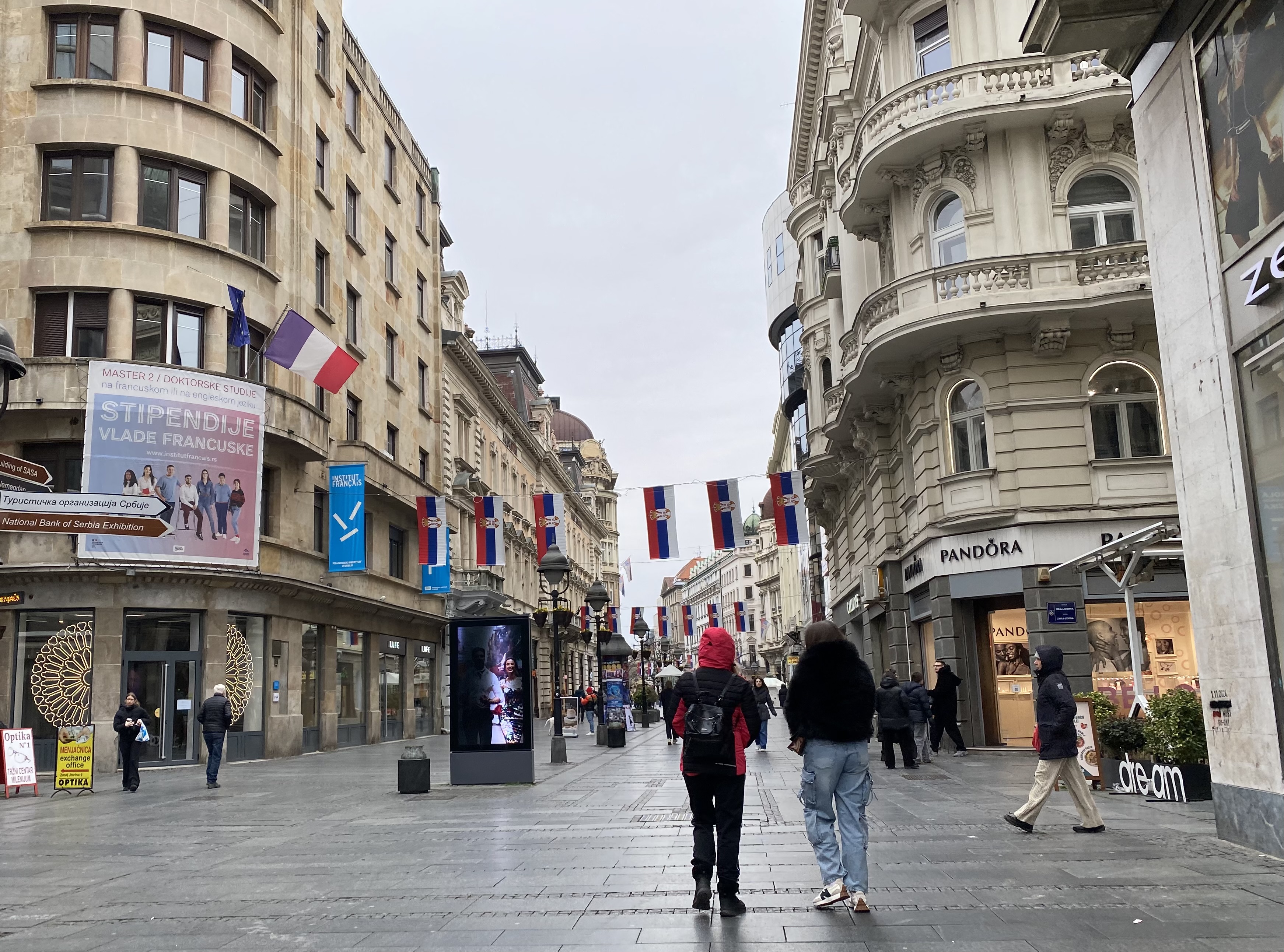
I love when a town or city commits to a space free of cars. It says, clearly and emphatically, that people matter here. For Belgrade, it means an entire section of downtown leading off from Republic Square is someplace you can stroll comfortably. And stroll we did. We spent some time inside a bookstore, a few cafes, and a vibrant indoor art and antique market.
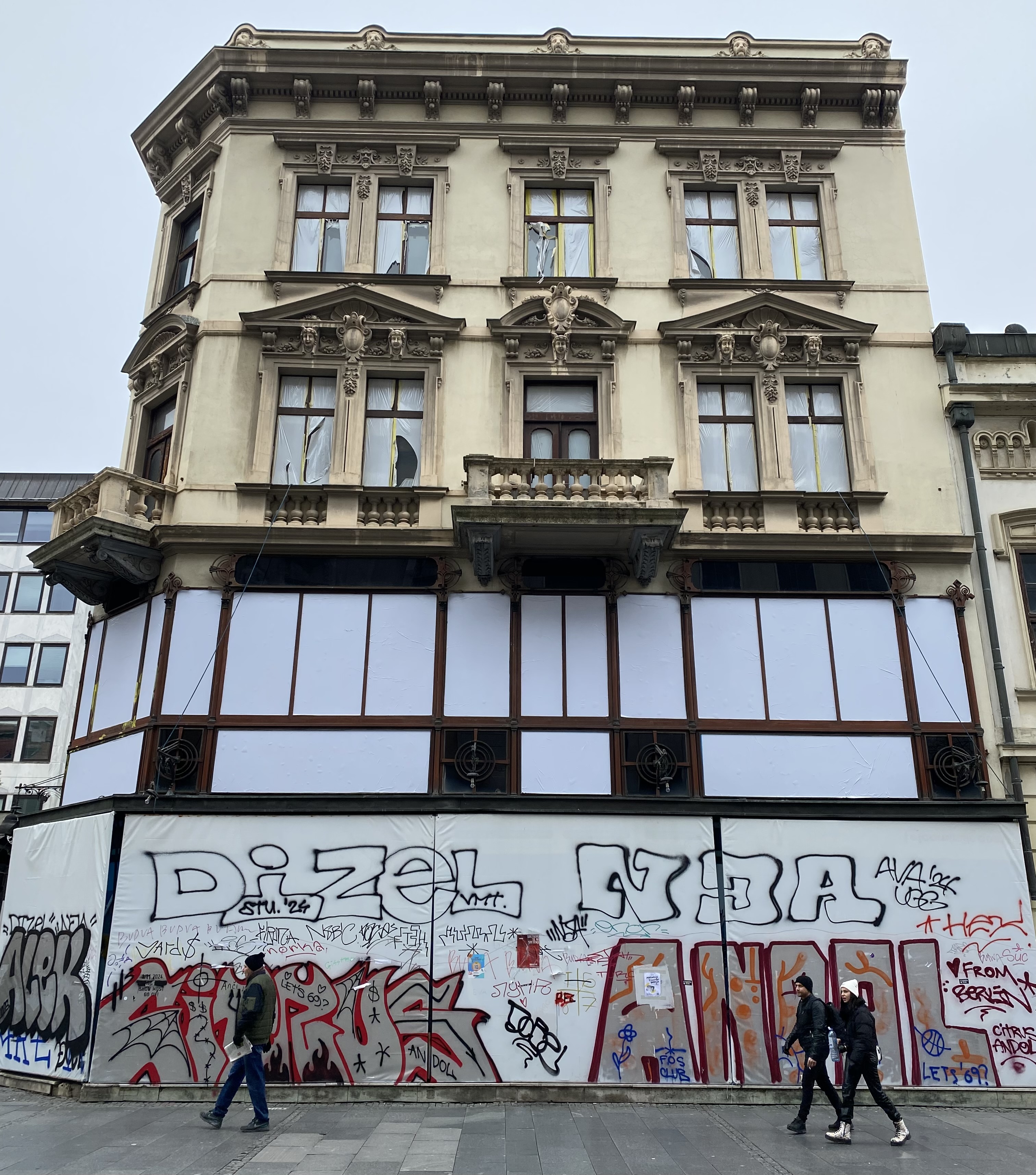
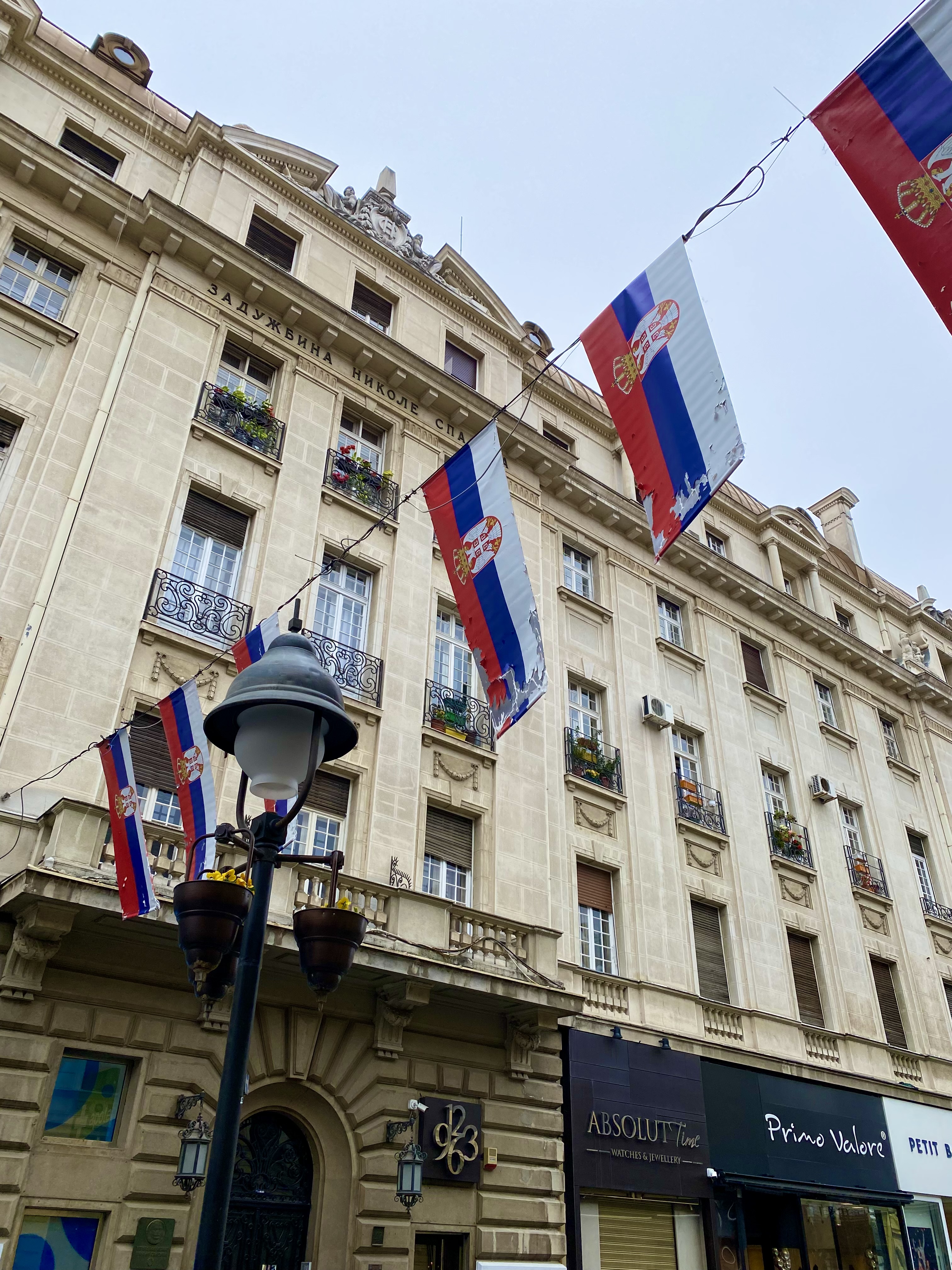
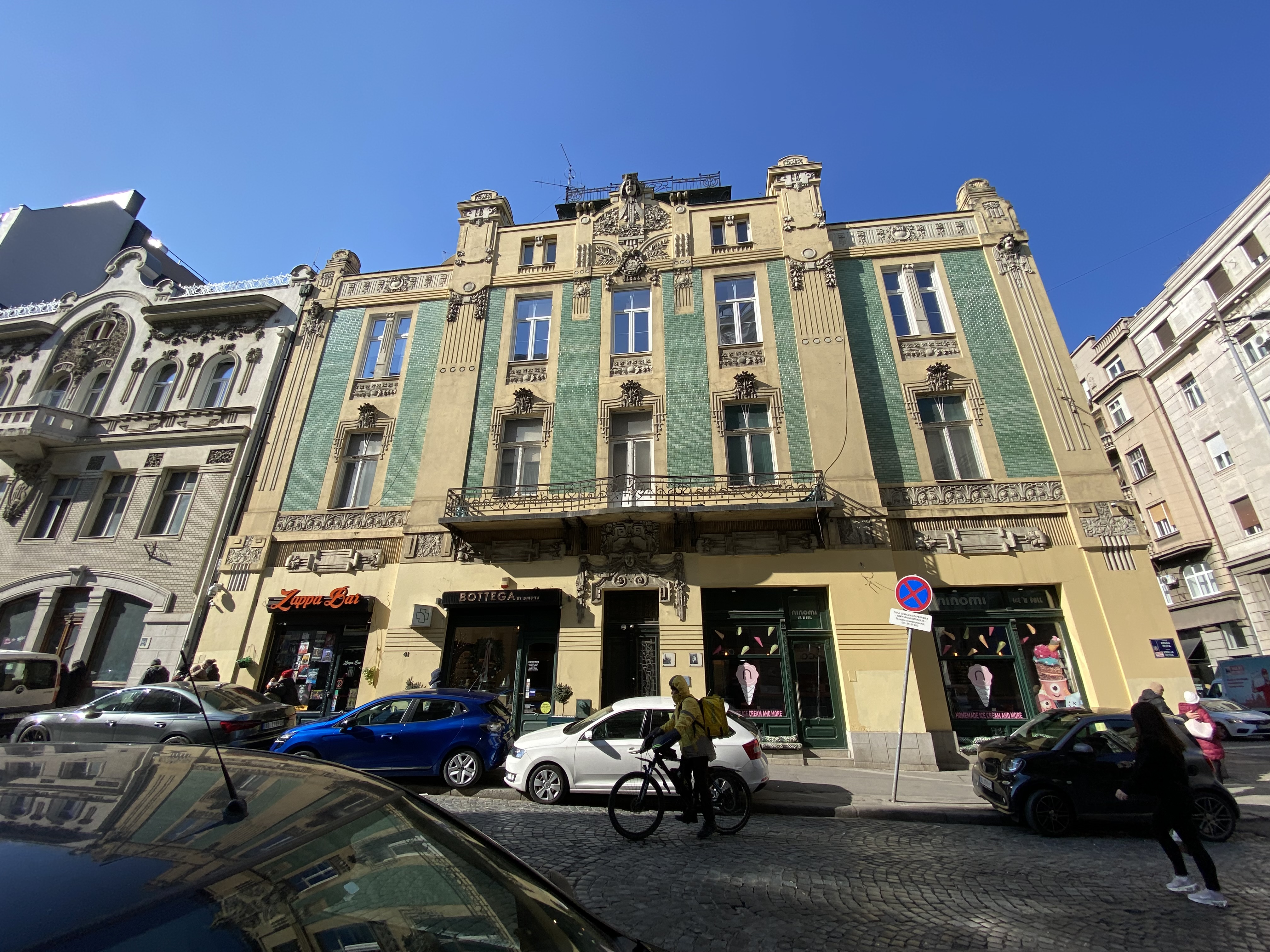
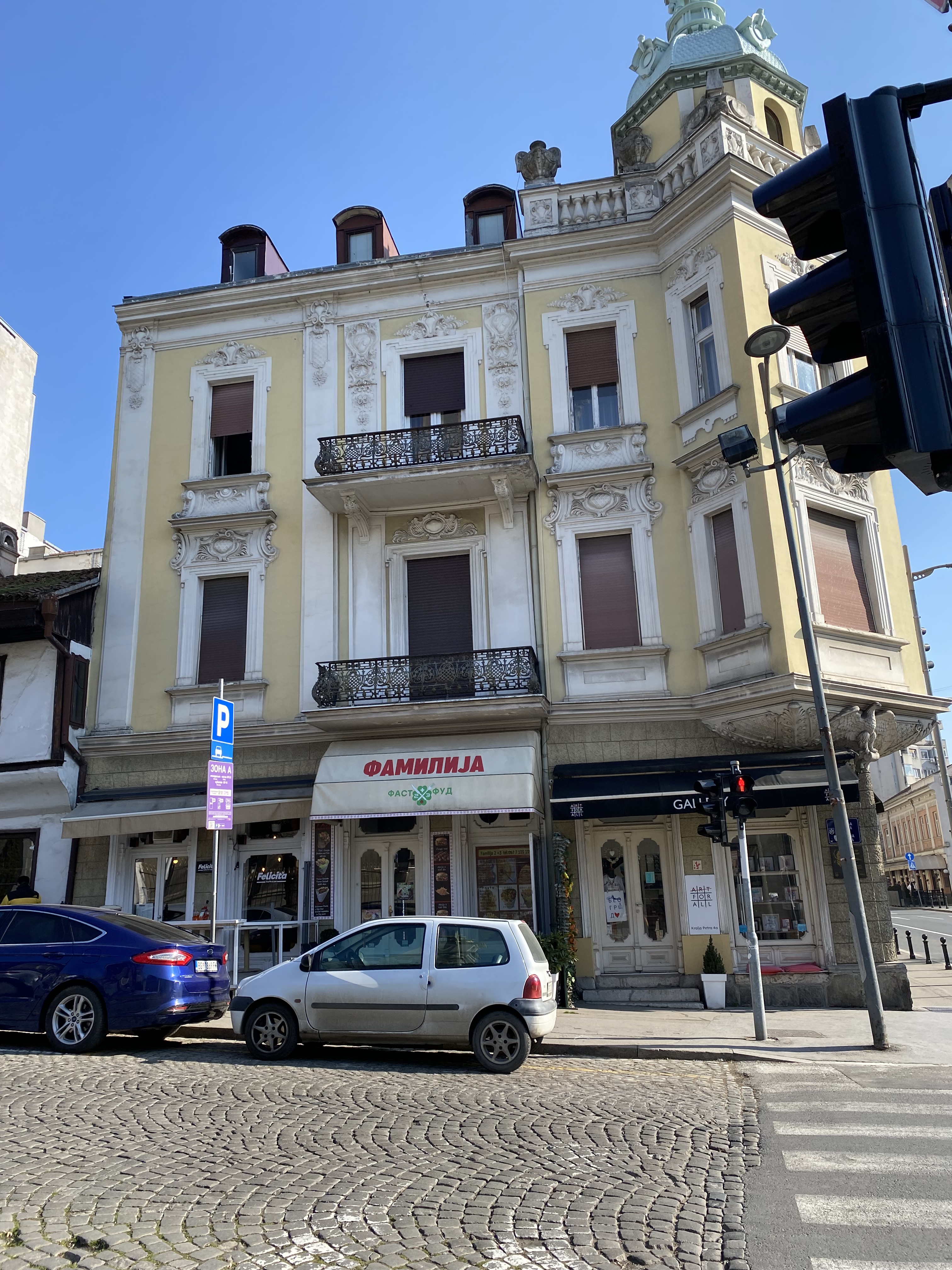
The buildings date back to the 1870s and are grand in style, with stone facades, iron balconies and decorative touches rarely seen on modern structures: Corinthian columns topped by curled leaves and flowers, carved faces grinning down from window pediments, and elegant rows of corbels pretending to hold the roofs up. Serbian flags were festooned on lines strung across the street and restaurants offered outdoor seating that would be appealing in warmer weather. Street artists arranged their work along the street and we were able to pick up a couple of small paintings to take home. In one, the street scene depicted looks like the 19th century, until you notice the teens in the crowd wearing shorts. Otherwise, very little has changed.
The city bears few visual reminders of the NATO bombing campaign of 1999, which was carried out during the Kosovo War, when the Republic of Yugoslavia (Serbia and Montenegro) fought Albanian separatists. The history here is complicated and not easily summed up in a few sentences. Brutal ethnic conflicts in the 1990s led to the dissolution of Yugoslavia—which had been created in the aftermath of World War I—into Slovenia, Croatia, Bosnia and Herzegovina, Macedonia and the Federal Republic of Yugoslavia (Serbia and Montenegro) in 1995. Serbia’s union with Montenegro was peacefully dissolved in 2006. We walked past a couple of visibly bombed buildings which remain in the city center, stark reminders of previous violence, but photographs aren’t allowed.
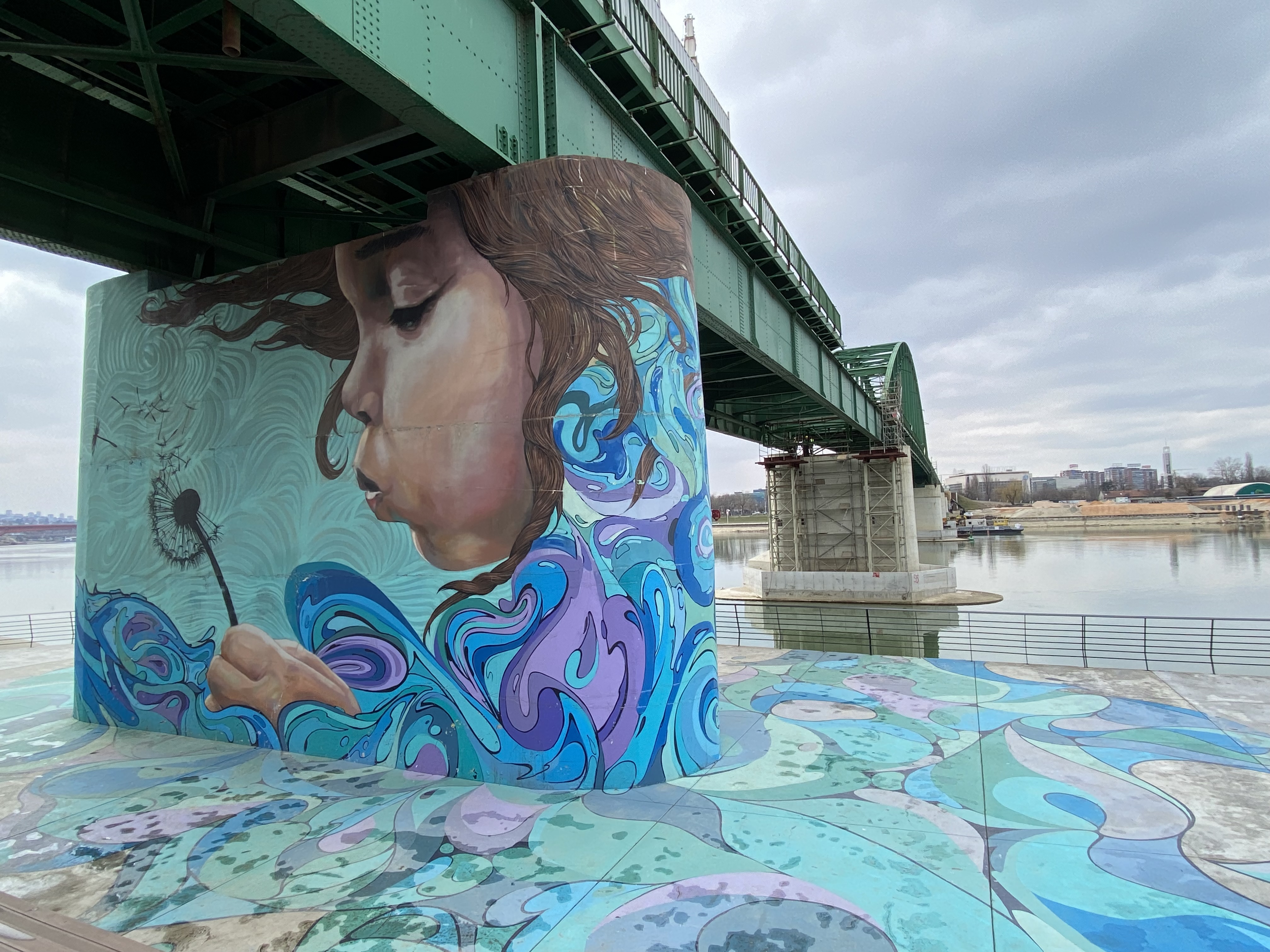
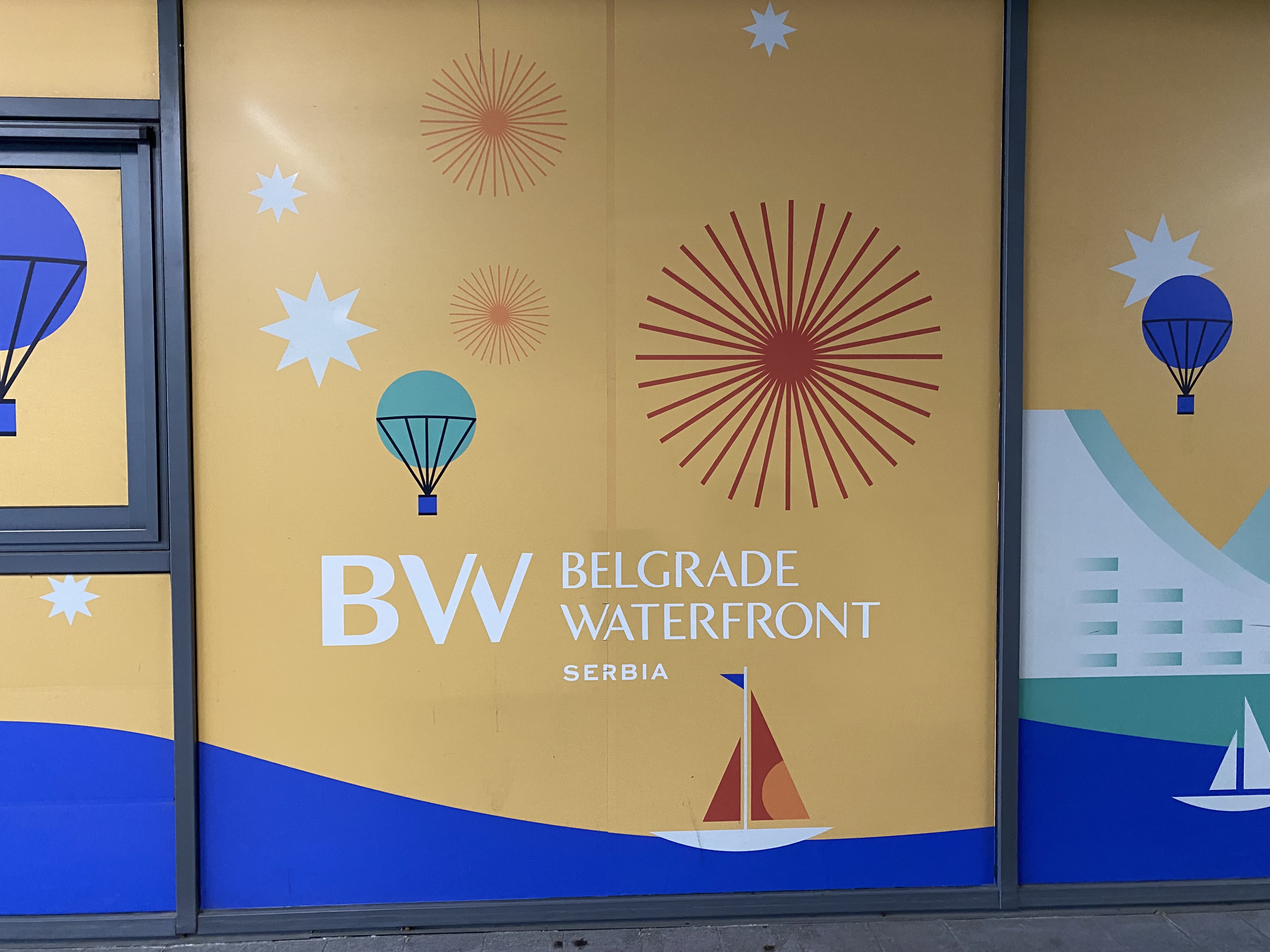
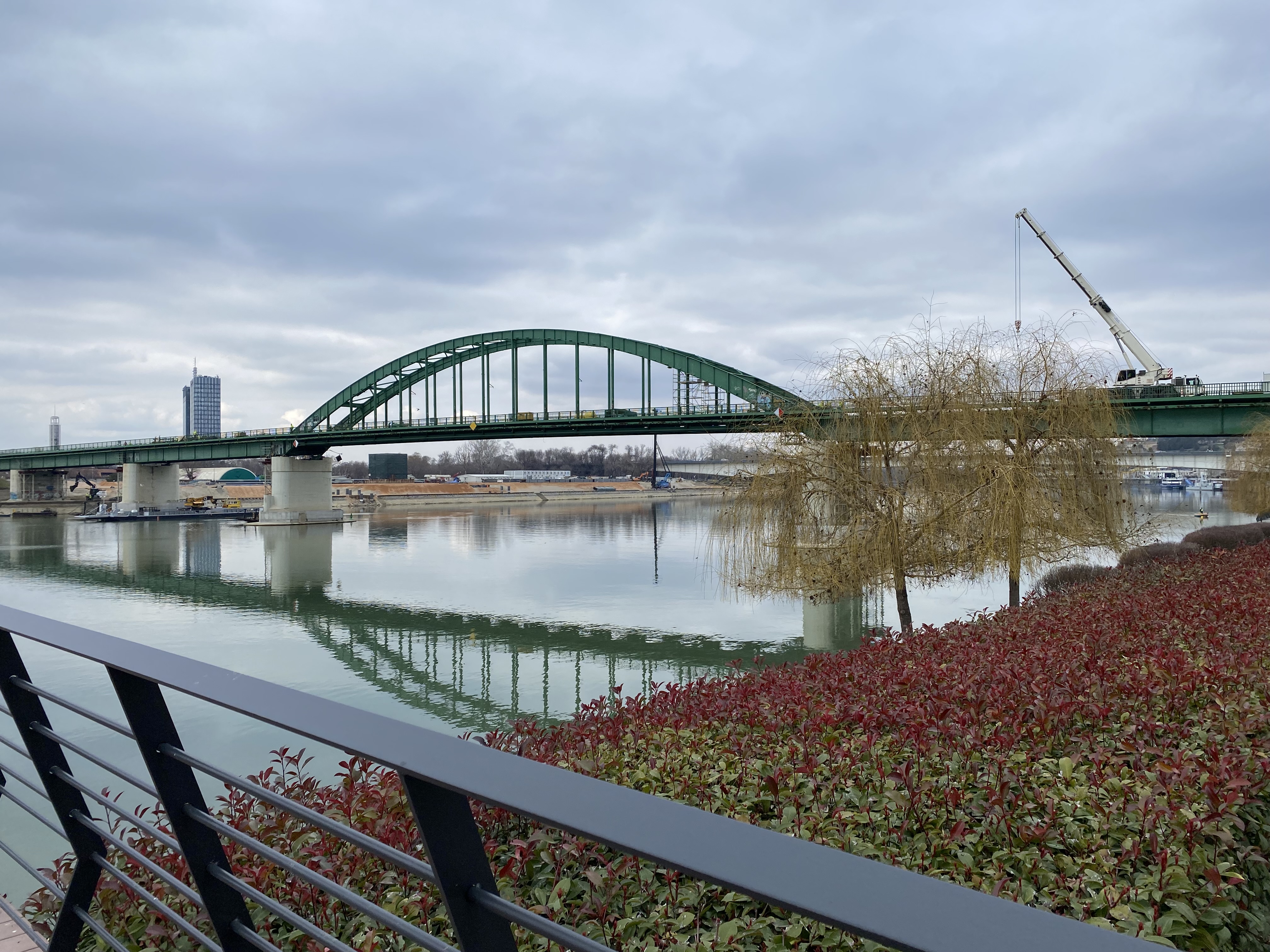
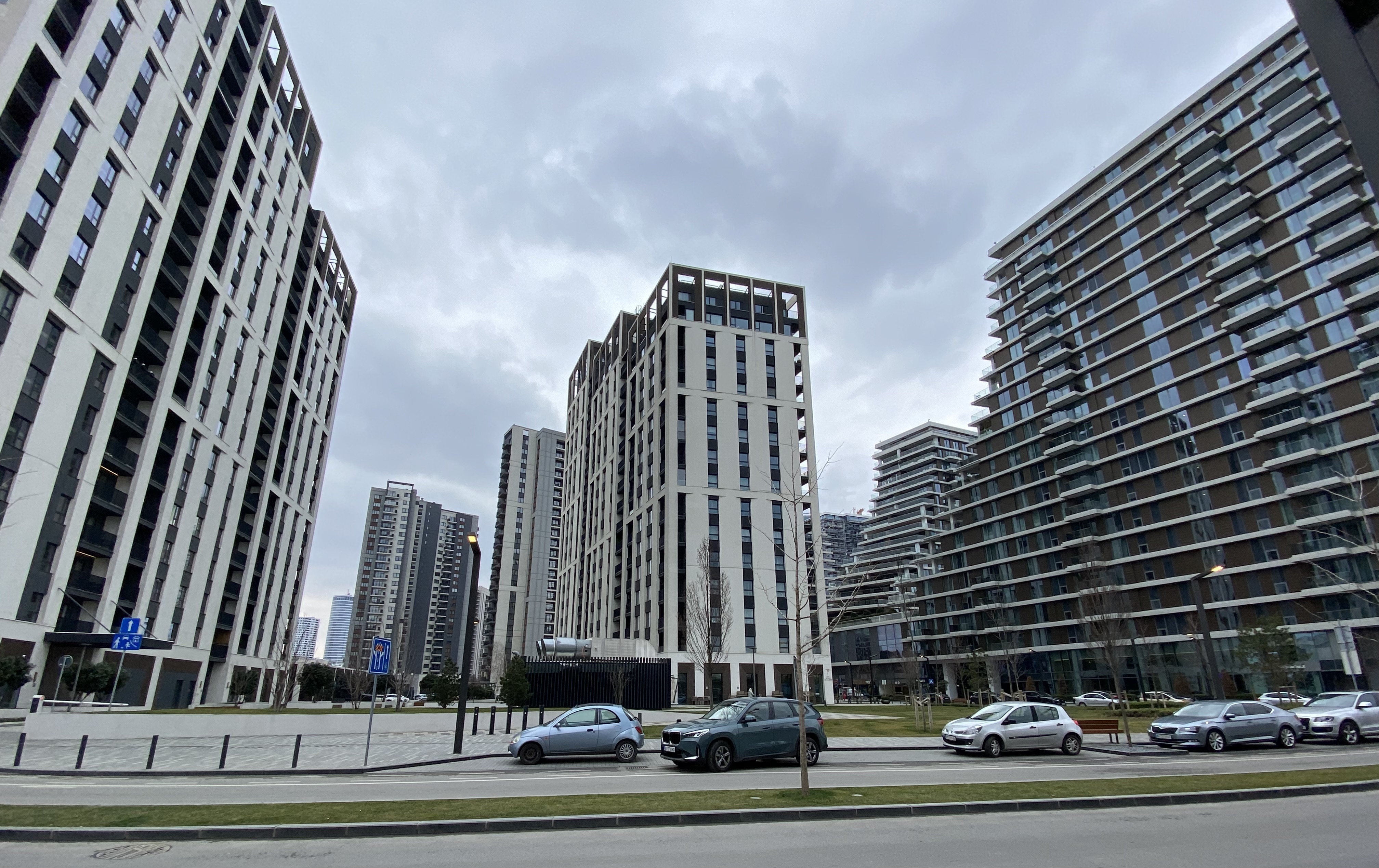
We also spent some time exploring the Belgrade Waterfront, a $3 billion development (yes – you read that figure right) being developed with apartments, offices, shops, restaurants and new infrastructure, including a bridge, over a large area on the Sava River. I can see how the development, which is beautiful and modern, adds to the mix of the city, but I preferred the place-specific vibe of the old town.

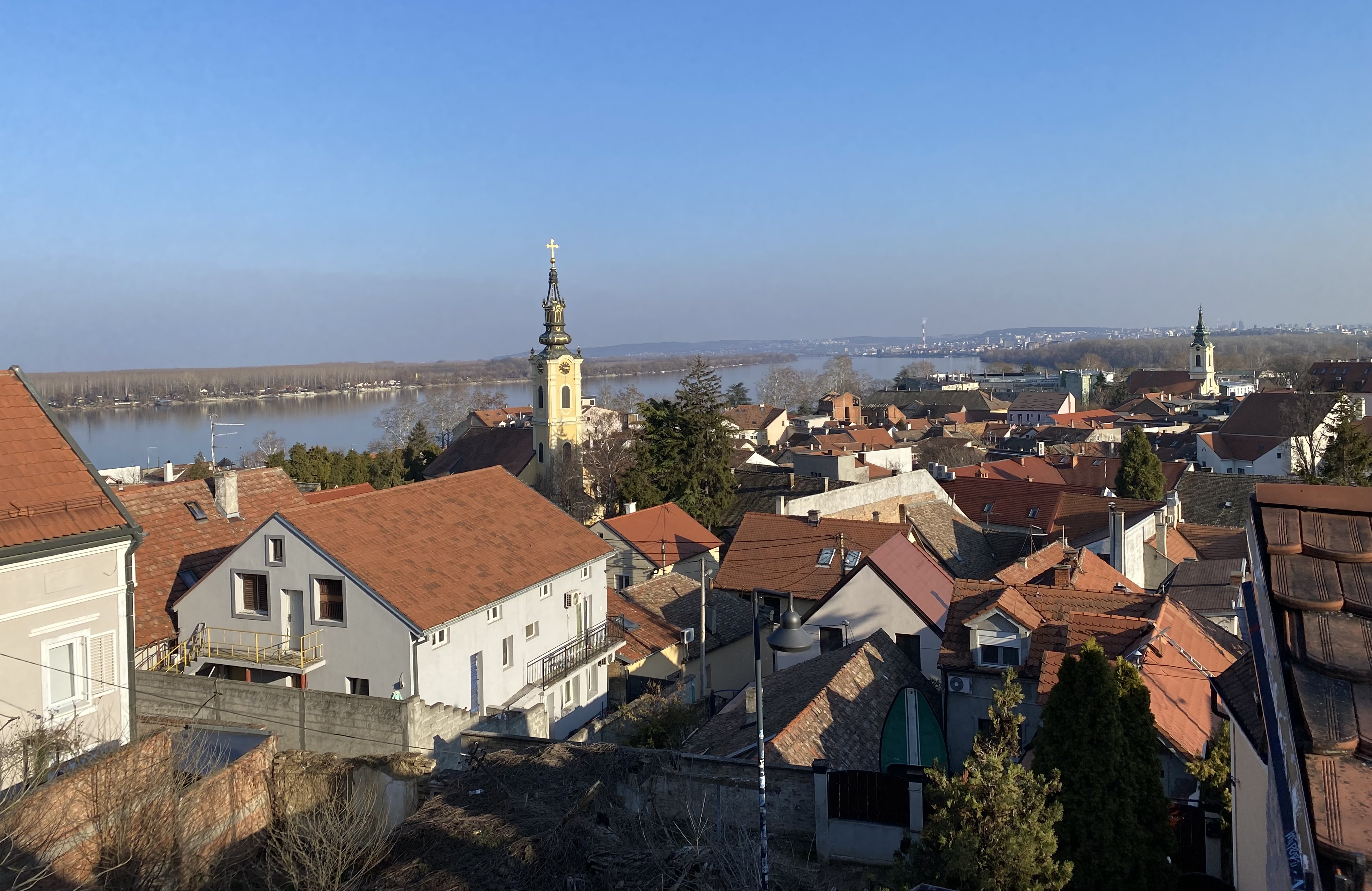
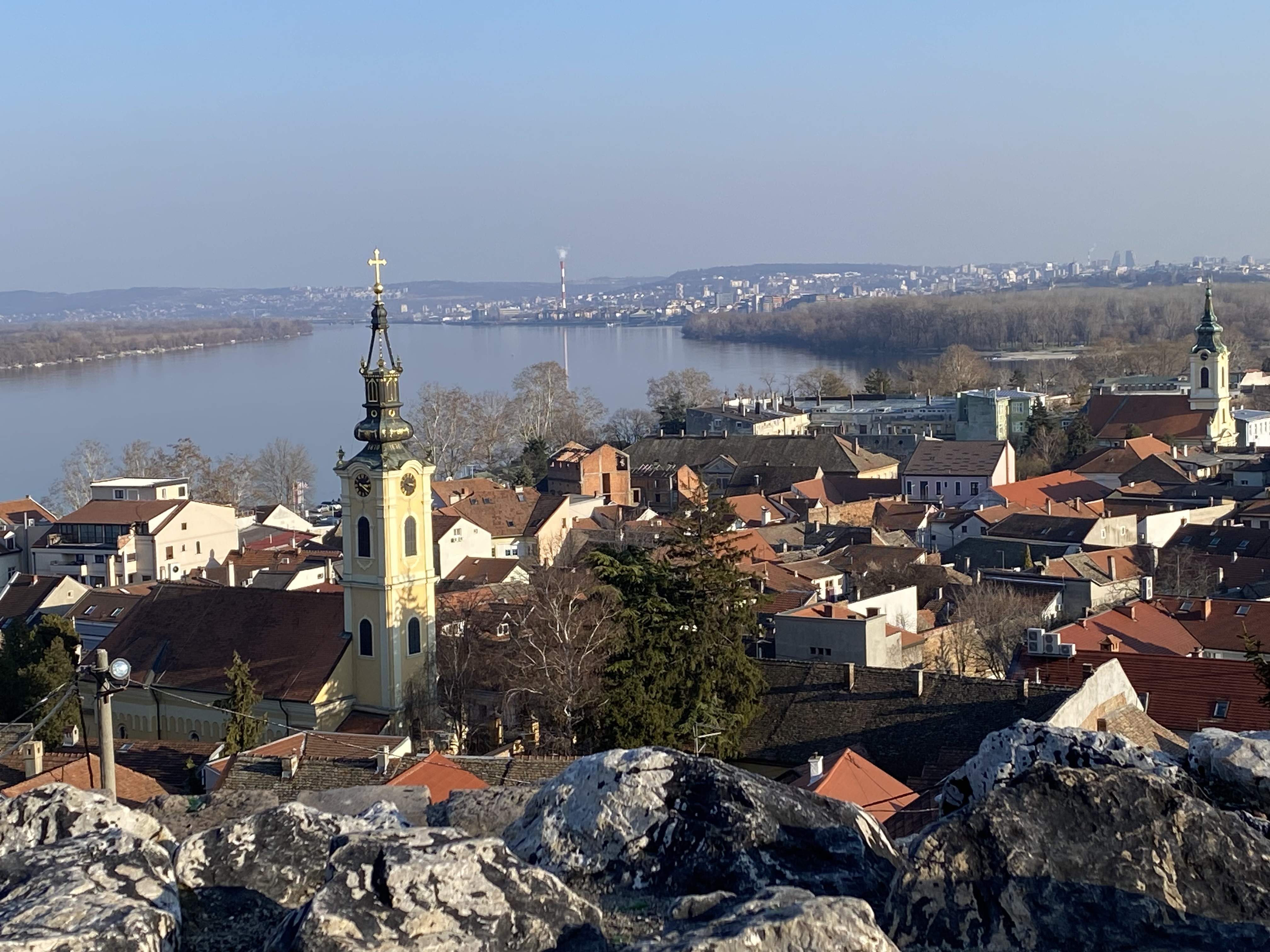
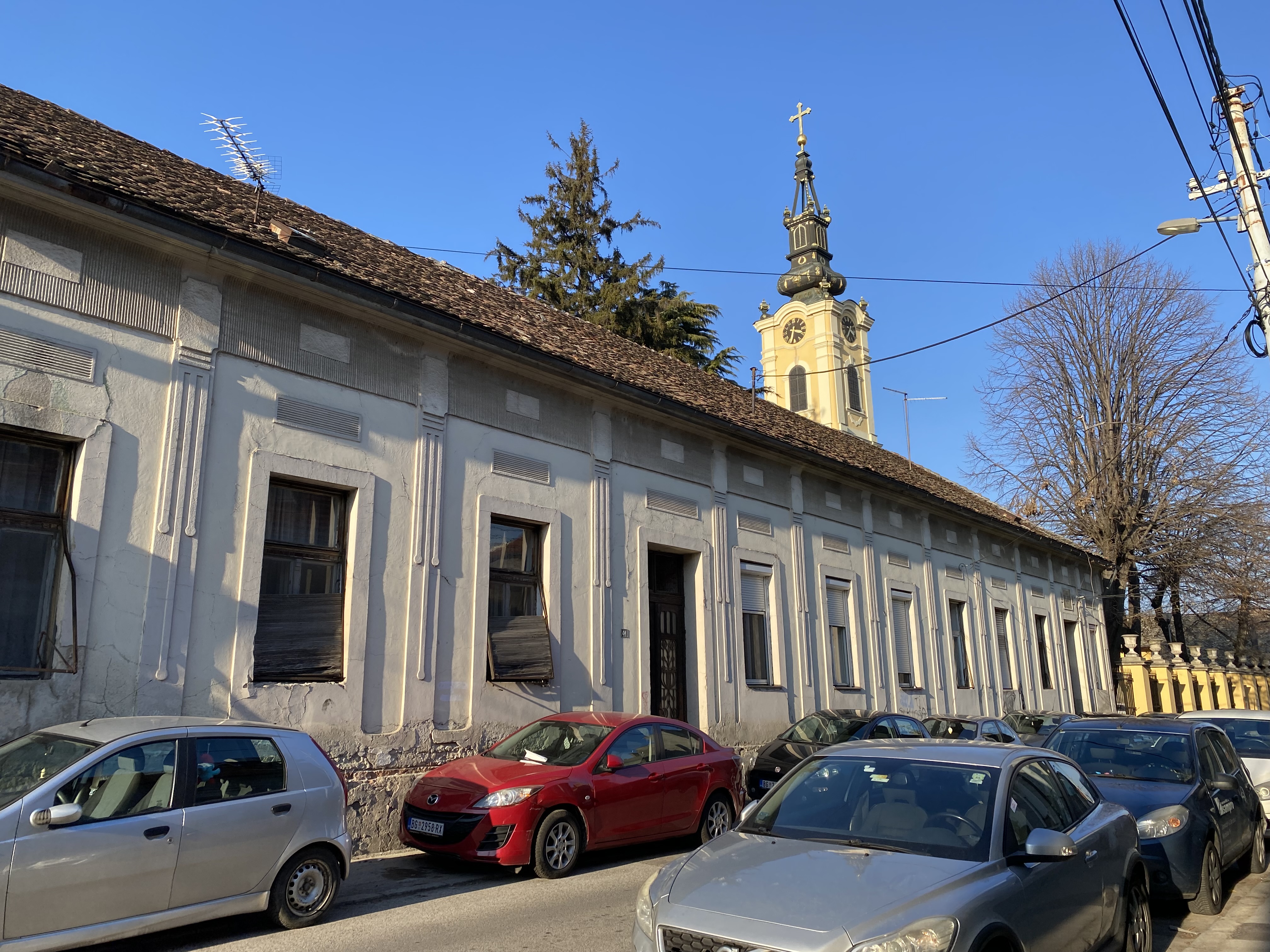
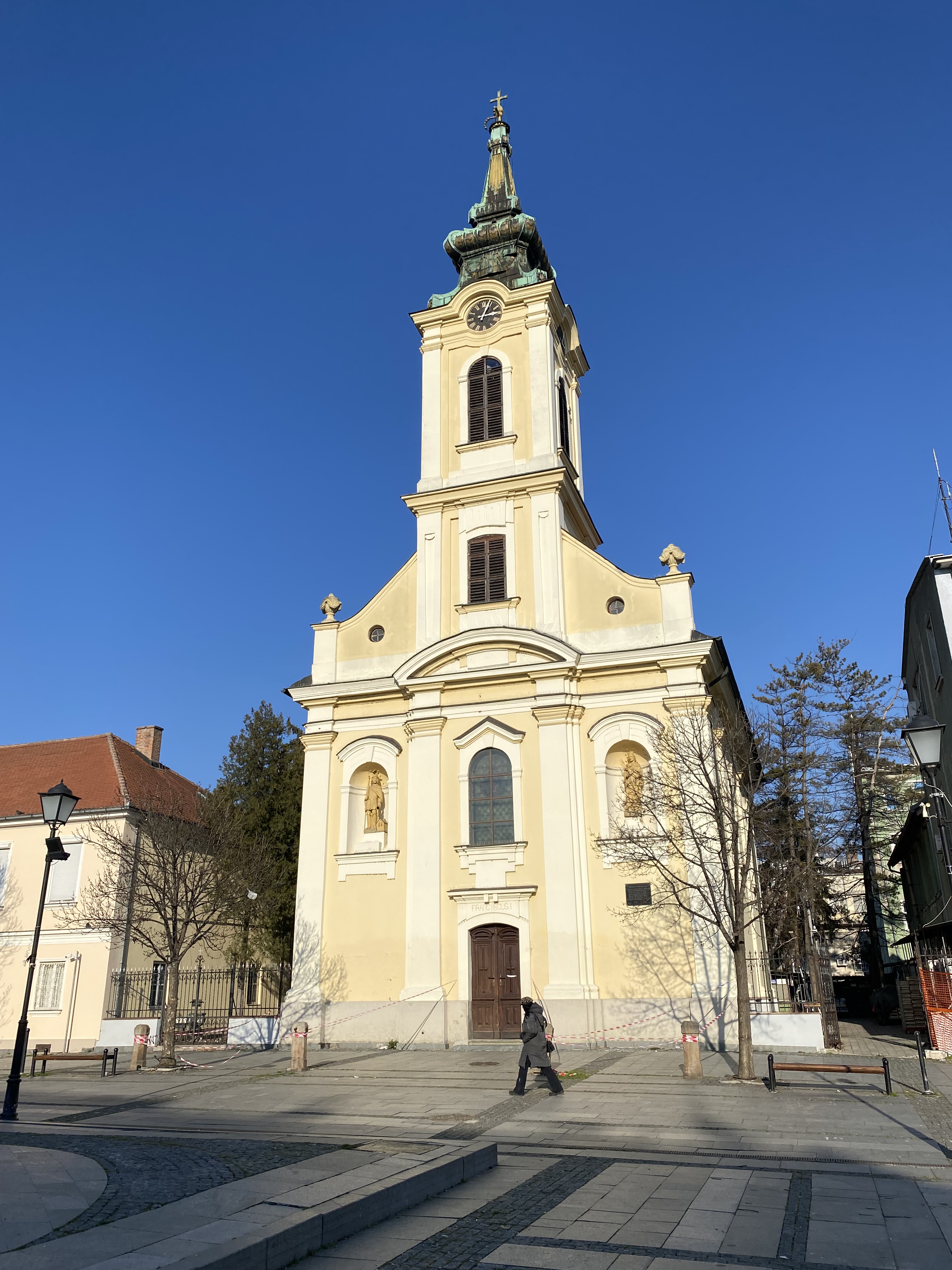
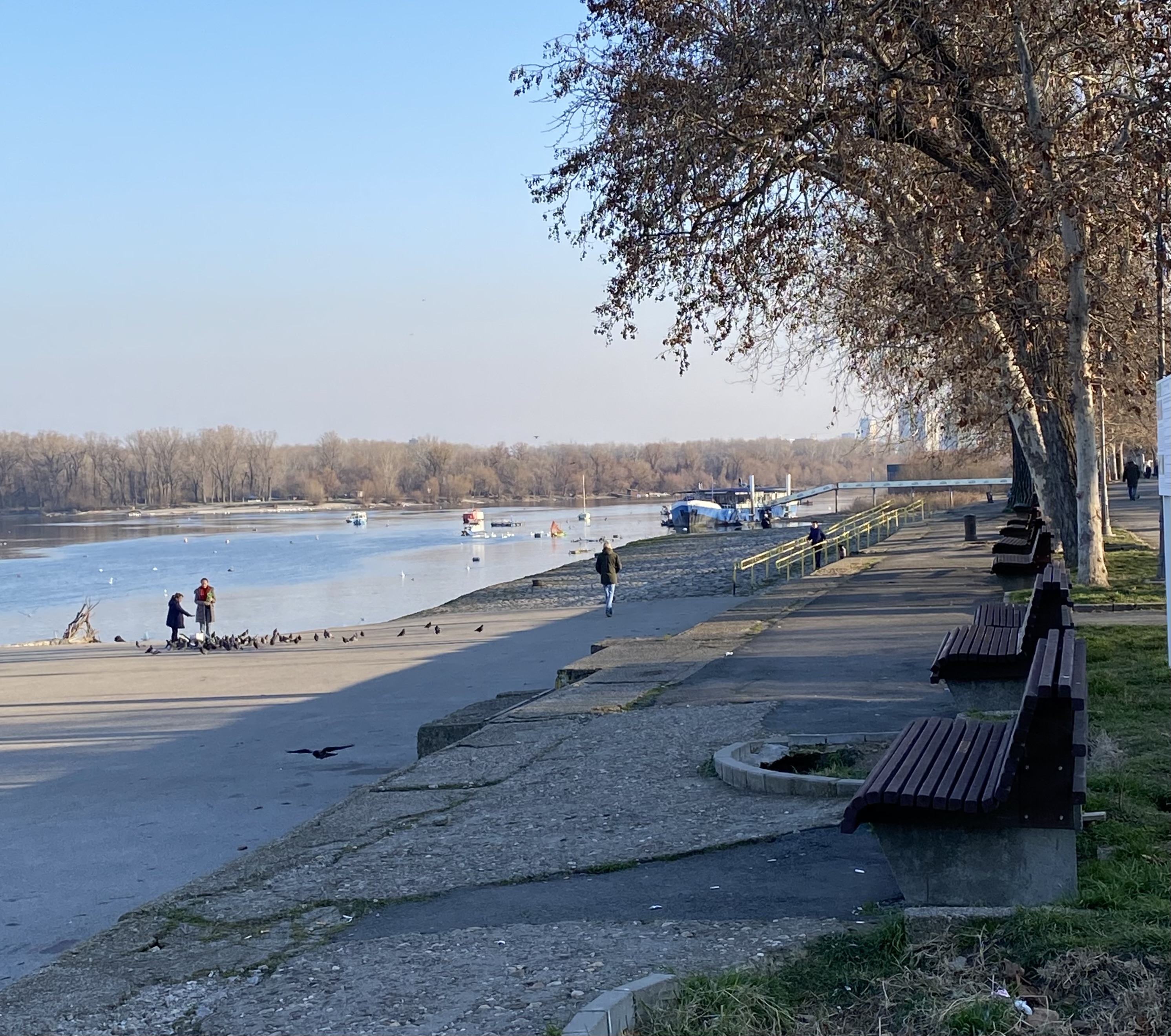
More to my taste was the district of Zemun, where we stopped for several hours on the afternoon we drove back from our overnight visit to Romania. Take the term district with a grain of salt: Zemun was its own city for centuries, has a history that includes control by Hungary and the Ottoman and Habsburg empires, and was only officially absorbed into Belgrade in 1934. Situated along the Danube River, it has a small-town feel, with plenty of pedestrian-friendly areas, including a restaurant-lined walk along the river.
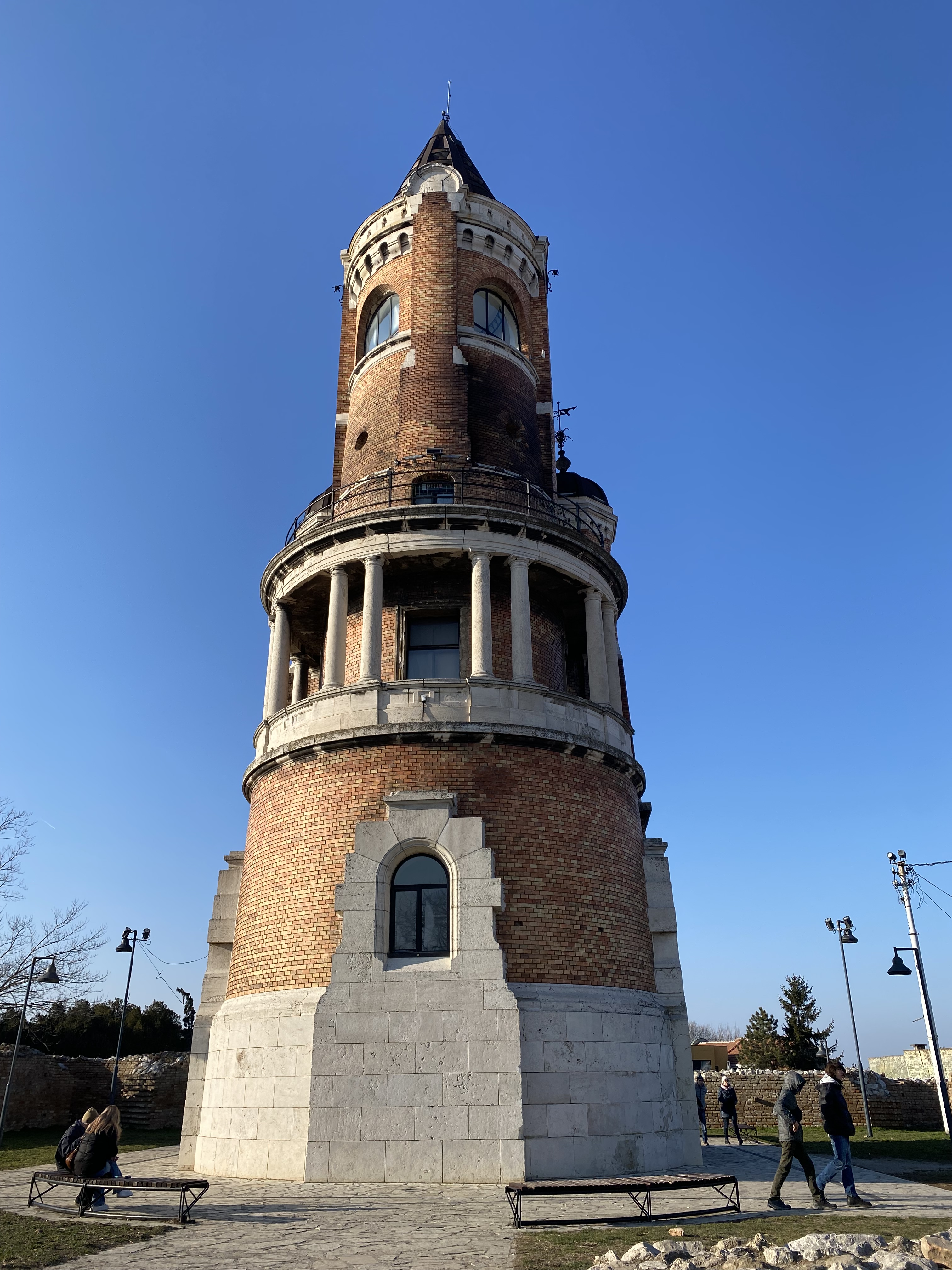
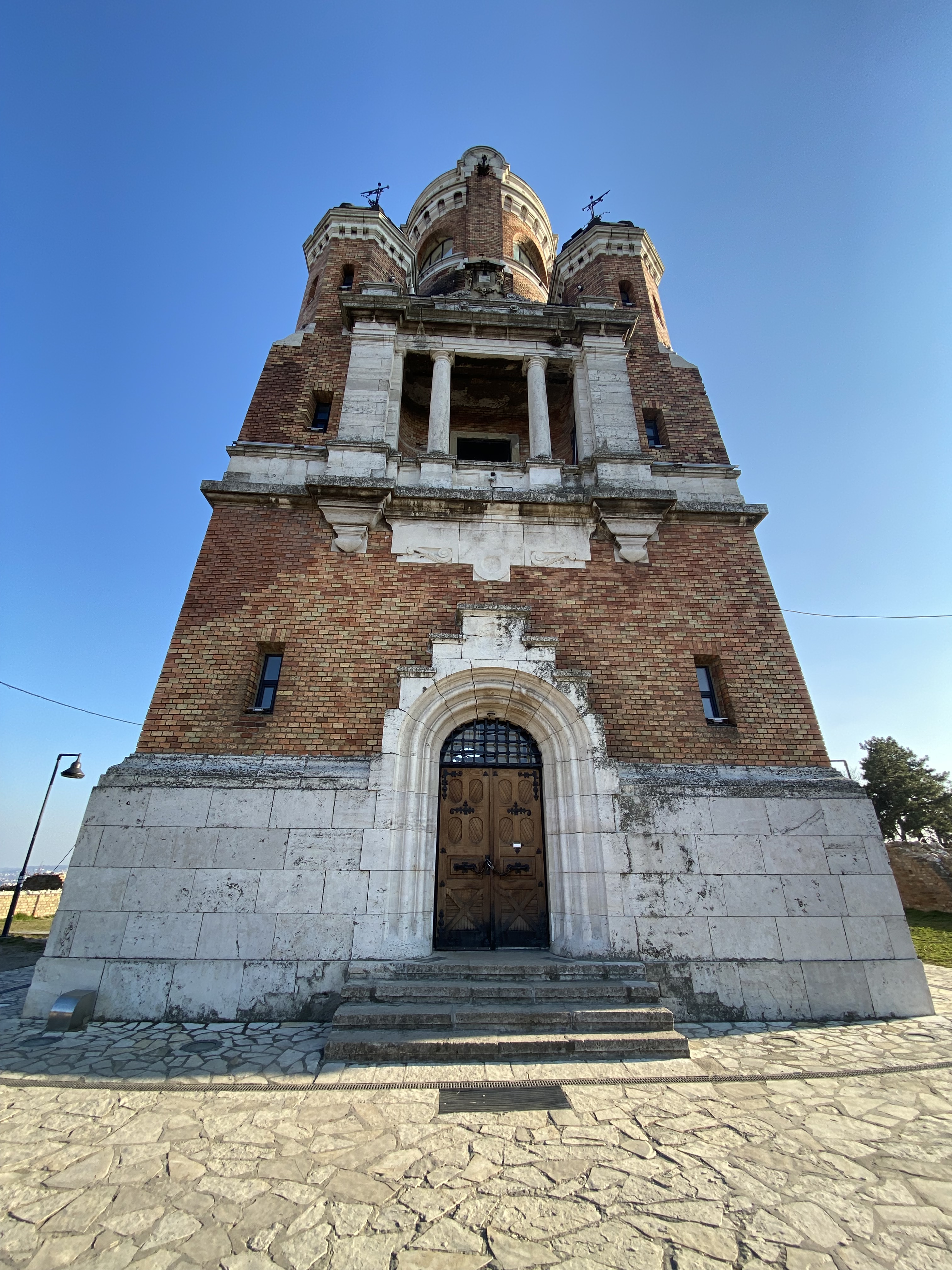
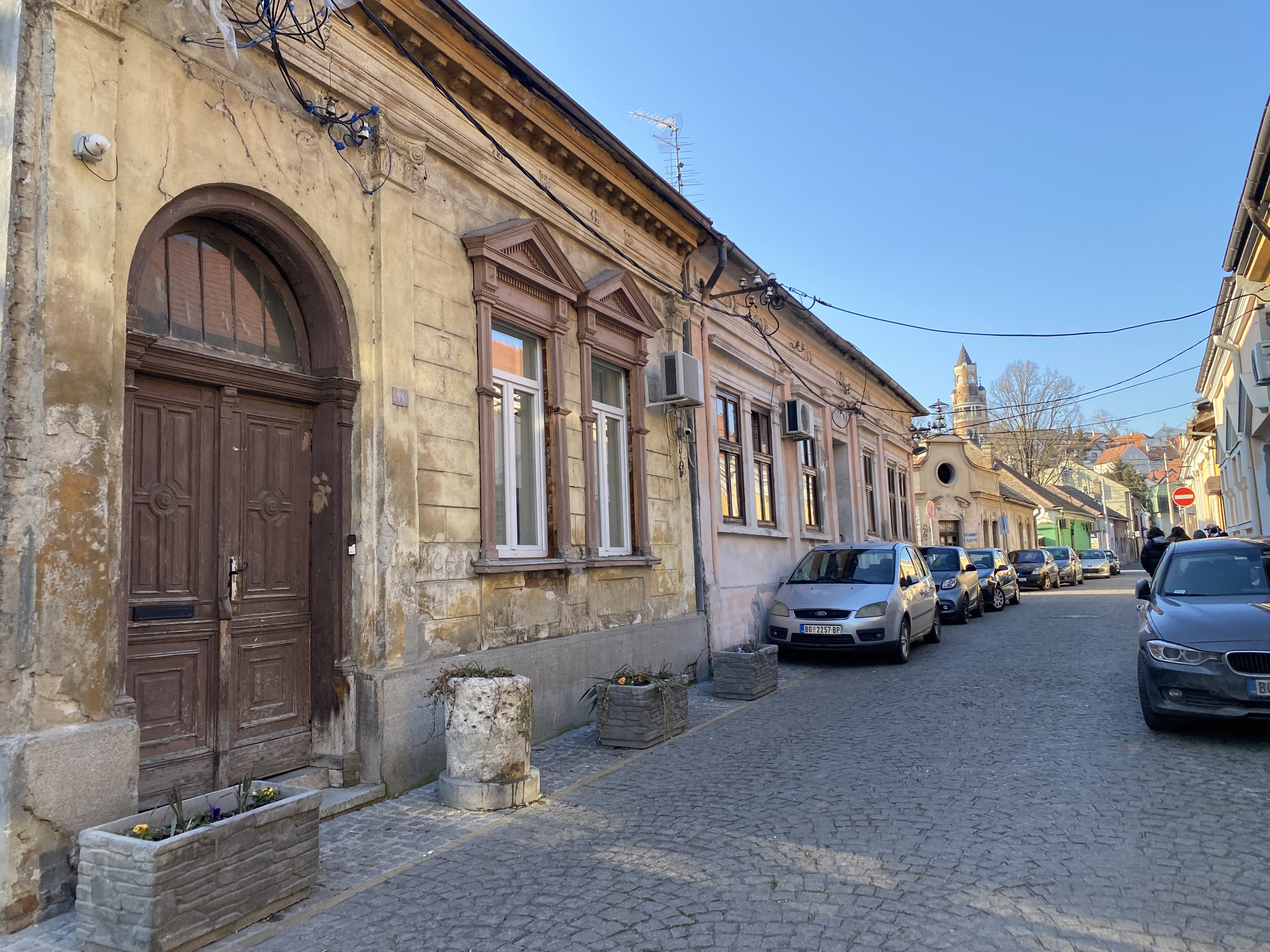
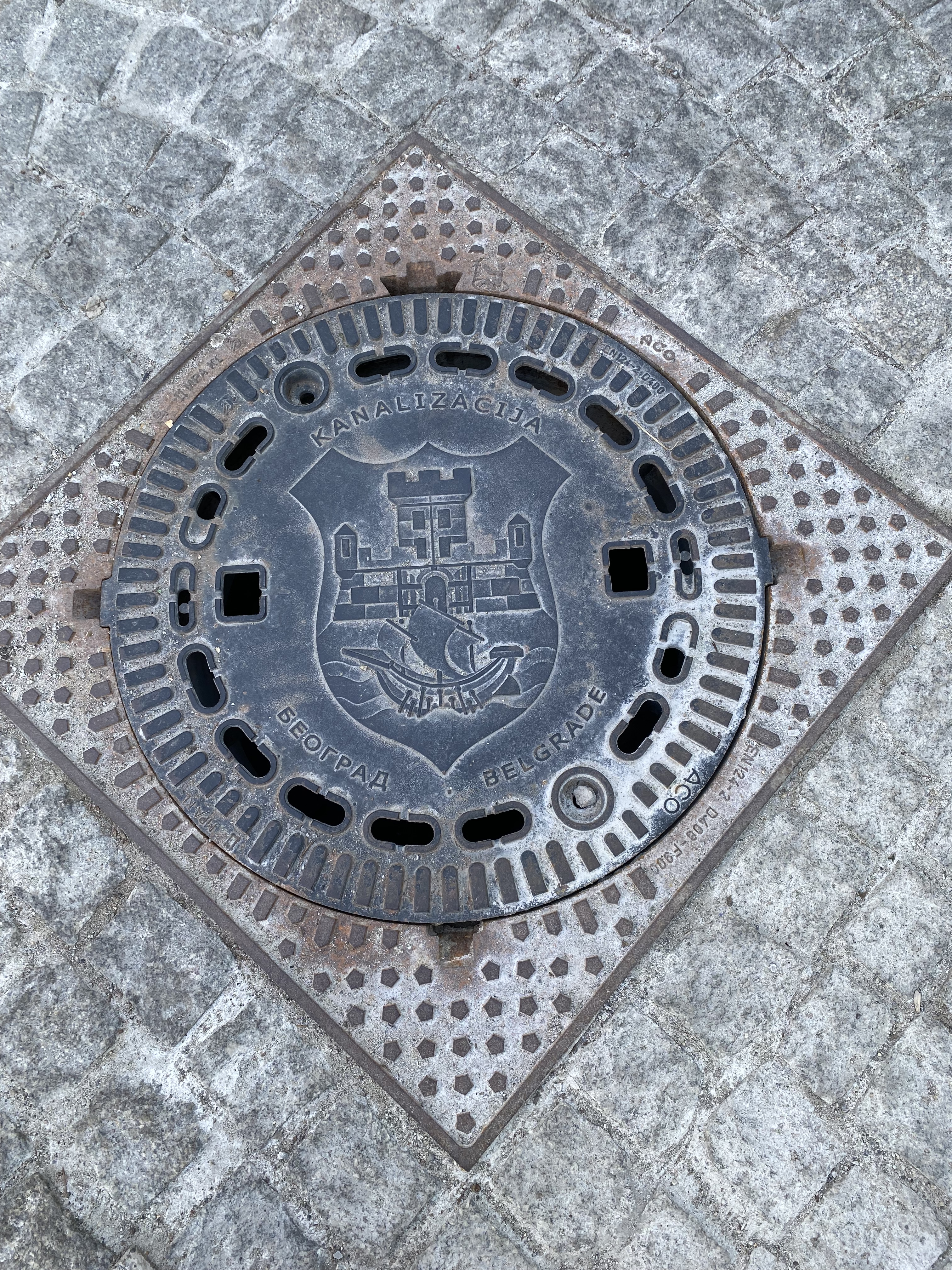
Cobblestone streets are abundant. We followed them up a hill, then up a lot of stairs lined by houses, to arrive at the medieval Zemun Fortress and the Gardo Tower, built in 1896. This is another spot that dates back to antiquity and has played a nearly continuous role in the shifting political control of the region over the centuries. That’s the thing with Europe. We’ve all heard of the bigger places, the Berlins, Pragues and Florences. But what happened in those famous places is echoed in smaller, less-known cities and towns throughout the continent.
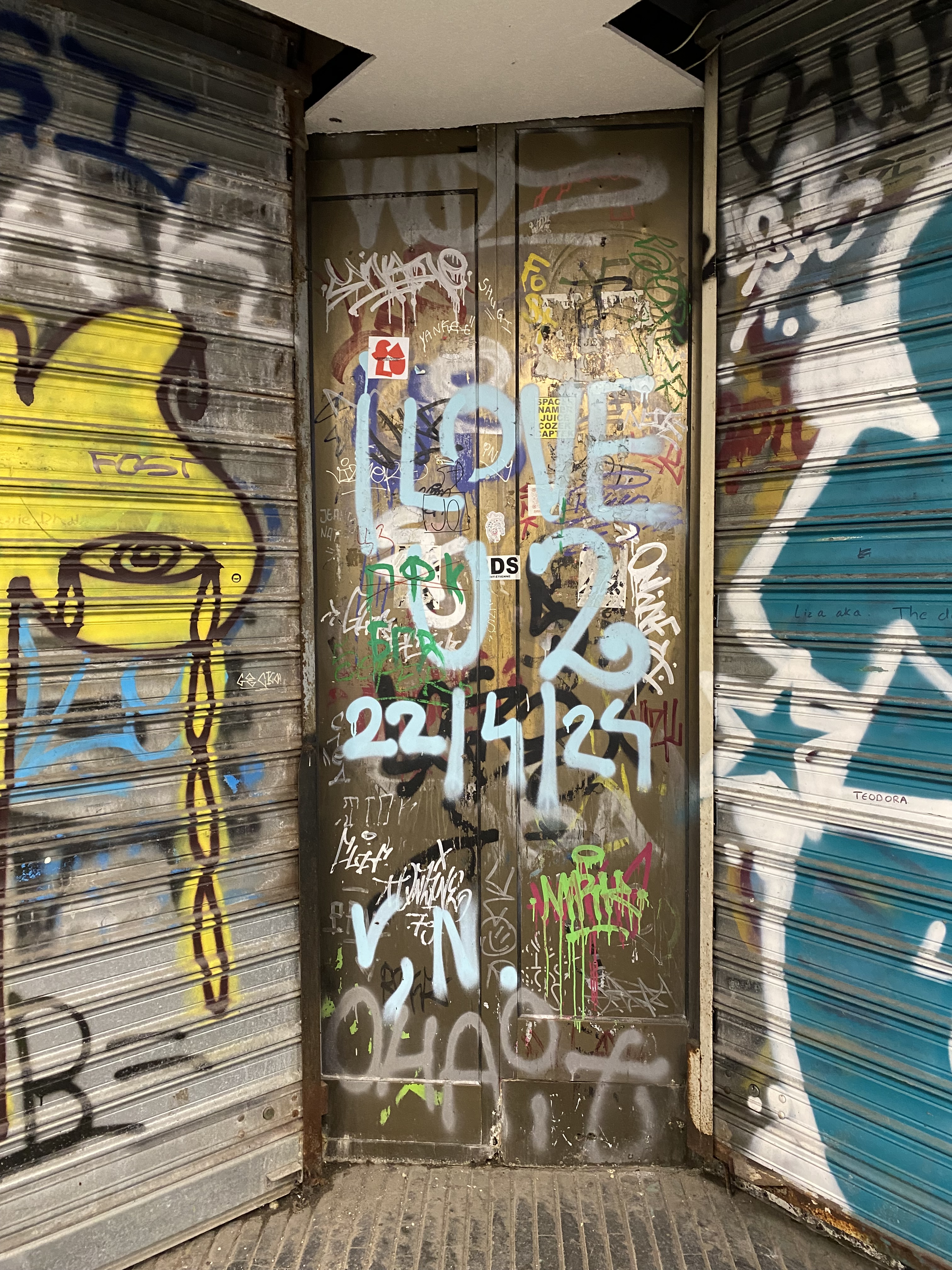
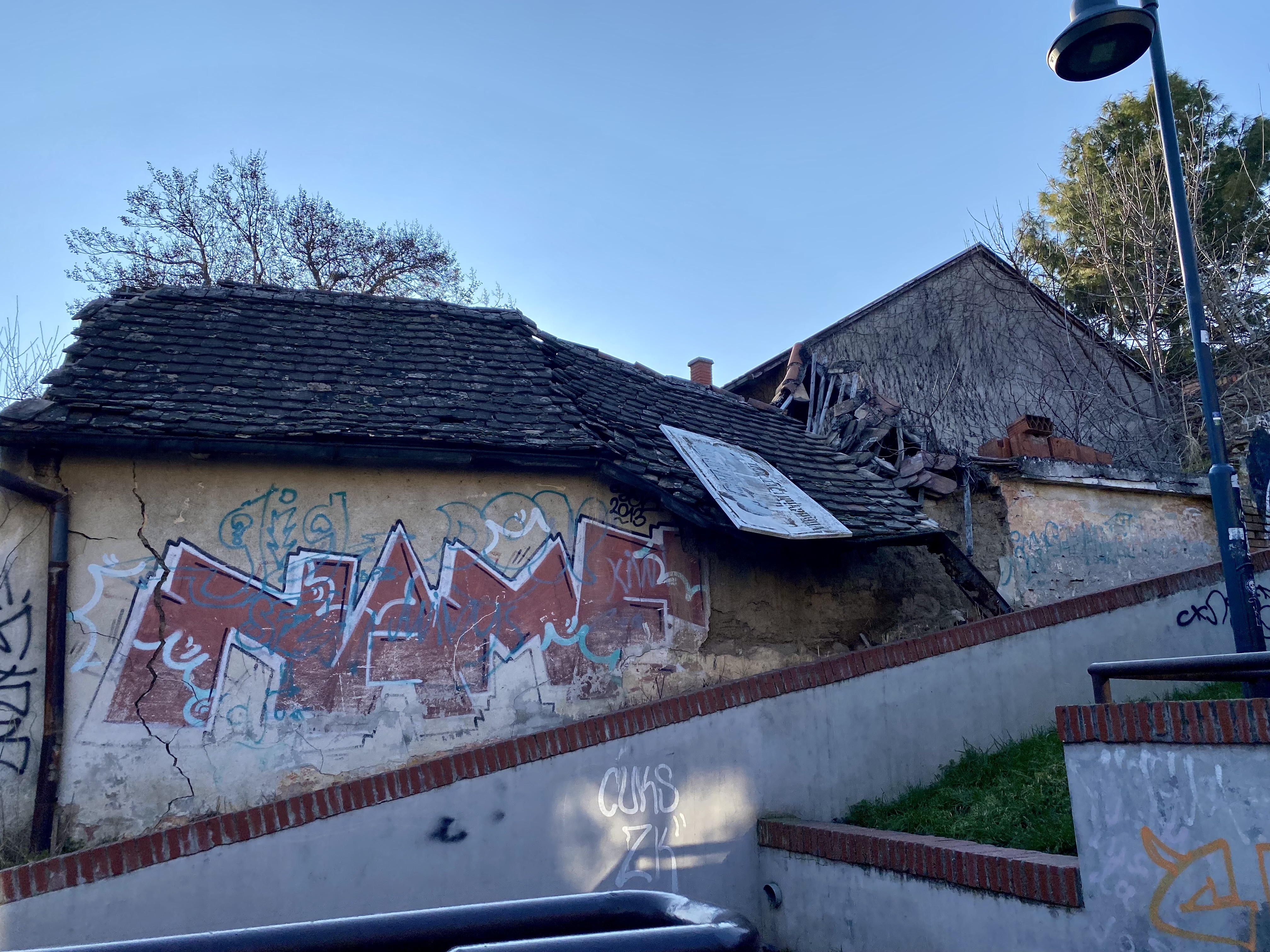
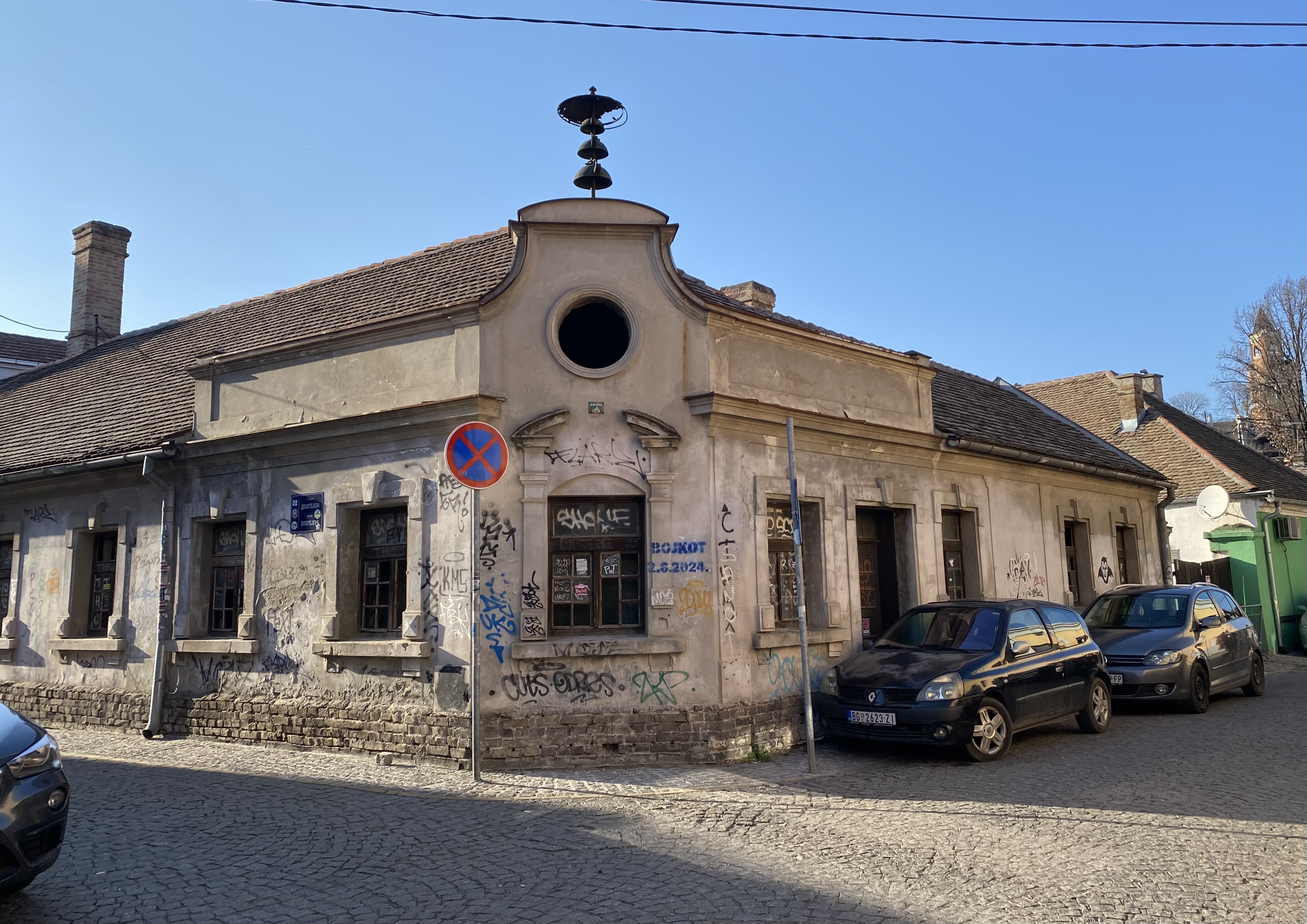
In Zemun, I loved the views back down over the city to the curving river, the late-afternoon sun washing over church steeples and red-tiled rooftops. The area has an era of genteel decay, with a fair amount of peeling paint and graffiti on display, but it’s also clearly a thriving summertime destination.
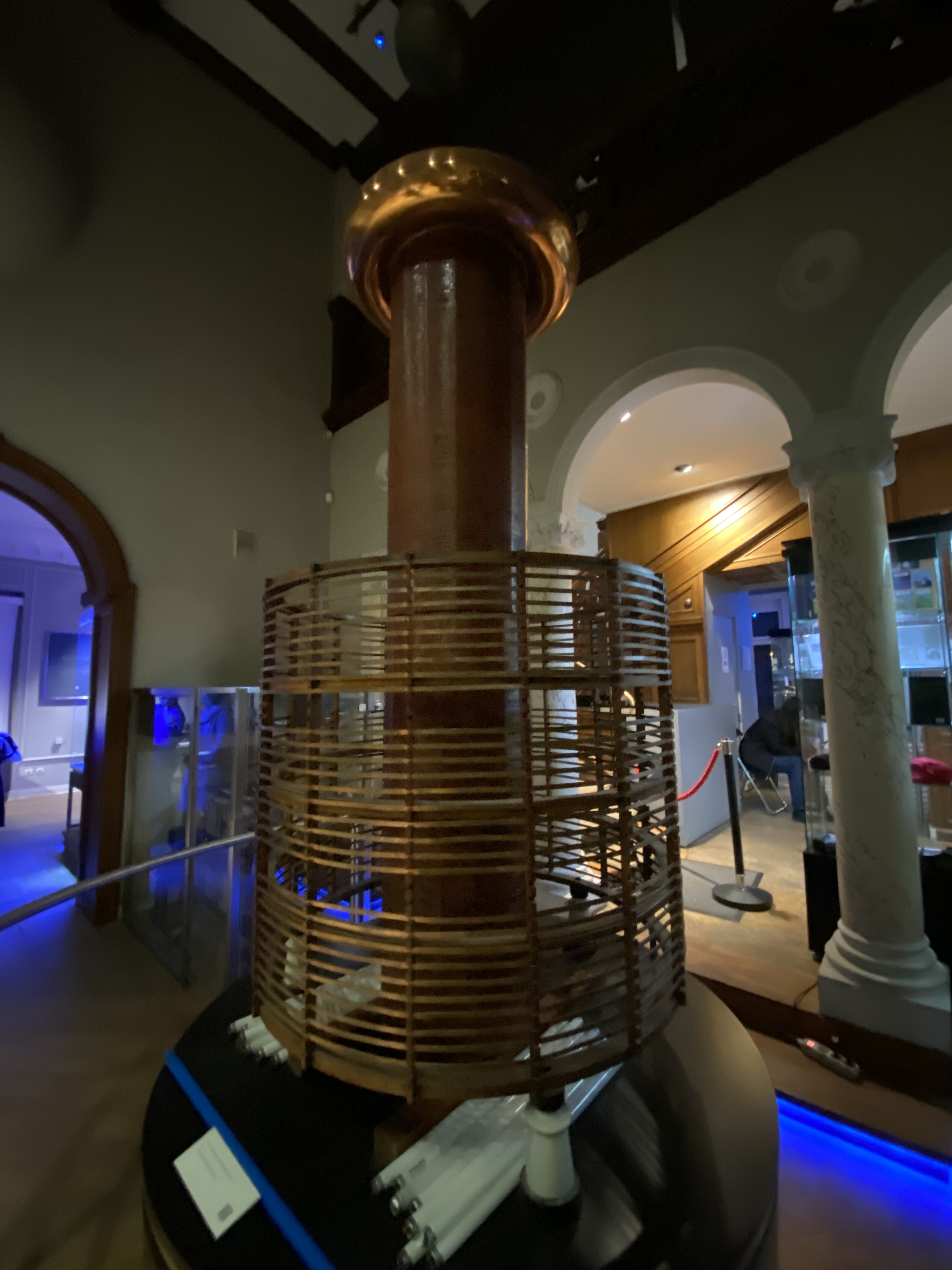
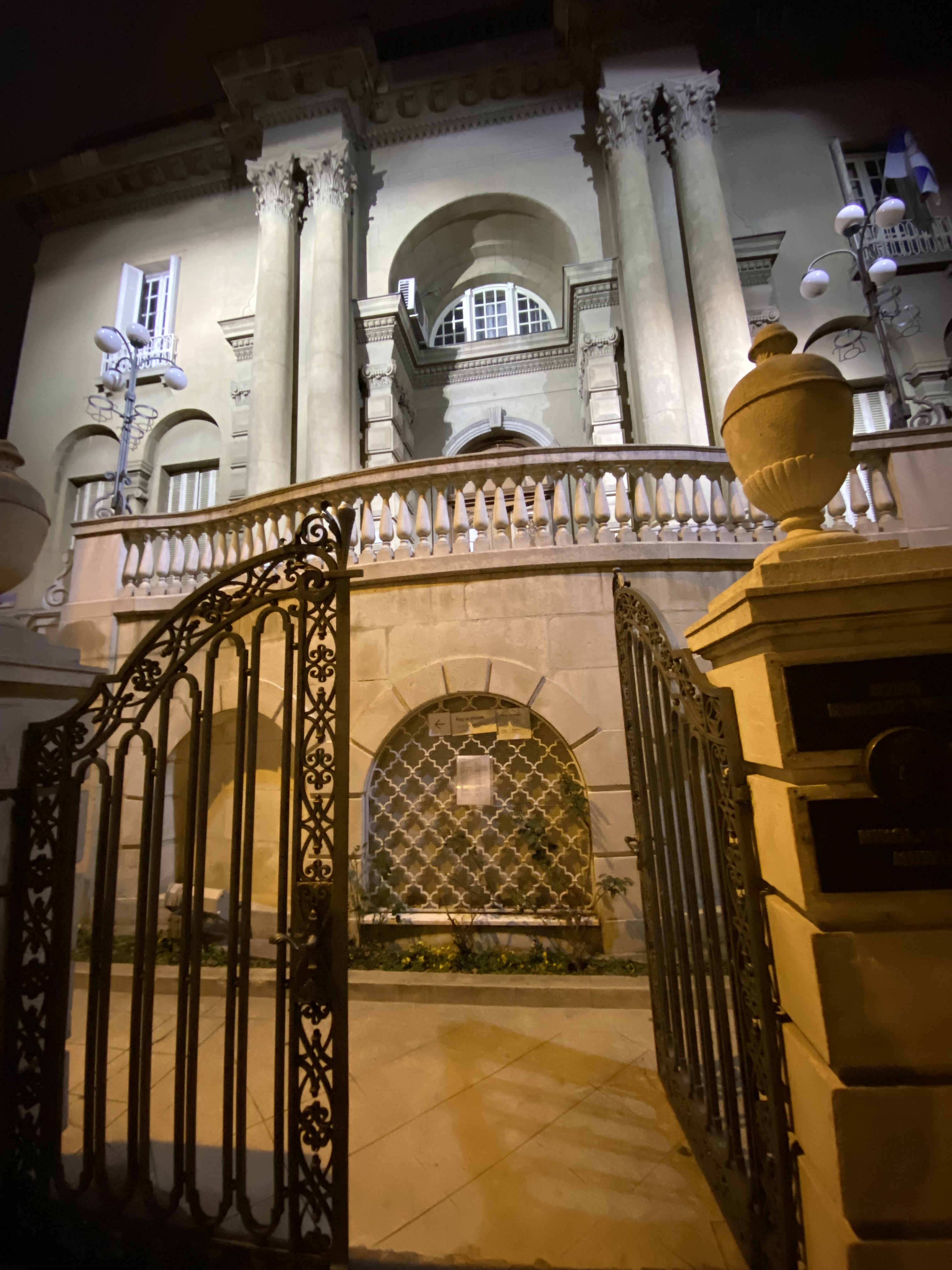
What’s a city visit without at least a couple of museums? On our first full day in Belgrade, we finished our evening at the Nicola Tesla Museum. It’s a small, interactive museum in a historic building which features the Serbian-born Tesla’s personal items, plans and drawings for his many inventions, and a few recreations of those inventions. (And no – he is not responsible for the car now generating headlines around the world.) Oddly, the museum is also his final resting space: The urn with his remains is on display.
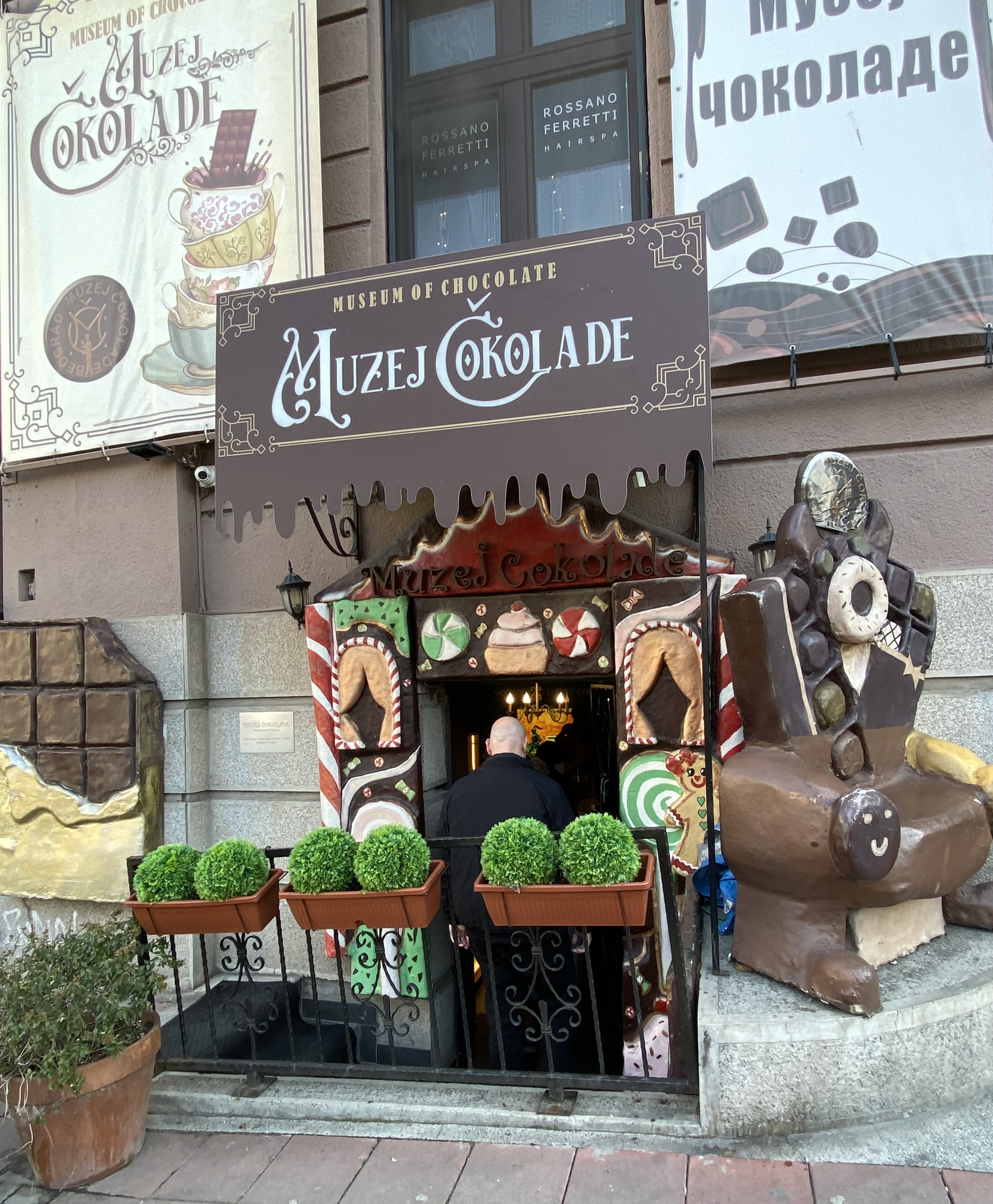
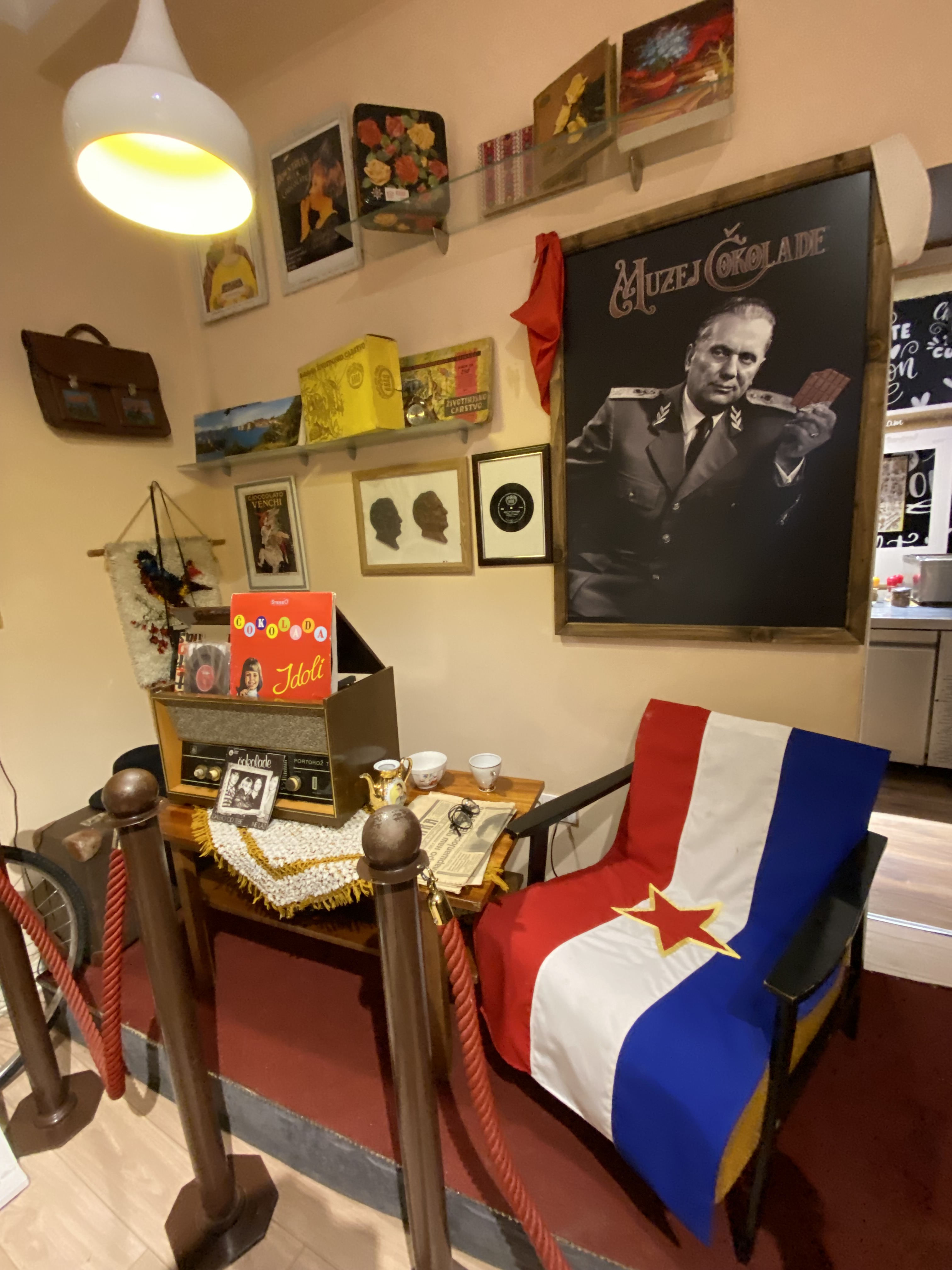
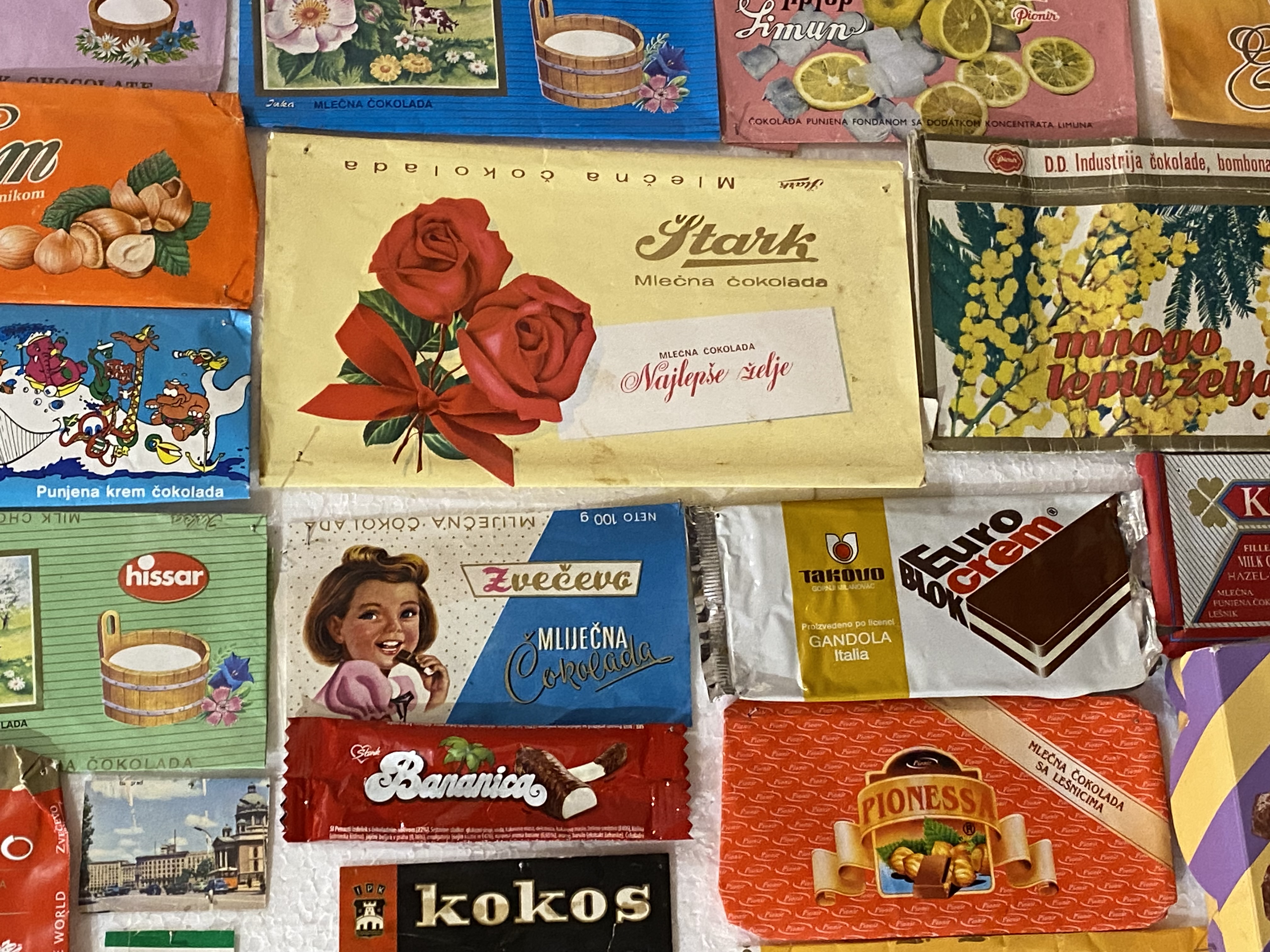
On our last full day, we visited the equally fascinating Muzej Cokolade, where we made our own chocolate bars and learned about the history of chocolate in Serbia and Yugoslavia. The displays of chocolate wrappers and tins over the years were fun to see, and included wrappers from the still popular Štark Chocolates and Bananica chocolates. (I can vouch for their tastiness.) A framed portrait of former president Josip Broz Tito in his military uniform posing with a chocolate bar was particularly memorable.
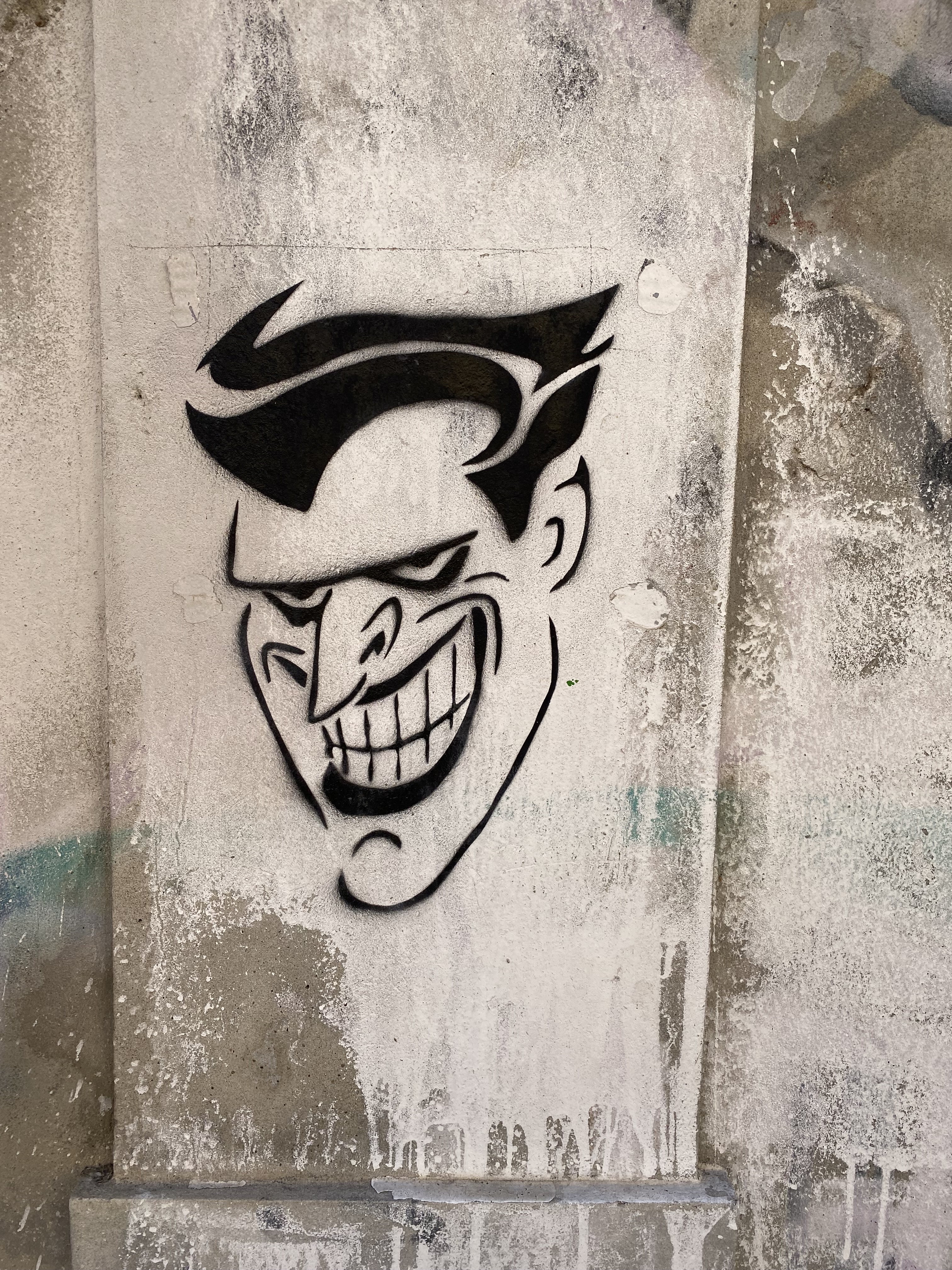
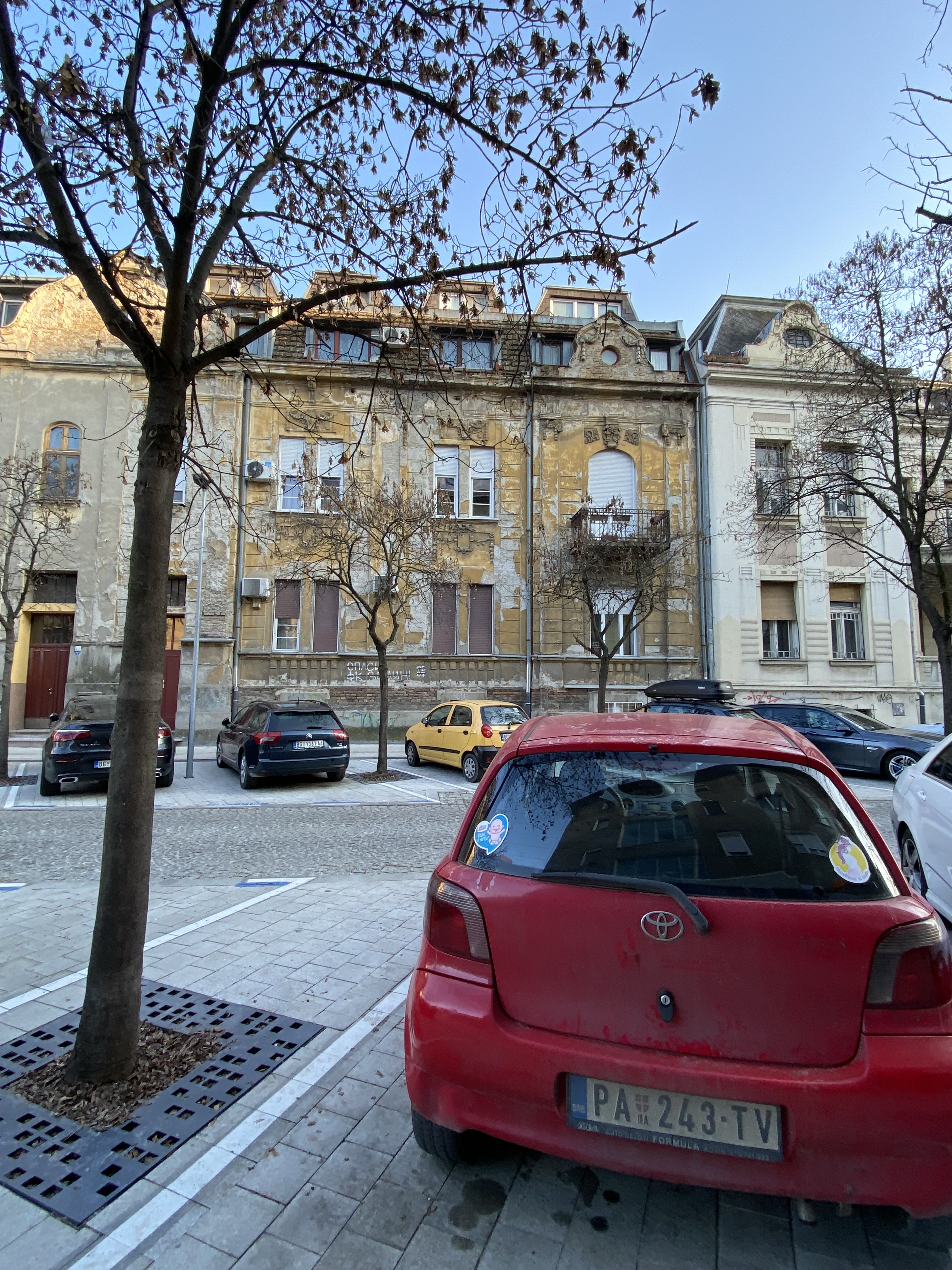
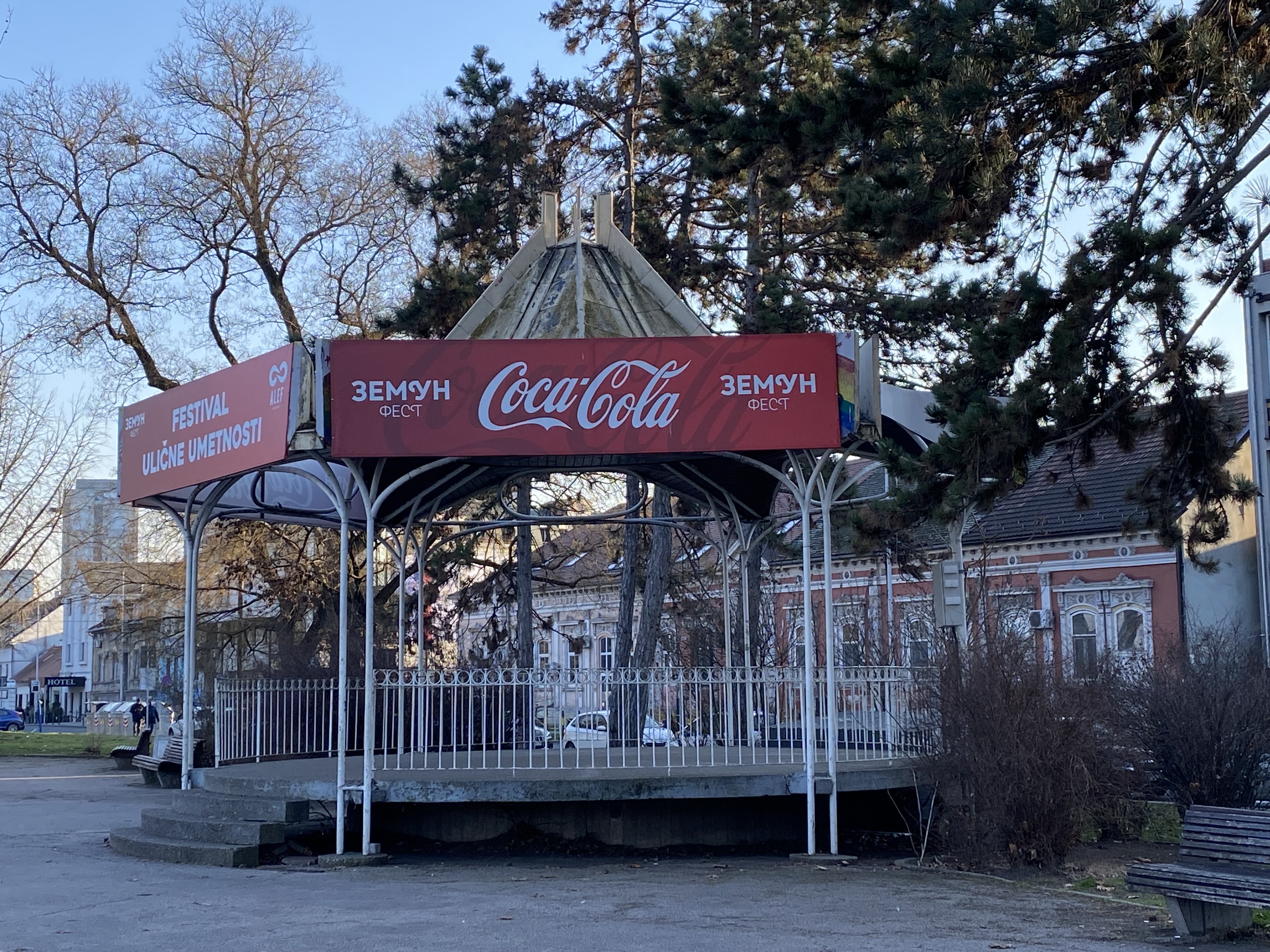
Food is one of my favorite topics so let’s save that for the next post. Until then, enjoy a few pictures of Belgrade and Zemun.
Belgrade – Republic Square
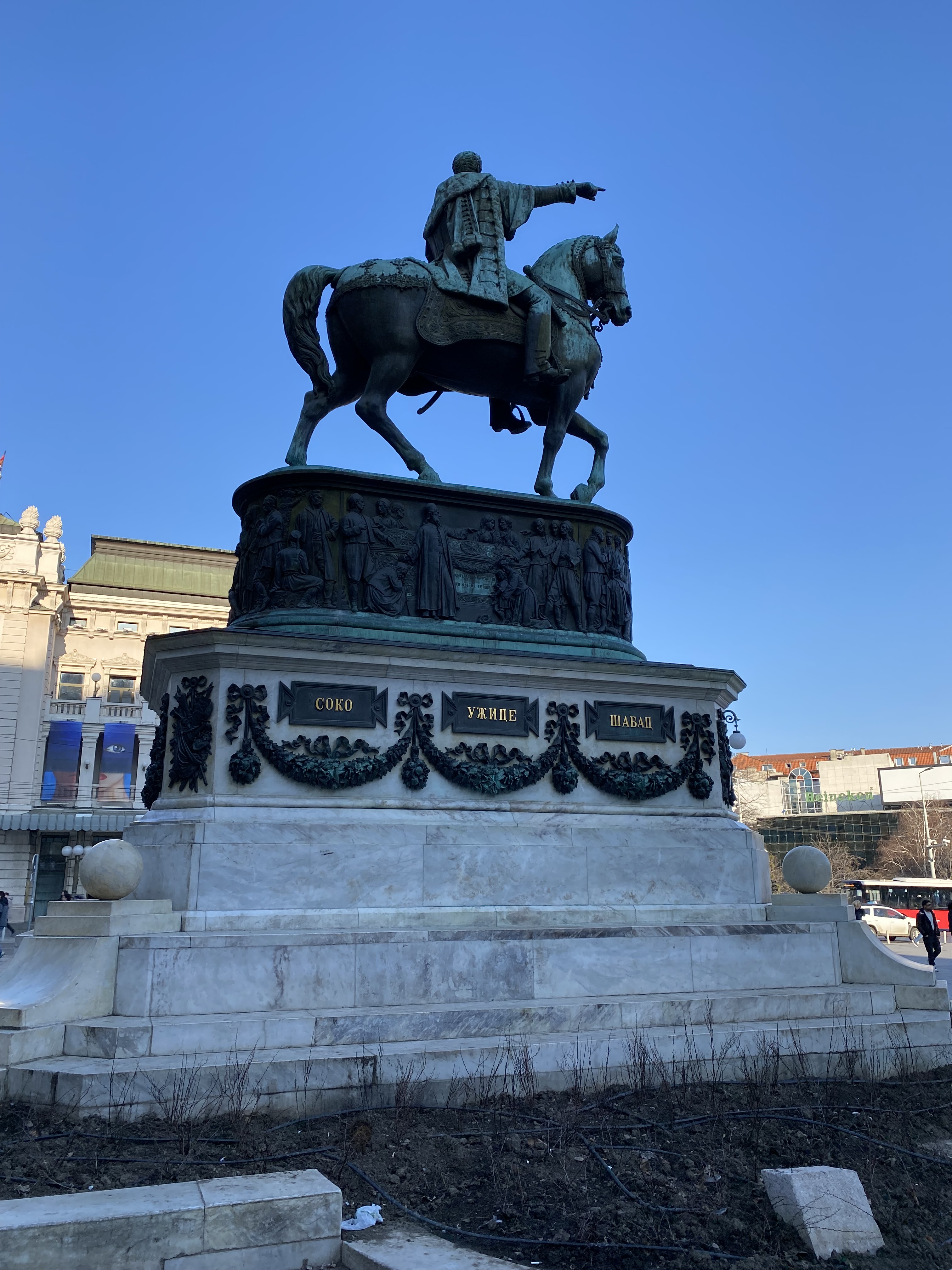

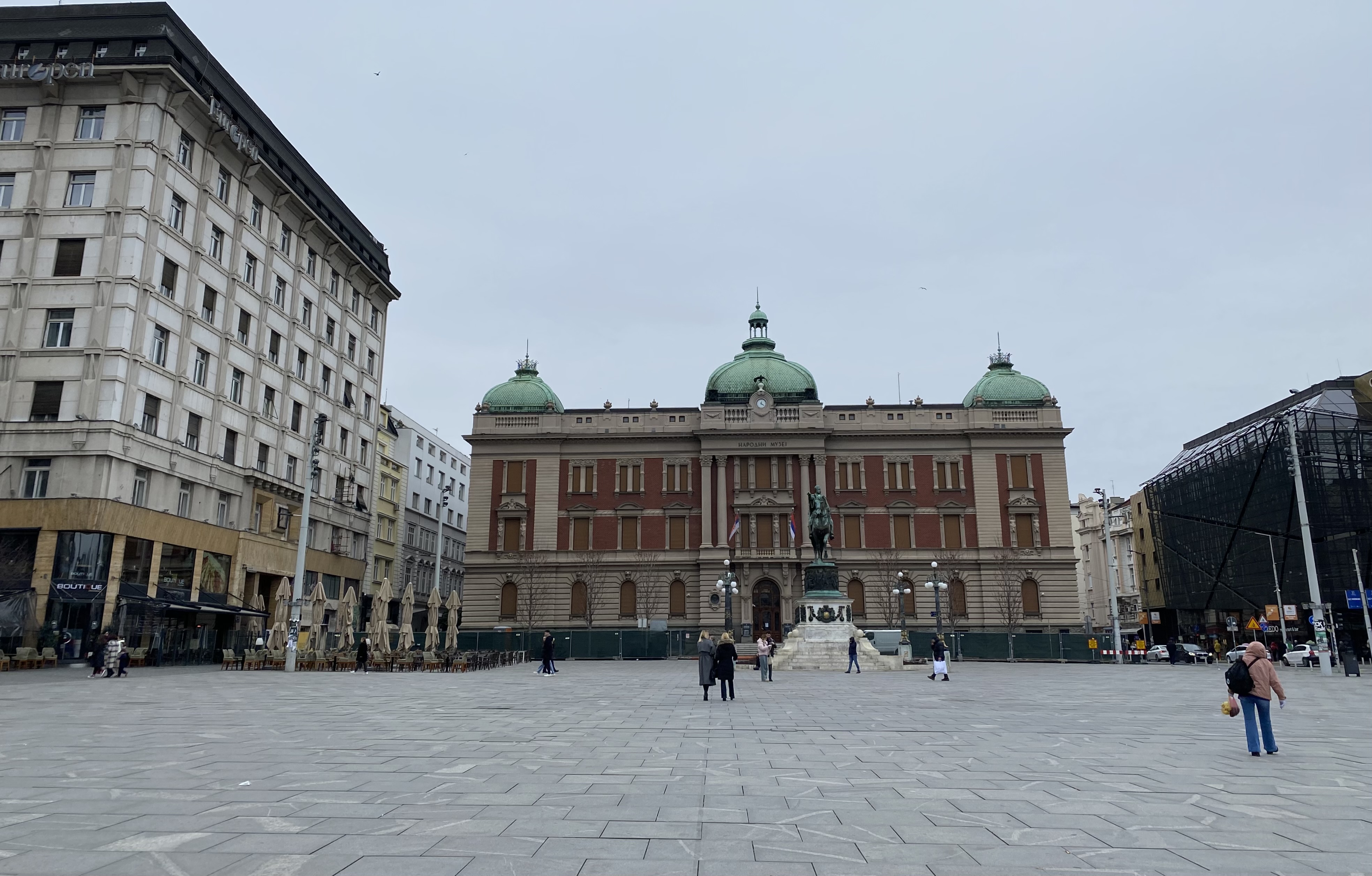

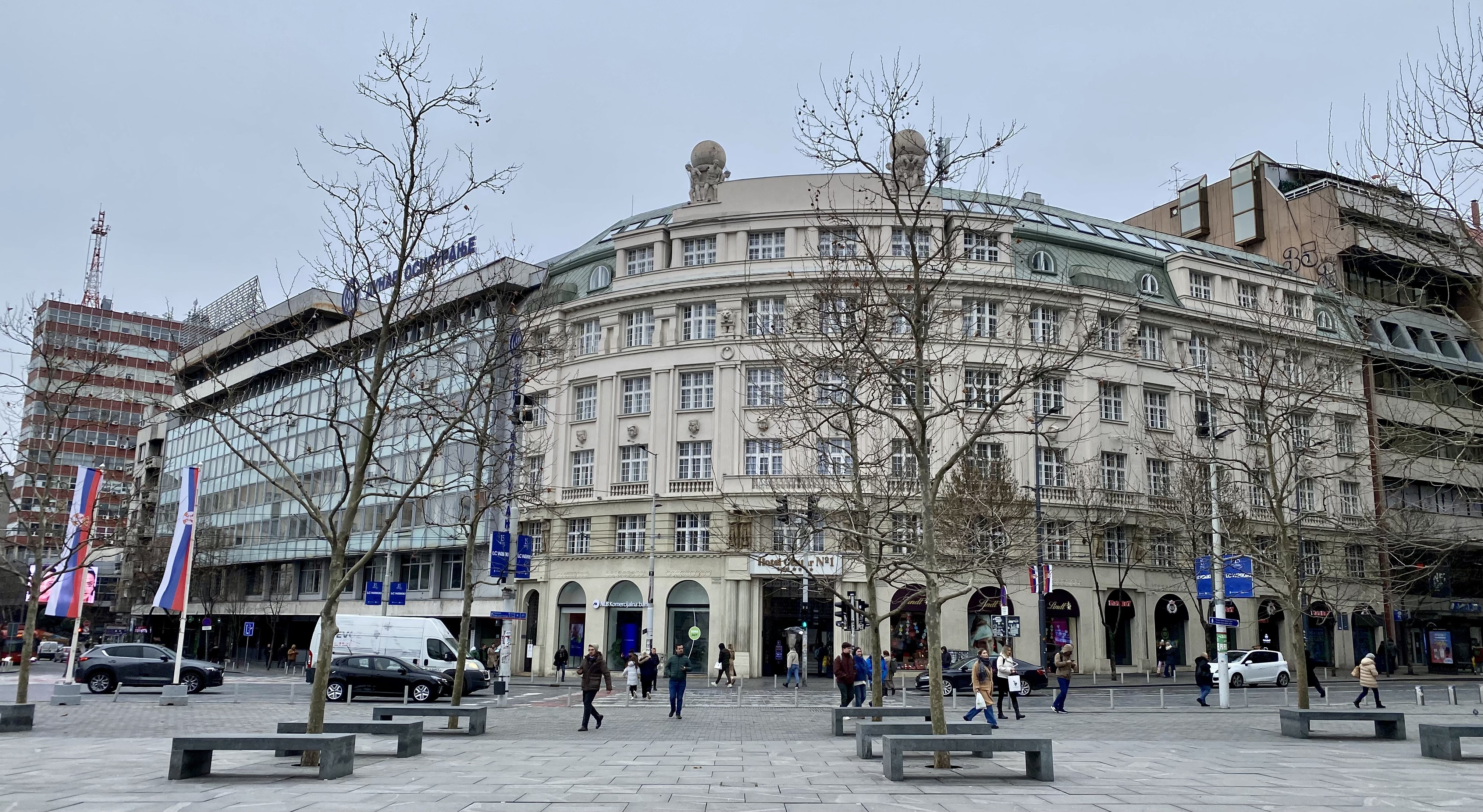
Belgrade – city center

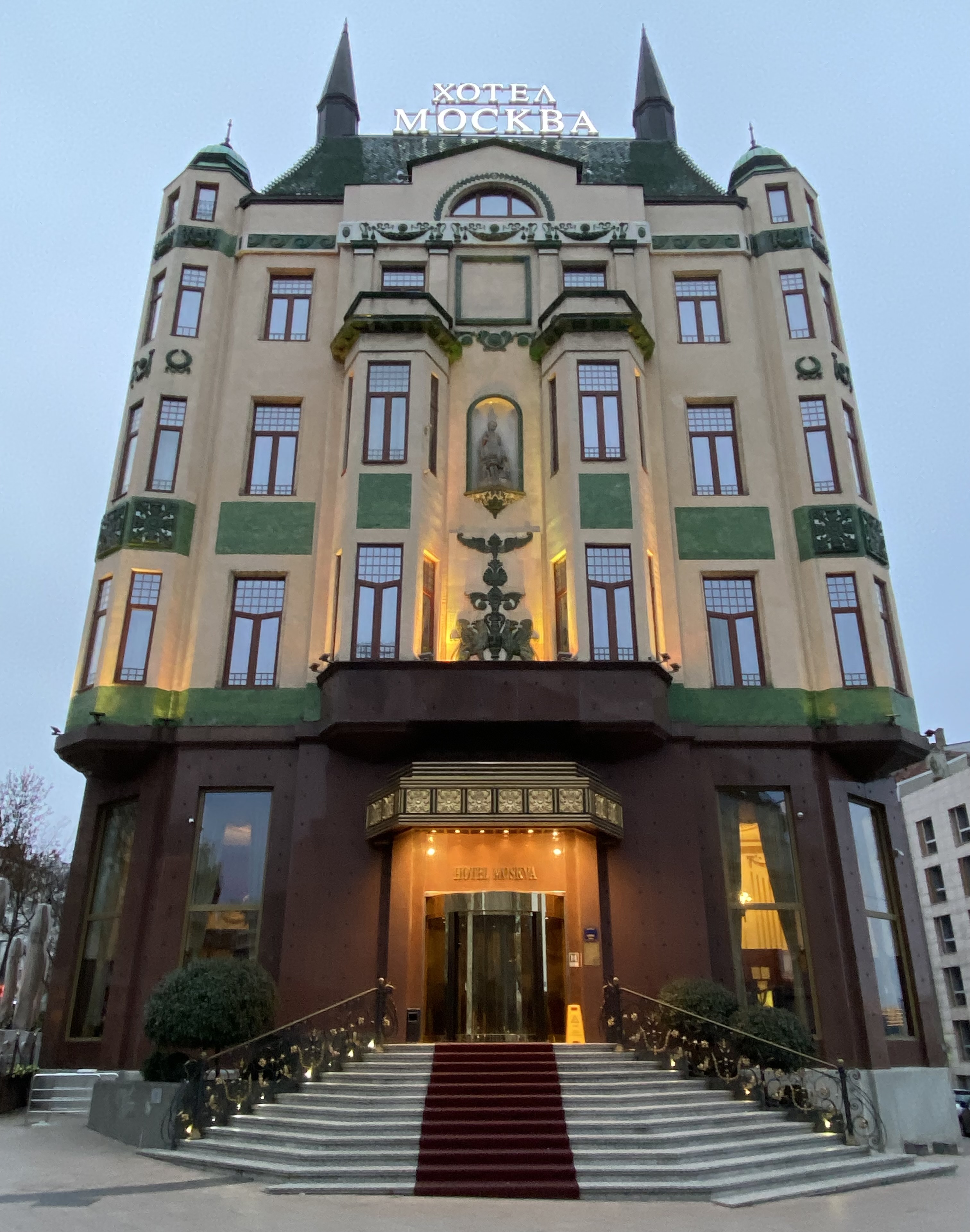
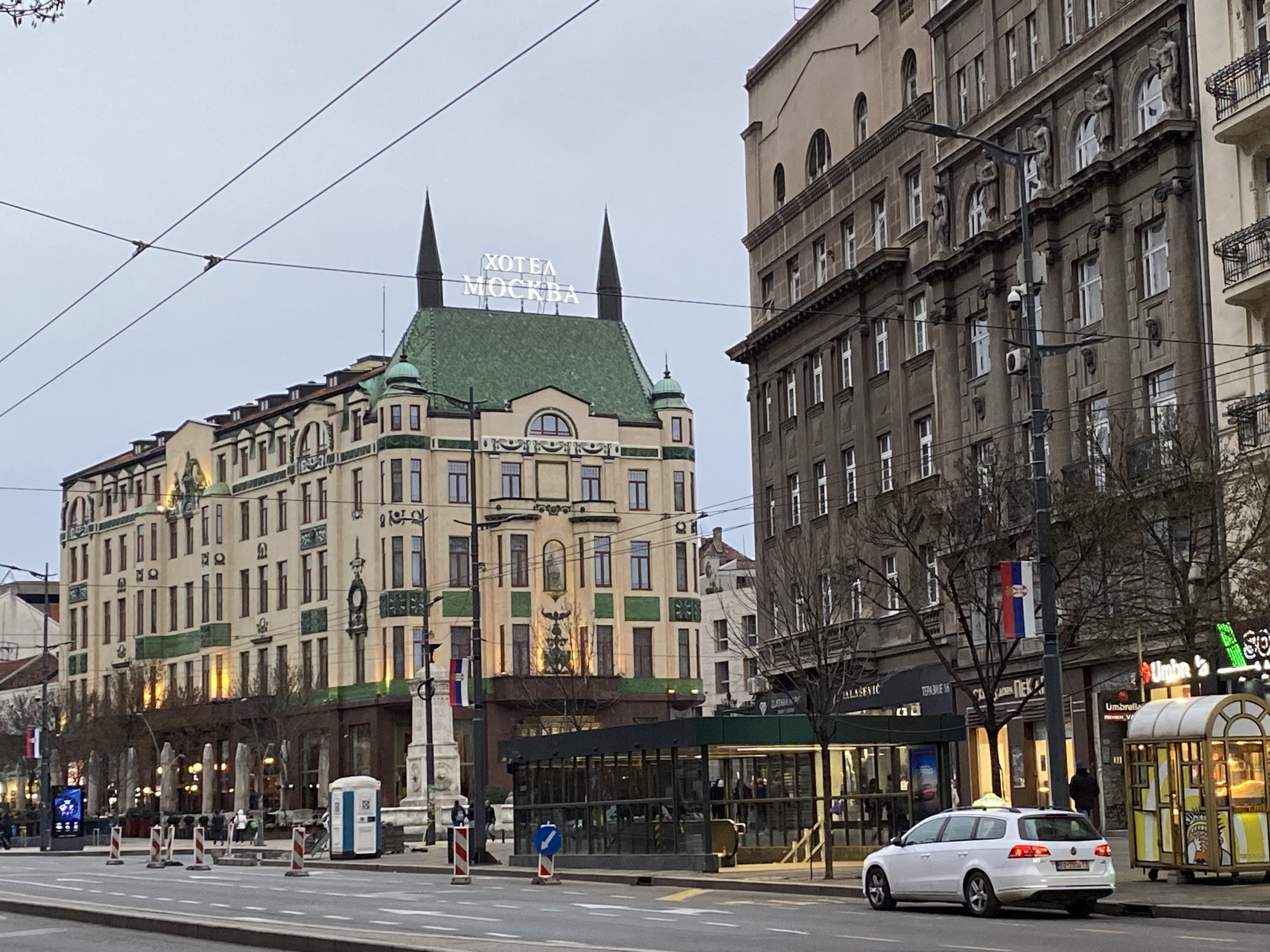
Belgrade – Hotel Moscva
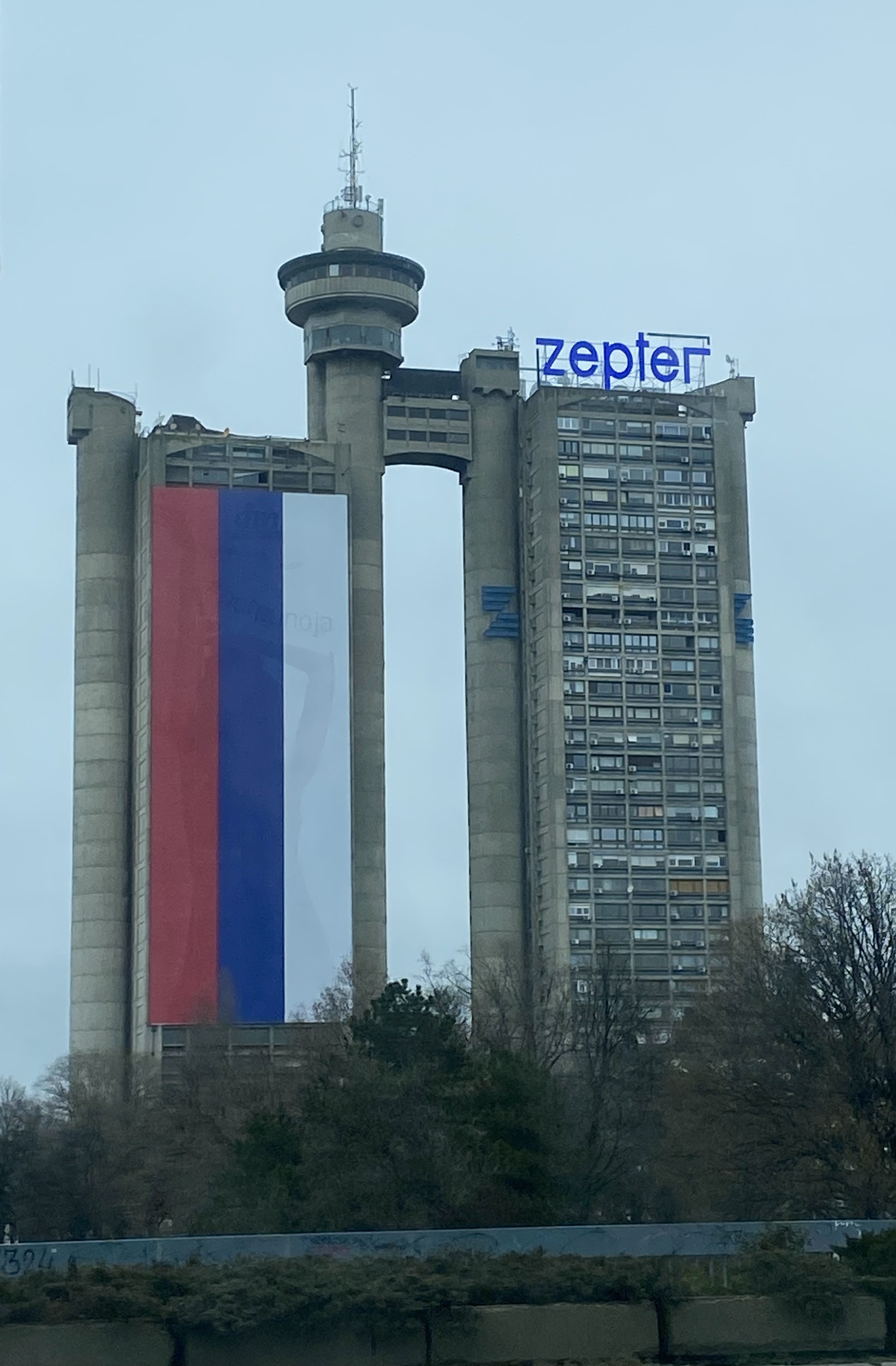
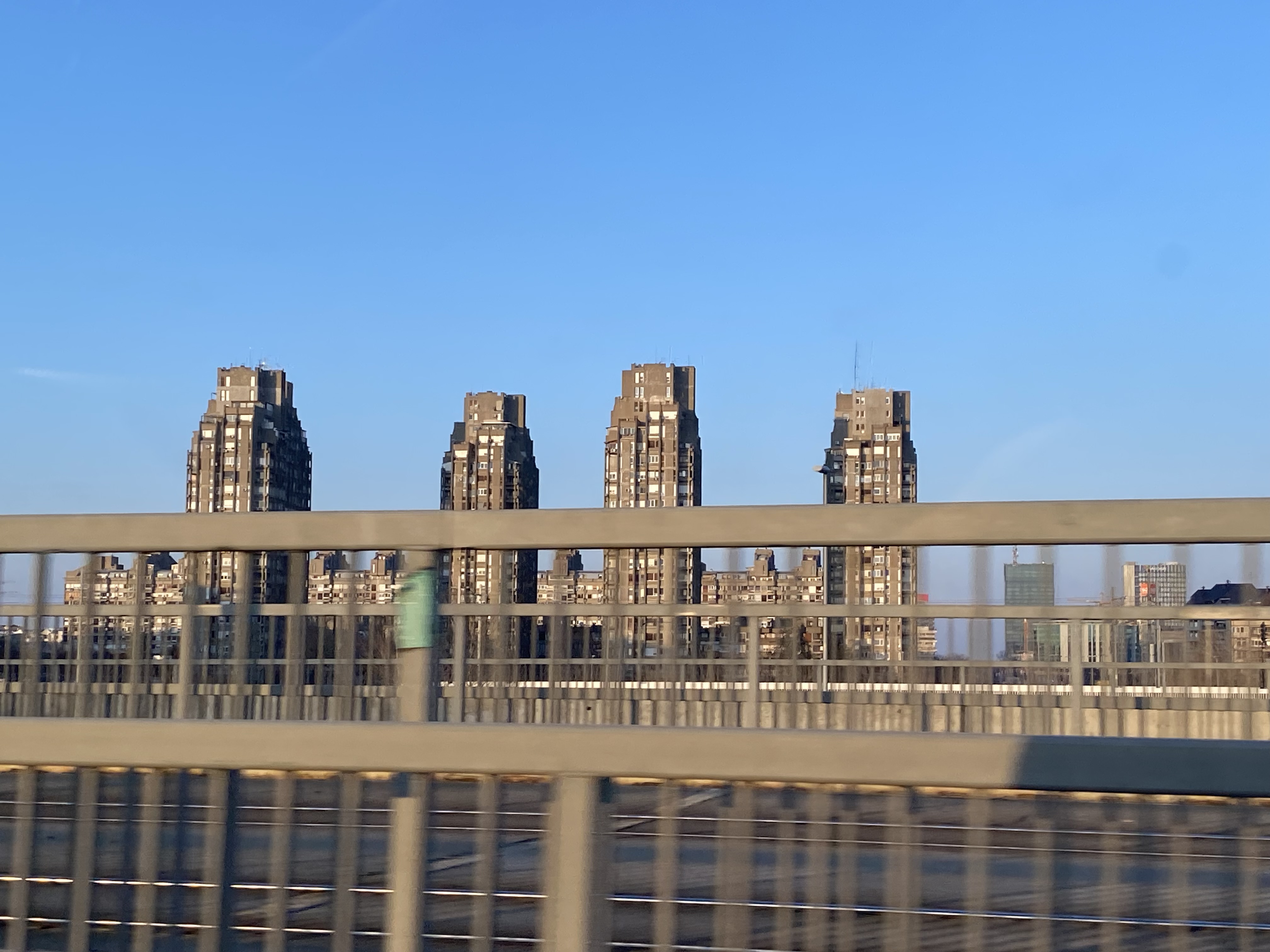
Belgrade – Genex Tower

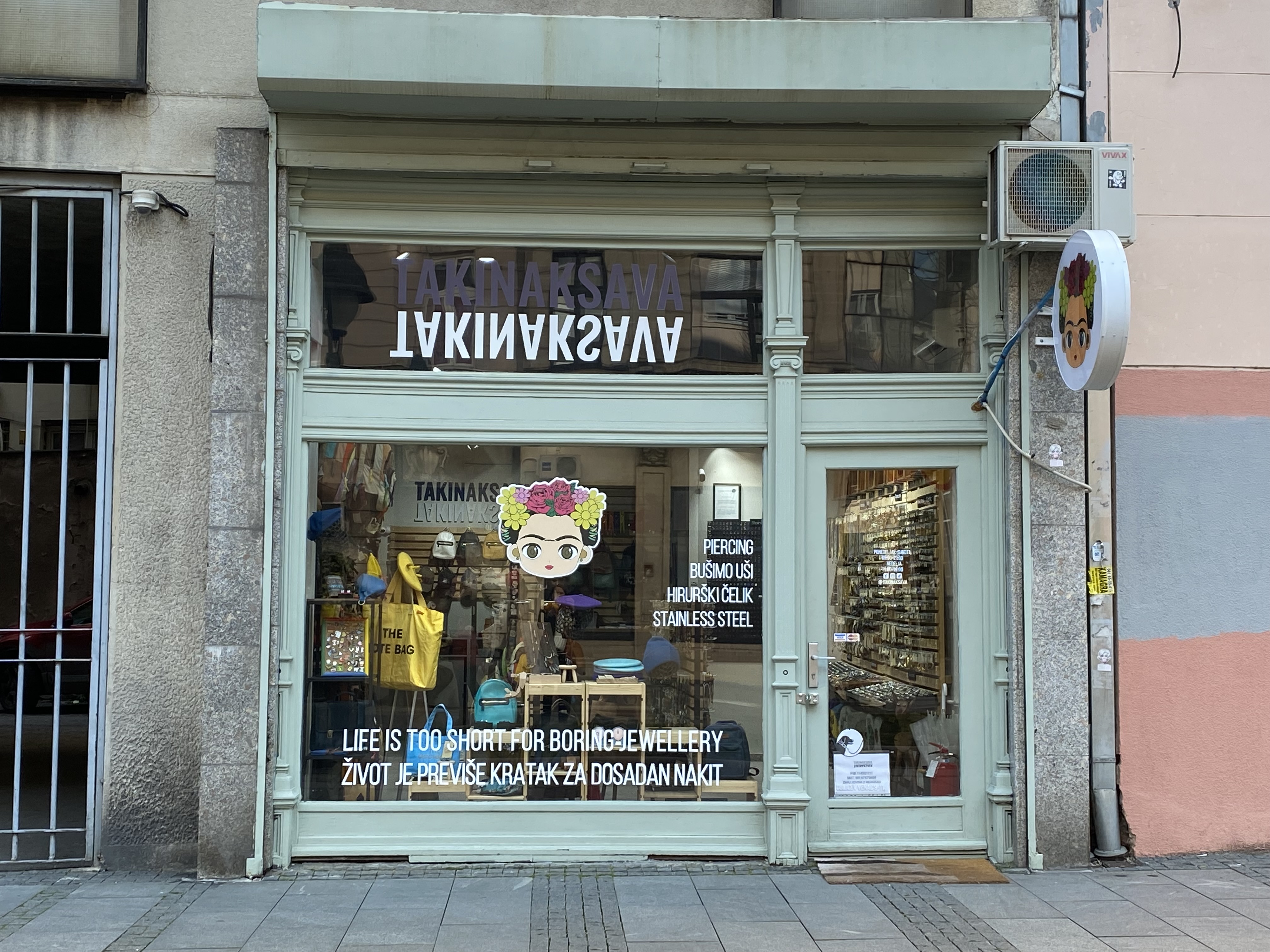
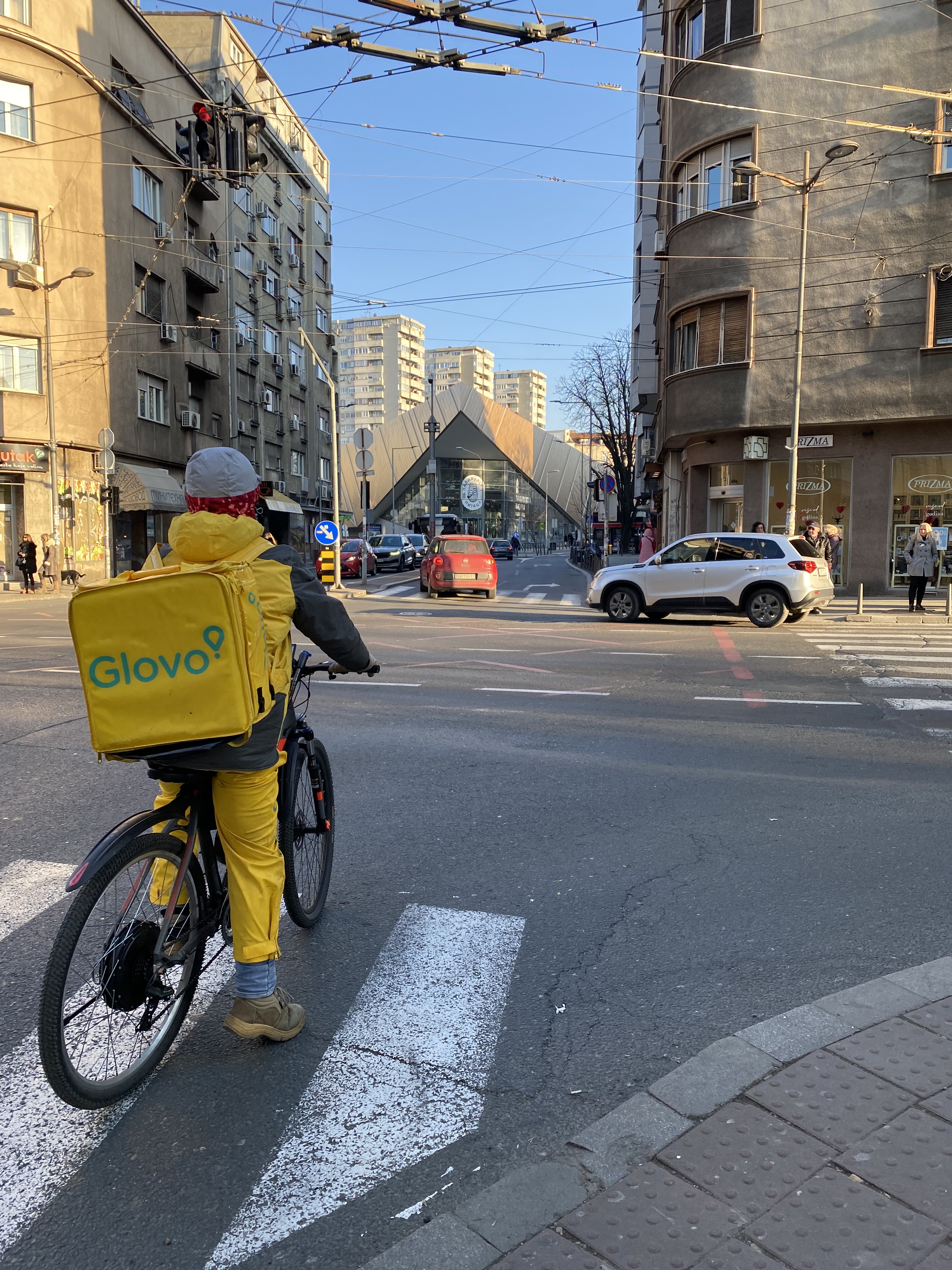
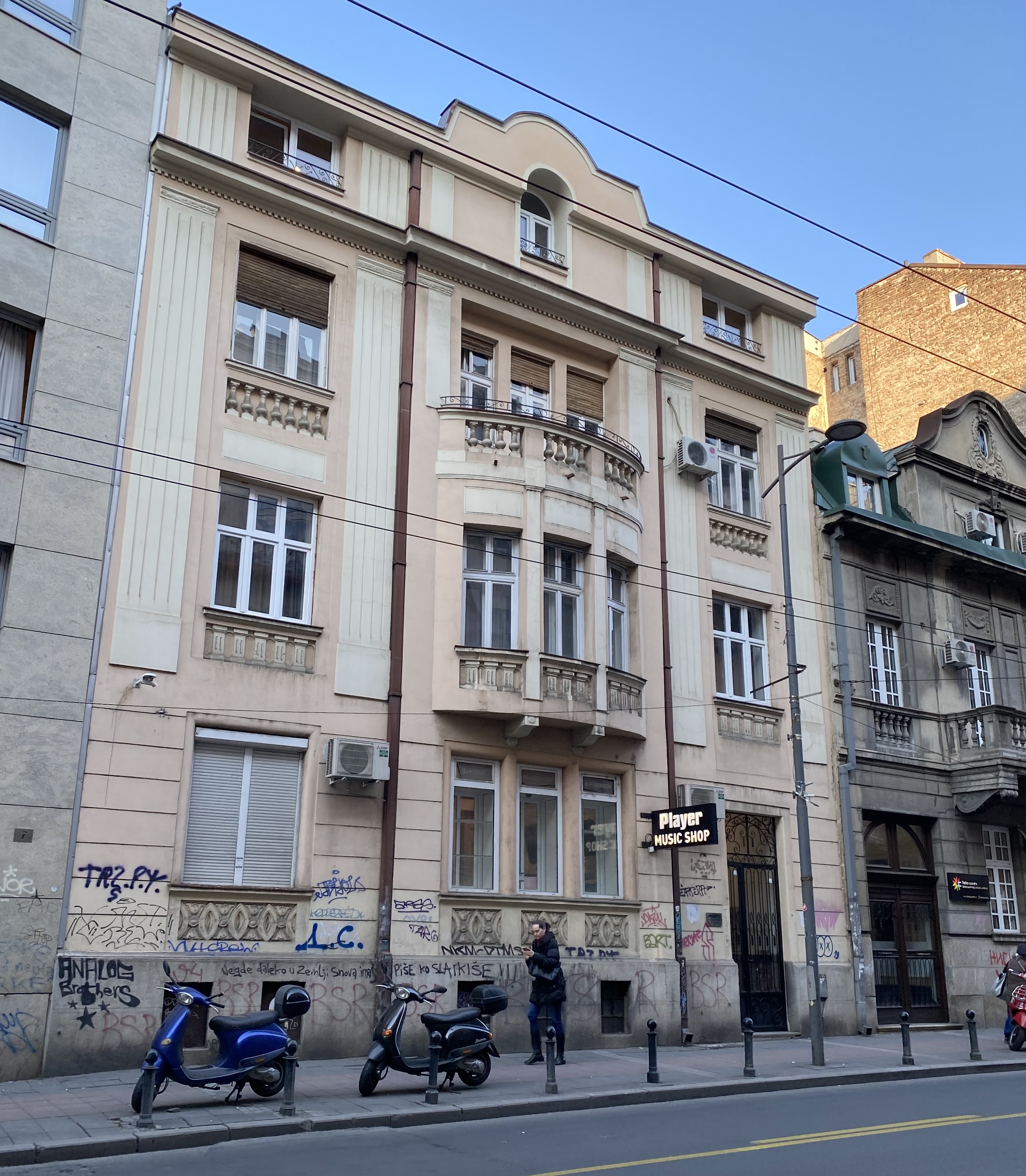
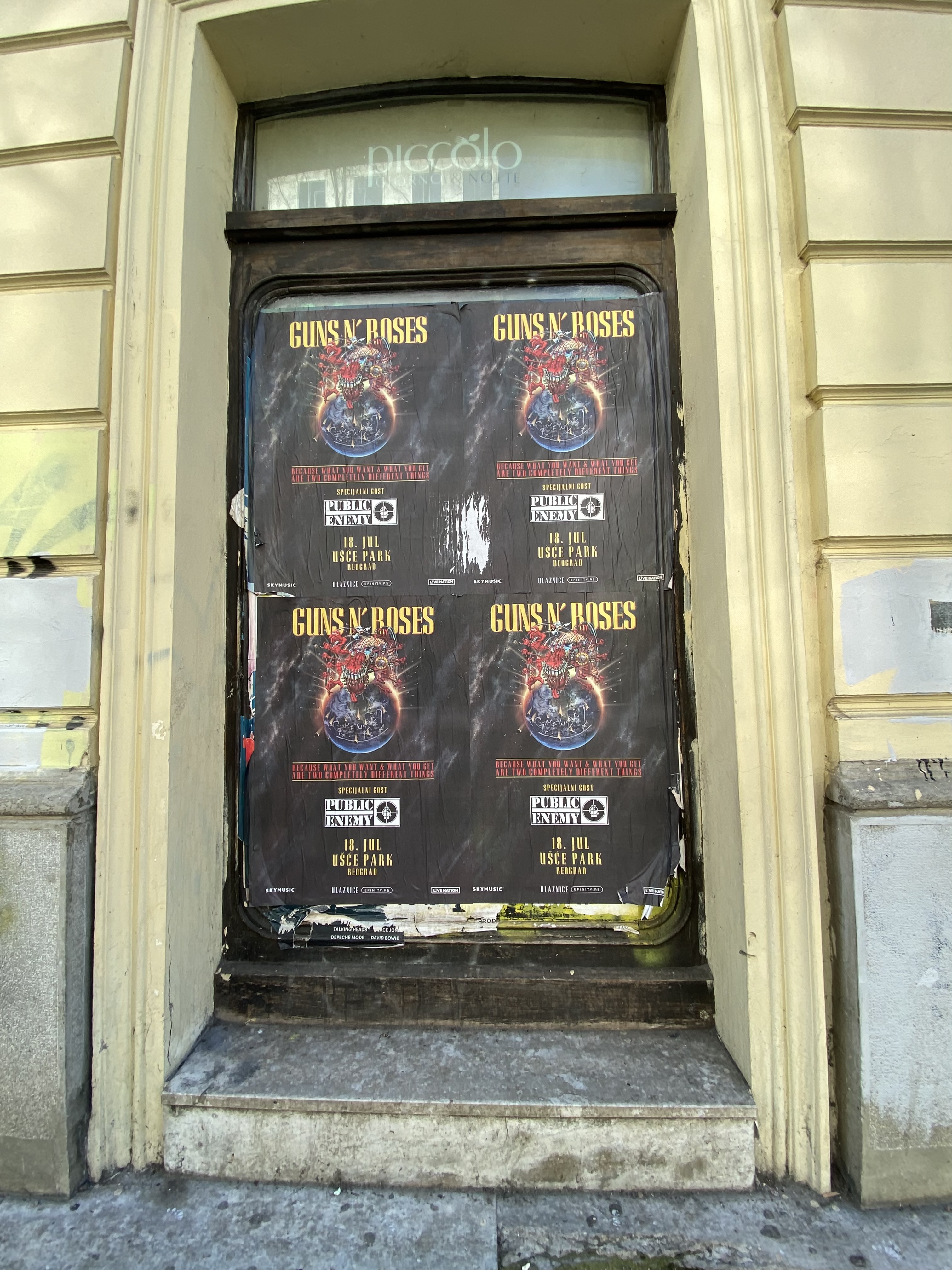
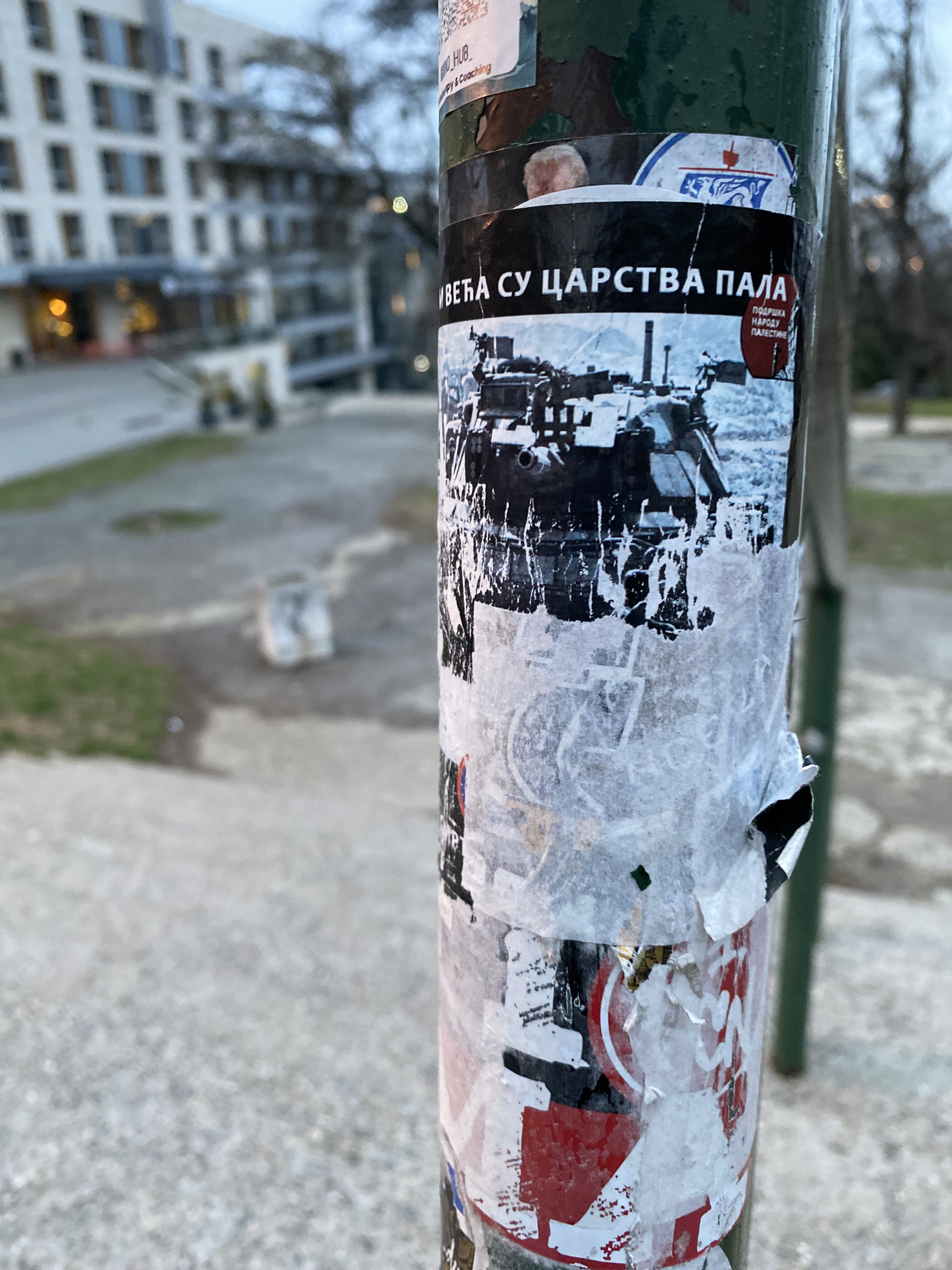
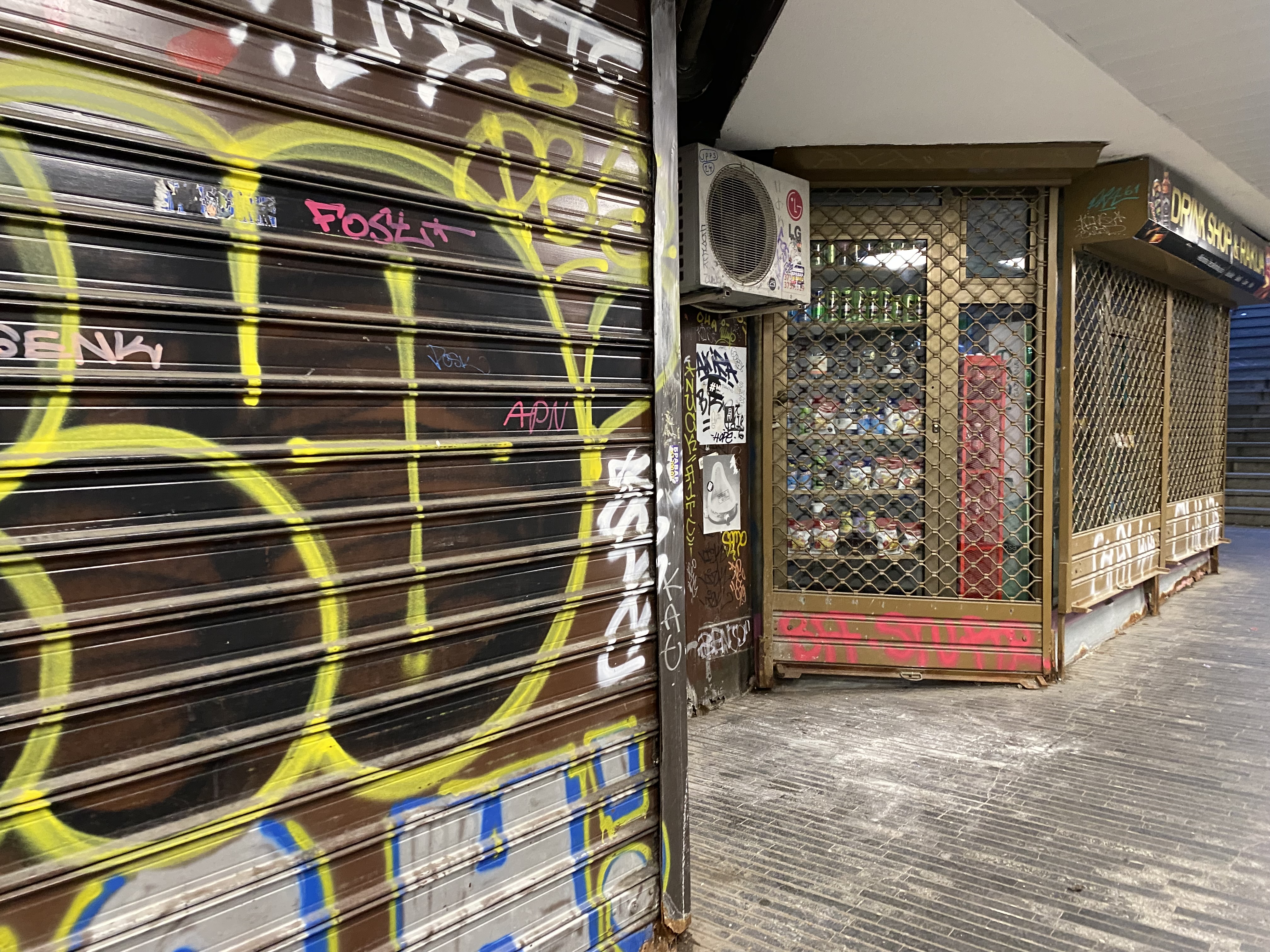
Belgrade – out and about

Belgrade – Waterfront
Belgrade – Nikola Tesla and Muzej Cokolade

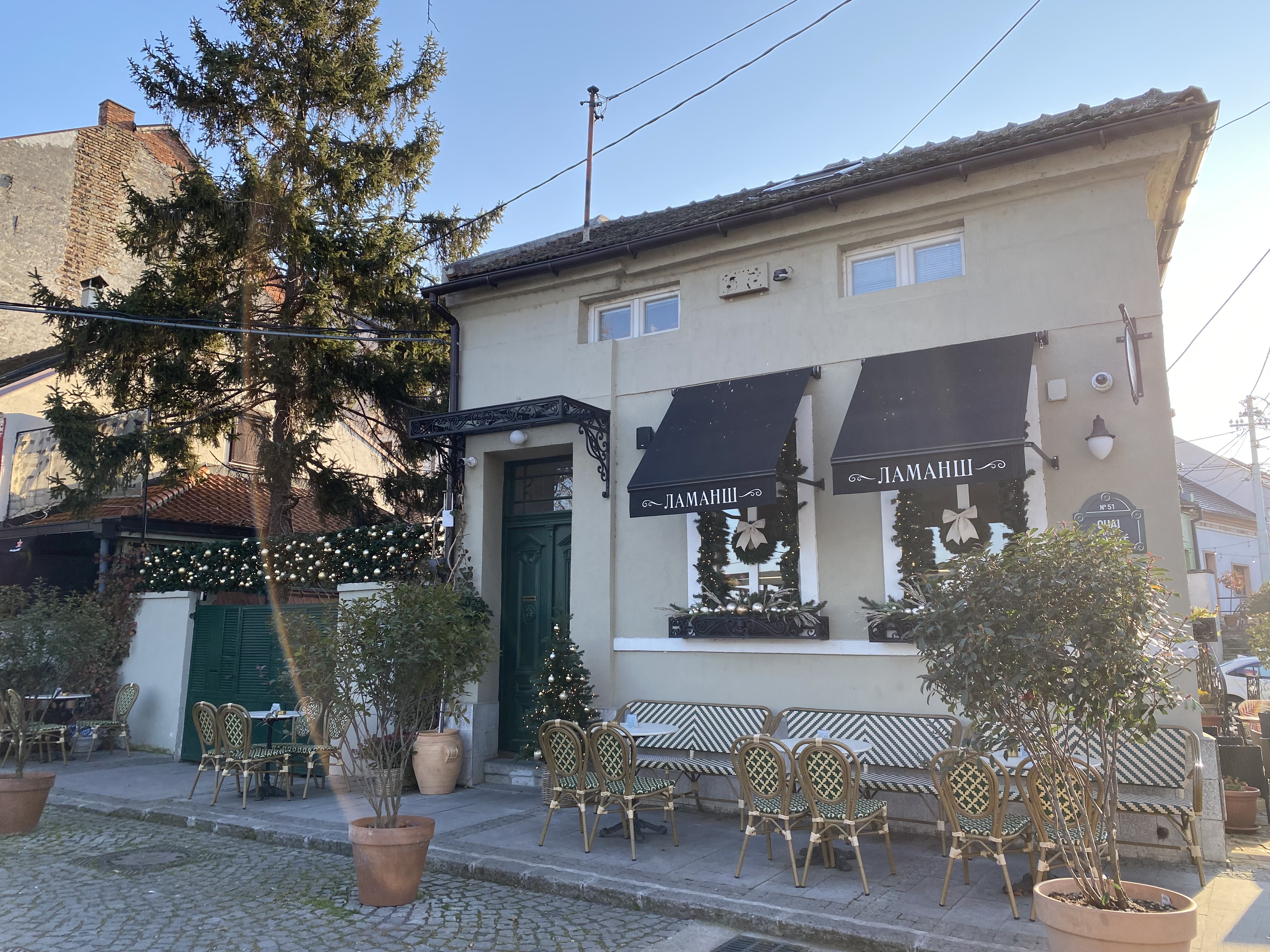
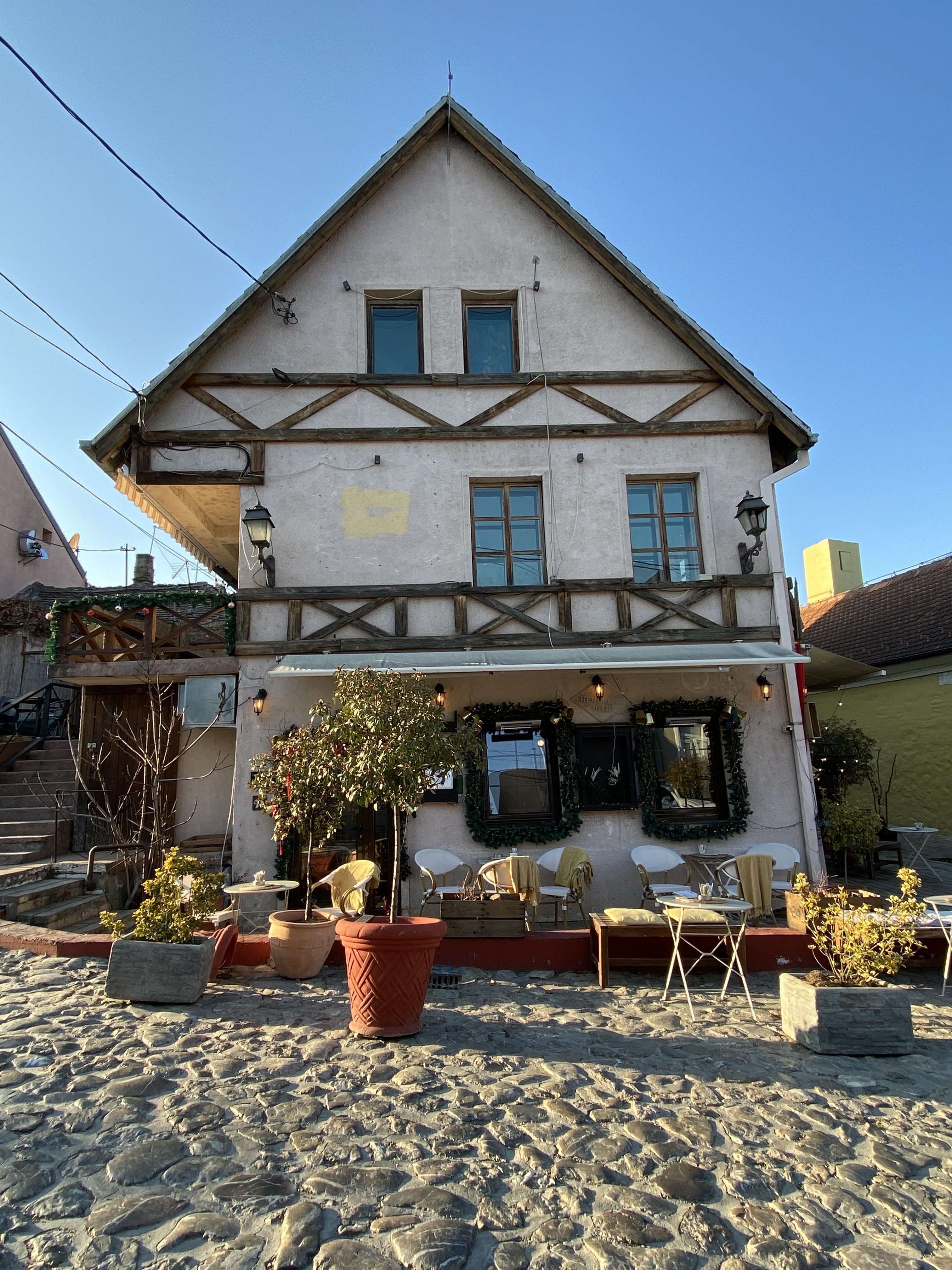
Zemun
 susan dalzell
You must be logged in to post a comment.